
Gosudarstvennyi Ermitazh and the Winter Palace on the Neva
Published on 08/30/2026 at 14:10 | Editorial responsibility: Rafael Müller, Editor-in-Chief AD HOC NEWS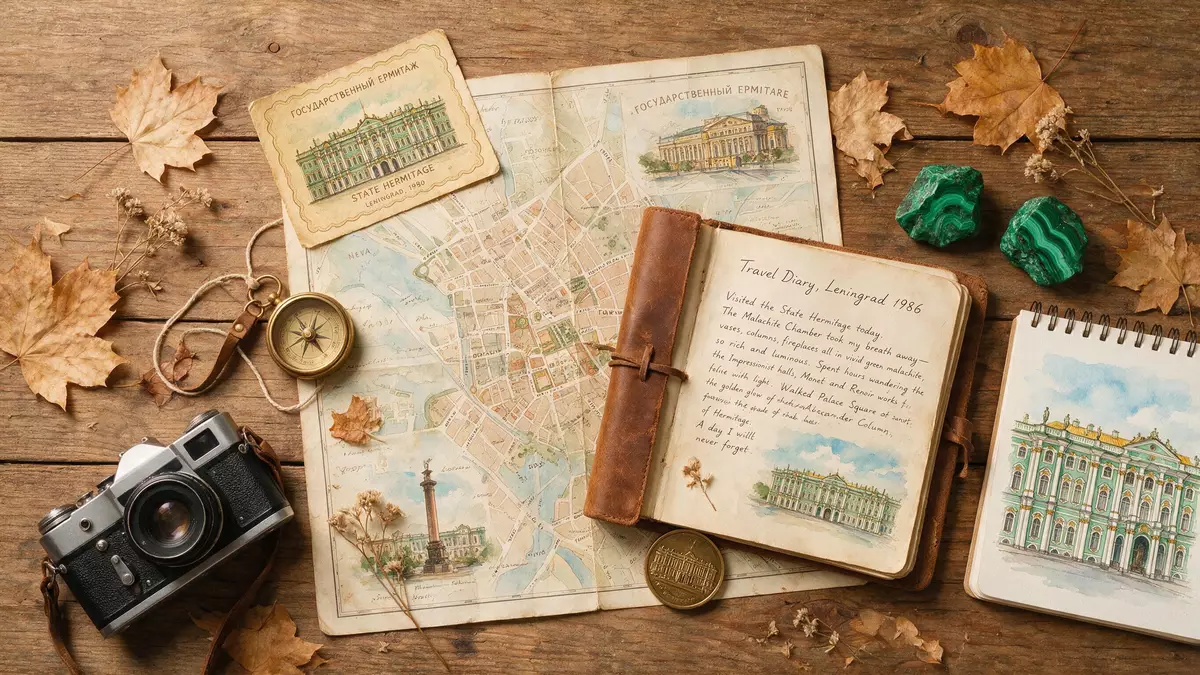
Gosudarstvennyi Ermitazh, known internationally as the State Hermitage Museum, occupies the former Winter Palace and neighbouring Hermitage buildings along the Neva River in Sankt Petersburg, Russia. Founded in 1764 under Empress Catherine the Great as an imperial art collection, it has grown into a museum complex spread through baroque and neoclassical palaces facing Palace Embankment.
The Winter Palace as a museum of art and power
The core of Gosudarstvennyi Ermitazh is the Winter Palace, the grand residence of the Russian emperors that rises along Palace Embankment in the historic centre of Sankt Petersburg. The palace was built between 1754 and 1762 in a richly decorated baroque style by the Italian architect Bartolomeo Rastrelli for Empress Elizabeth, its long facades painted in green and white and lined with columns and sculptural figures.The Winter Palace was built between 1754 and 1762 Inside, the palace holds state halls, grand staircases and enfilades that once served court ceremonies and receptions and are now part of the museum’s route.
The Winter Palace forms only one part of a larger chain of Hermitage buildings along the Neva River embankment, all connected to create a single museum complex.The museum occupies the former Winter Palace and neighbouring Hermitage buildings The palace stands on Palace Square, with its main entrance facing the monumental open space and its river front extending along Dvortsovaya Naberezhnaya, giving visitors a sense of how closely imperial power was linked to the city’s main ceremonial axis.
From Catherine the Great’s gallery to a public museum
Gosudarstvennyi Ermitazh traces its origin to 1764, when Empress Catherine the Great bought a substantial group of paintings assembled by Berlin merchant Johann Ernst Gotzkowsky, beginning an imperial collection that she housed in rooms adjoining the Winter Palace.The museum was founded in 1764 when Catherine the Great acquired paintings from Johann Ernst Gotzkowsky These early galleries became known as the Small Hermitage and later expanded into the Old Hermitage and other buildings as the collection grew.
In the nineteenth century, Gosudarstvennyi Ermitazh changed from an imperial private gallery into a public museum during the reign of Emperor Nicholas I. The New Hermitage, designed by the German architect Leo von Klenze, opened as a purpose-built museum building in 1852, with a street portico supported by tall grey granite Atlantes figures.The New Hermitage opened in 1852 as a public museum designed by Leo von Klenze By that time the State Hermitage Museum’s collections ranged from ancient artefacts to European painting, filling suites of rooms arranged for display rather than court life.
A linked ensemble of palaces along the Neva
The museum today occupies a linked ensemble of several historic buildings along the Neva River, including the Winter Palace, the Small Hermitage, the Old Hermitage, the New Hermitage and the Hermitage Theatre.The museum complex comprises the Winter Palace and its Hermitage extensions The Small Hermitage began as Catherine’s intimate retreat above the river embankment, while the Old Hermitage occupies a northern section along the water and has a more restrained neoclassical style.
Across Palace Square, the museum also uses the long General Staff Building, which closes the square’s perimeter opposite the Winter Palace and adds further gallery space behind a curved facade.The complex comprises several buildings along the Neva River embankment and the General Staff Building Together these structures form a continuous run of imperial architecture, with baroque ornament giving way to neoclassical lines, and visitors moving through covered passages that link palaces which once had distinct roles at court.
Visiting Gosudarstvennyi Ermitazh: what travellers from Western Europe should know
- Gosudarstvennyi Ermitazh stands on Palace Embankment beside the Neva River in central Sankt Petersburg, with the main Winter Palace complex reached from Palace Square and Dvortsovaya Naberezhnaya.
- The historic palace interiors include broad ceremonial staircases, long suites of rooms and some narrower connecting corridors, so a visit involves substantial walking over polished stone floors and several flights of steps.
- The museum’s main complex faces the open expanse of Palace Square, with the General Staff Building forming the opposite side of the square and providing additional exhibition halls within easy walking distance.
- Outside the UK, Ireland and the EU, entry requirements depend on your nationality; UK travellers can check the FCDO travel advice at gov.uk/foreign-travel-advice, Irish travellers the Department of Foreign Affairs at ireland.ie.
Searching for Gosudarstvennyi Ermitazh on social platforms
These links open searches for Gosudarstvennyi Ermitazh on each platform.Frequently asked questions about Gosudarstvennyi Ermitazh
Where is Gosudarstvennyi Ermitazh located?
Gosudarstvennyi Ermitazh is in central Sankt Petersburg, Russia, with its main complex in the Winter Palace and adjoining Hermitage buildings on Palace Embankment beside the Neva River.
What can visitors expect on a visit?
Visitors move through historic palace interiors that now house galleries of art and cultural artefacts, passing ceremonial staircases, grand halls and long sequences of rooms arranged for museum display.
What makes Gosudarstvennyi Ermitazh distinctive among museums?
Its distinctive character lies in the combination of an imperial residence built in the eighteenth century and an extensive museum of art and culture, spread through a connected ensemble of palaces along the Neva.


