
Gobekli Tepe and its Neolithic stone circles above Sanliurfa
Published on 09/18/2026 at 12:17 | Editorial responsibility: Rafael Müller, Editor-in-Chief AD HOC NEWS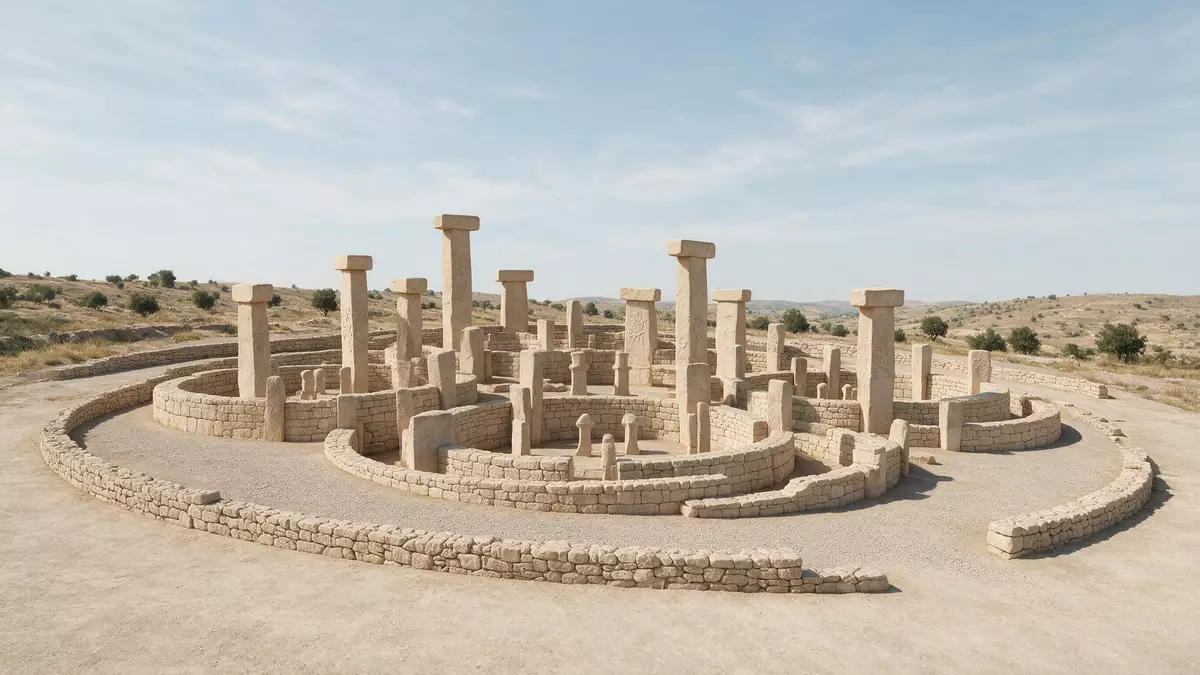
Gobekli Tepe, on a hill above the plains outside Sanliurfa in south-eastern Turkey, is a Neolithic sanctuary where circles of megaliths rise from a man-made mound. In the tenth and ninth millennia BC, communities of hunter-gatherers carved and raised these T-shaped pillars on a limestone ridge that later became one of the earliest recognised monumental complexes. The site lies within the Germus mountains of the Upper Mesopotamian region and forms part of the broader Tas Tepeler, or “Stone Hills”, landscape of early Neolithic mounds.Pre-Pottery Neolithic structures
Circles of T-shaped pillars in a Neolithic mound
The most striking feature at Gobekli Tepe is the pattern of circular and near-oval stone enclosures cut into the limestone plateau, each defined by T-shaped pillars set around their edges. In several of these enclosures, a pair of taller central pillars stands within the ring, their broad faces aligned towards each other and their flat tops bridging the space above the floor.layers of carved megaliths Excavation has revealed that these monumental circles belong to the earliest building phase at the site, sometimes referred to as Layer III, and date to the tenth millennium BC.
Although only a portion of the mound is opened, geophysical surveys indicate that more than two hundred pillars are present within numerous enclosures, suggesting a dense arrangement of stone circles that once covered the hill.massive T-shaped stone pillars The tell itself rises about 15 m (49 ft) above the surrounding plateau and extends across roughly 9 ha, giving a sense of the effort involved in shaping this artificial hill and its architecture along the edge of the Germus range.covers 9 ha of an area
Carved animals and human figures in stone
Close inspection of the pillars at Gobekli Tepe reveals a dense layer of relief carving, with animals and abstract signs standing out from the smoothed stone. Vultures, lions, foxes, snakes and wild boar appear in profile along the shafts of the pillars, sometimes overlapping and sometimes marching in bands around the stone, while other motifs include stylised arms, hands and belts that give certain pillars a distinctly anthropomorphic character.images mainly of wild animals
One of the most discussed reliefs, on a pillar known as Pillar 43 in one of the main enclosures, layers a vulture, a scorpion and long-necked birds among other figures, all carved into the same stone surface.a rich, complex relief carving Across the site, many pillars carry combinations of animals and symbols, while others remain blank, reinforcing the impression that the carved stones formed a visual focus within each enclosure. The carvings belong to the same broad period as the structures themselves, tying the decoration directly to the Pre-Pottery Neolithic communities that raised the pillars.
Gobekli Tepe as a World Heritage landscape
Gobekli Tepe’s combination of age, scale and architectural form led to its inscription on the UNESCO World Heritage List in 2018, recognising it as an early example of monumental architecture created before settled farming communities and urban centres.designated a UNESCO World Heritage Site in 2018 The property lies in the Haliliye district of Sanliurfa Province, on a limestone ridge that looks out across the Harran plain and links into the Tas Tepeler cluster of Neolithic tells.an early Neolithic site located some 15 kilometres northeast of the modern town
Archaeological work indicates that Gobekli Tepe was used between about 9,600 and 8,200 BCE within the broader Pre-Pottery Neolithic, placing it among the earliest known sites where large stone structures were created by hunter-gatherer groups.erected by hunter-gatherers in the Pre-Pottery Neolithic age between 9,600 and 8,200 BCE The site’s location in Upper Mesopotamia, a region where some of the earliest farming communities later emerged, links it to a wider story of social and economic change at the end of the Younger Dryas climate phase and the beginning of the Holocene.the earliest phases of Pre-Pottery Neolithic in the 10th millennium BC
Visiting Gobekli Tepe: what travellers from Western Europe should know
- Gobekli Tepe stands on a low rise northeast of central Sanliurfa, near the village of Orencik in the Haliliye district, reached by road from the city.
- The archaeological mound forms part of a limestone ridge, and visiting the excavated areas involves walking along raised paths and platforms over uneven ground.
- The official language is Turkish and the currency is the Turkish lira.
- Entry requirements depend on your nationality; UK travellers can check the FCDO travel advice at gov.uk/foreign-travel-advice, Irish travellers the Department of Foreign Affairs at ireland.ie.
Searching for Gobekli Tepe on social platforms
These links open searches for Gobekli Tepe on each platform.
Frequently asked questions about Gobekli Tepe
Where is Gobekli Tepe located?
Gobekli Tepe lies on a limestone ridge in the Haliliye district of Sanliurfa Province in south-eastern Turkey, northeast of the city of Sanliurfa.
What can visitors expect to see at Gobekli Tepe?
Visitors encounter excavated Neolithic enclosures with T-shaped stone pillars, many carved with animals and abstract symbols, viewed from walkways that cross the archaeological mound.
What makes Gobekli Tepe distinctive among archaeological sites?
Gobekli Tepe stands out for its early Pre-Pottery Neolithic date, its monumental stone circles raised by hunter-gatherers, and its dense relief carvings of animals on towering pillars.


