
Glover Garden, Nagasaki’s hillside of Western houses
Published on 09/15/2026 at 07:18 | Editorial responsibility: Rafael Müller, Editor-in-Chief AD HOC NEWS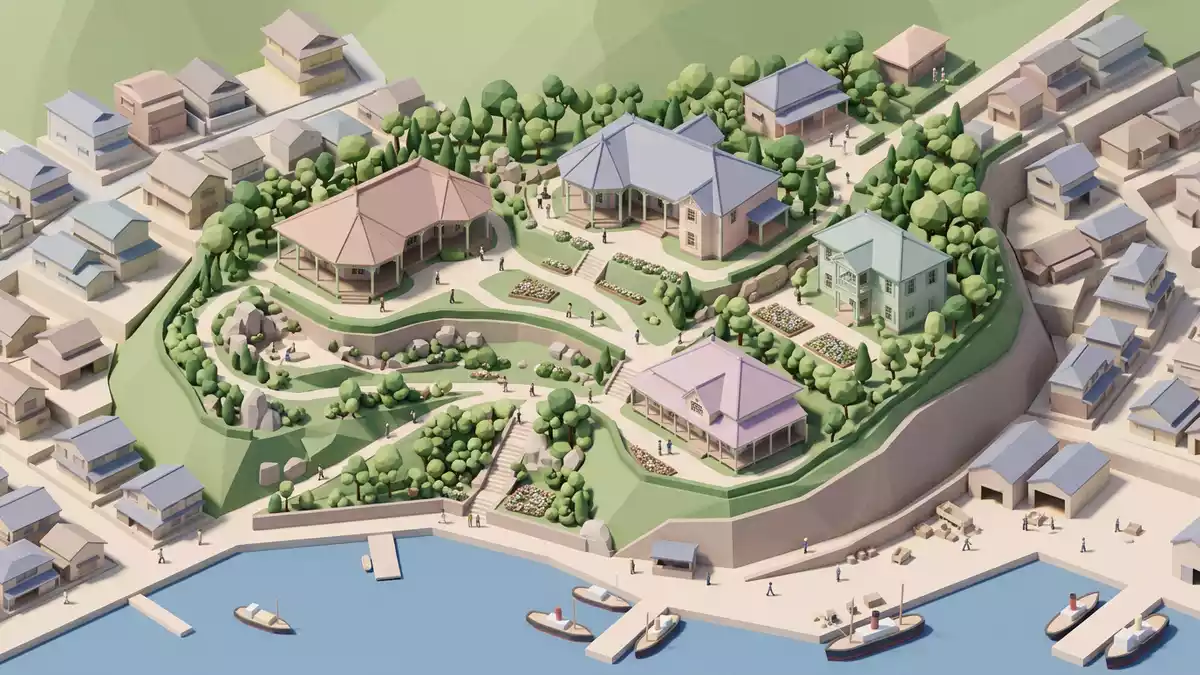
On the hillside above Nagasaki Harbour, Glover Garden brings together a cluster of Western-style houses and landscaped paths that recall the city’s nineteenth-century treaty-port era. Centered on the former home of Scottish merchant Thomas Blake Glover, built in 1863, it offers a view into Japan’s early encounters with industrial Europe and the lives of foreign residents who settled on this slope in the Meiji period.
Western mansions on the Minamiyamate hill
Glover Garden occupies the Minamiyamate hillside in Nagasaki, a district that formed part of the foreign settlement once Japan loosened its long seclusion in the second half of the nineteenth century.open air museum in Nagasaki The slope looks out over Nagasaki Harbour, and the residences are arranged along terraces and paths, with views down towards the port and the industrial waterfront.
The focal point is the Former Glover House, a wooden residence built in 1863 for Thomas Blake Glover, who arrived from Scotland in 1859 and became an important figure in shipbuilding, coal mining and other industries in Japan.built for Thomas Blake Glover The house is recognised as Japan’s oldest surviving Western-style wooden building and stands as one of Nagasaki’s best-known landmarks.oldest wooden Western-style building in Japan Around it, other mansions and related buildings from the Meiji era were dismantled from elsewhere in the city and reassembled on this hillside, turning the area into an open-air architecture museum of Western-influenced houses.
Thomas Blake Glover and Meiji-era Nagasaki
Glover Garden takes its name from Thomas Blake Glover, born in Scotland in 1838, who settled in Nagasaki in 1859 and remained closely associated with the city and Japan’s industrial development.Scottish merchant Thomas Blake Glover His residence on the hill dates from 1863, at a time when Nagasaki was emerging as a centre for shipbuilding and trade in the wake of Japan’s opening to foreign commerce.built the residence in 1863 The garden and its buildings sit within the broader story of the Meiji Restoration, when Western technology and industrial practices entered Japan with new intensity.
The Former Glover House and associated industrial heritage are included as a component of the Sites of Japan’s Meiji Industrial Revolution, a serial property inscribed on the UNESCO World Heritage List in 2015.part of the UNESCO World Heritage Site Within Glover Garden, several other Western-style residences from Nagasaki’s foreign settlement era have been preserved or reconstructed, including houses associated with merchants and industrial families, alongside buildings tied to Mitsubishi’s shipyard history.Western-style residences from the Meiji era Together they illustrate how foreign traders and engineers lived and worked in Nagasaki during the late Tokugawa and Meiji periods, with verandas, timber structures and decorative details that blend European and Japanese elements.
Paths, harbour views and historic details
Glover Garden is laid out as a landscaped park where houses, outbuildings and small exhibits are linked by paths, steps and planted slopes. Moving walkways carry visitors up the incline from the lower entrance, leading towards the upper terraces around industrial buildings that once related to Mitsubishi’s dock facilities.moving walkways to the top of the hill From the upper levels, the harbour, shipyards and cityscape spread out below, giving a sense of Nagasaki’s geography as a port surrounded by steep hills.
Within the garden, each residence carries its own character. The Former Glover House has broad verandas and a timber frame adapted to Nagasaki’s climate, while other houses such as Ringer House and Alt House represent variations on Western domestic architecture introduced in Japan during the late nineteenth century.open-air architecture museum Decorative features include statuary linked to the “Madame Butterfly” story and displays relating to Nagasaki’s traditional performing arts, which connect the foreign-settlement houses back to local culture and festivals.Madame Butterfly statue and Kunchi artefacts
Visiting Glover Garden: what travellers from Western Europe should know
- Glover Garden stands on the Minamiyamate hill above Nagasaki Harbour, close to Oura Church and reached on foot from tram stops on Nagasaki Electric Tramway Line 5.
- The garden occupies a steep hillside with paths, steps and moving walkways, so a visit involves walking on gradients between the terraces and houses.
- Nagasaki lies in Japan, where the official language is Japanese and the currency is the yen.
- Entry requirements depend on your nationality; UK travellers can check the FCDO travel advice at gov.uk/foreign-travel-advice, Irish travellers the Department of Foreign Affairs at ireland.ie.
Searching for Glover Garden on social platforms
These links open searches for Glover Garden on each platform.Frequently asked questions about Glover Garden
Where is Glover Garden located in Nagasaki?
Glover Garden is on the Minamiyamate hillside above Nagasaki Harbour, near Oura Church and within walking distance of tram stops on Nagasaki Electric Tramway Line 5.
What should visitors expect on a visit to Glover Garden?
A visit involves walking through landscaped paths and terraces linking several restored Western-style houses, with harbour views and interiors that illustrate Meiji-era foreign life in Nagasaki.
What makes Glover Garden distinctive among Nagasaki’s historic sites?
It combines Japan’s oldest surviving Western-style wooden residence and other Meiji-period houses on a single hillside, tied to Thomas Blake Glover and recognised within Japan’s Meiji Industrial Revolution UNESCO listing.


