Glover Garden and the hillside villas of Nagasaki harbour
Published on 09/11/2026 at 15:07 | Editorial responsibility: Rafael Müller, Editor-in-Chief AD HOC NEWS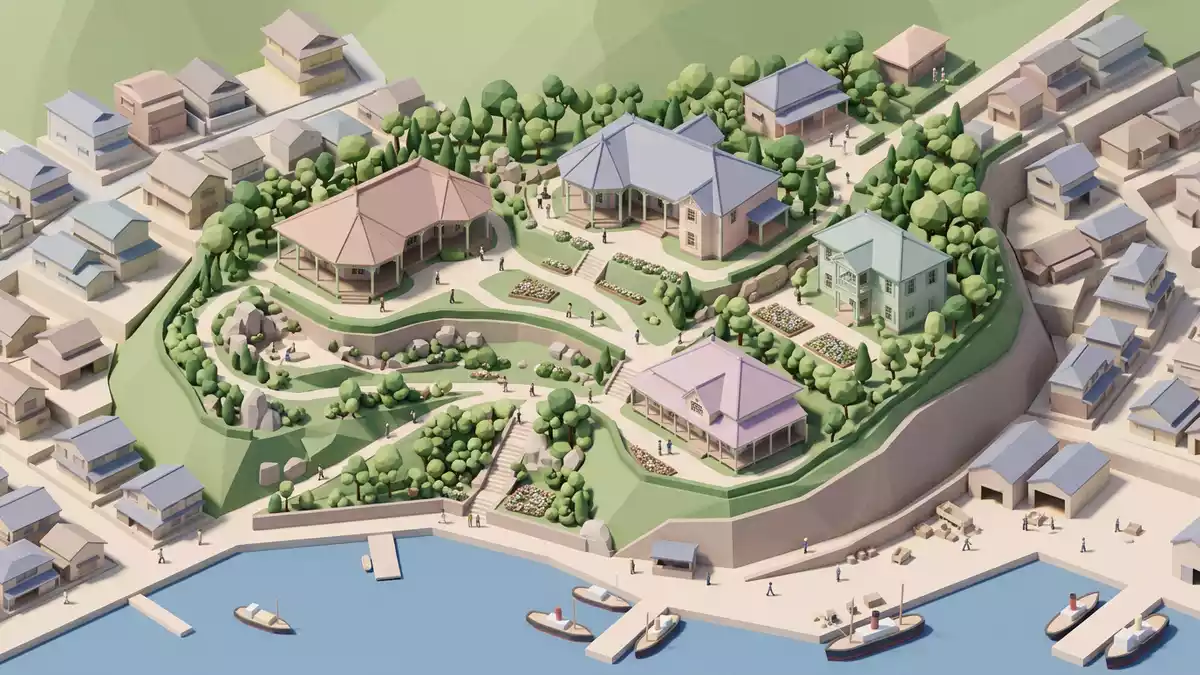
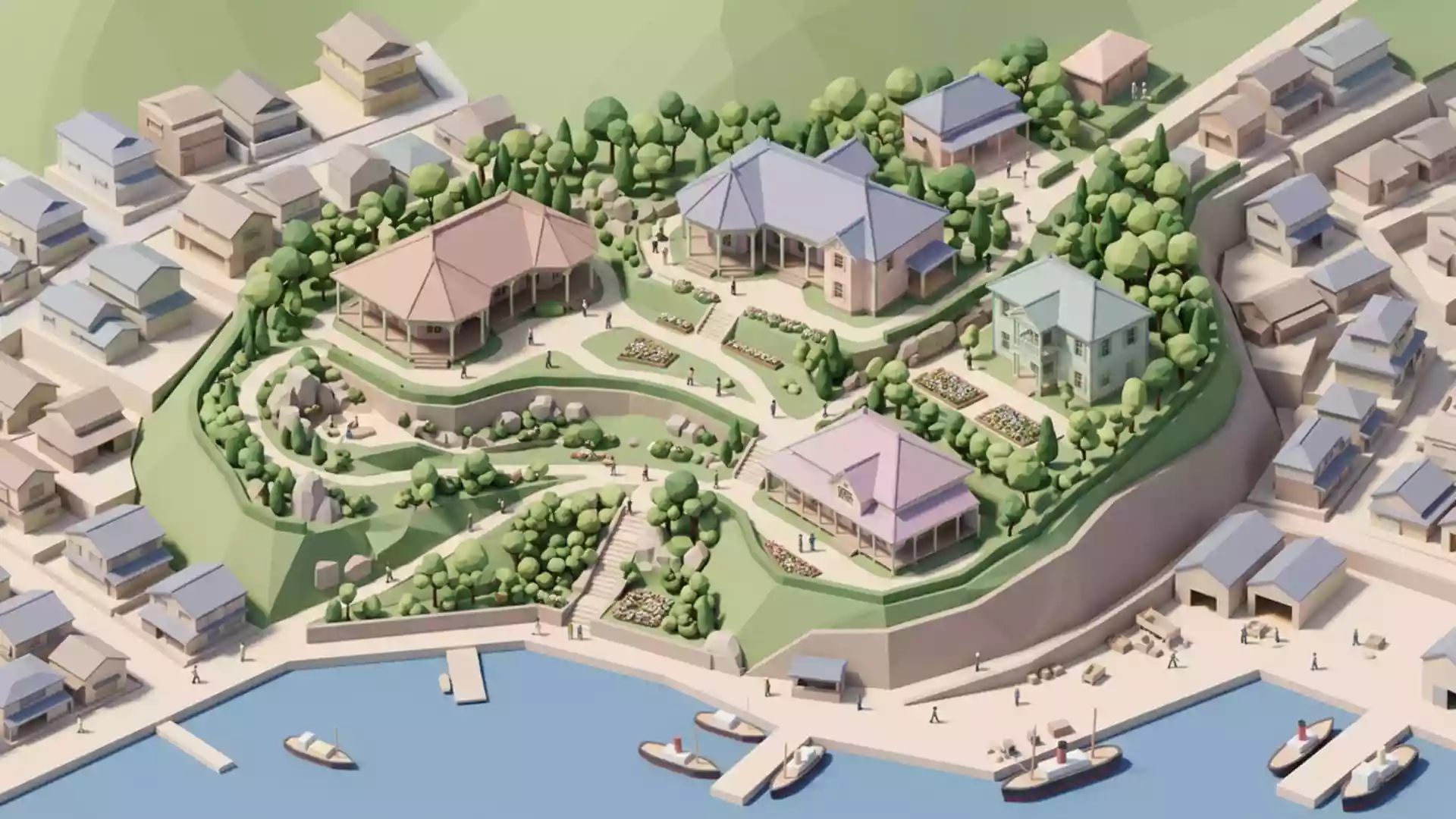
On the hillside above Nagasaki Harbour, Glover Garden brings together Western-style villas, garden paths and views across the bay in a single landscaped park. Centred on the former residence of Scottish merchant Thomas Blake Glover, completed in 1863, it offers a walkable snapshot of Nagasaki’s foreign settlement in the late nineteenth century.
Hilltop villas and the legacy of Thomas Blake Glover
Glover Garden occupies the Minamiyamate hillside in Nagasaki, climbing across terraces that look out over the harbour and the surrounding city. The park takes its name from Thomas Blake Glover, the Scottish merchant who settled here in 1859 and became closely linked with Japan’s industrial development in shipbuilding and mining. His timber residence stands at the heart of the garden and is widely recognised as Japan’s oldest surviving wooden Western-style house, blending verandas, tiled roofs and timber detailing that reflect both European and Japanese influences in the 1860s. Around it, lawns, flower beds and paved paths connect the house with viewpoints over Nagasaki Port, emphasising how the hillside location shaped the way foreign residents lived with the harbour in sight.
The former Glover Residence was donated to the city of Nagasaki by Mitsubishi Heavy Industries in the 1950s, and by 1974 it formed the centrepiece of a larger park that incorporated other Western-style houses from the Meiji period.donated to the city in 1957 Visitors can walk through several historic interiors, including the former Ringer Residence and former Alt Residence, which were relocated from elsewhere in Nagasaki and restored on this slope as Important Cultural Properties.Former Ringer House and Former Alt House Together these villas form an open-air architecture museum of late Edo and Meiji Western-style houses, illustrating how foreign industrial families and their Japanese associates lived during Japan’s shift from isolation to international trade.
Walking the open-air museum above Nagasaki Harbour
Exploring Glover Garden is a gradual descent across terraces, paths and planted slopes, with the harbour and the city unfolding below. Moving walkways and escalators carry visitors from lower levels to the upper parts of the park, making the climb manageable even as the garden spreads across roughly 30,000 square metres of hillside.roughly 30,000-square-metre grounds Once on the upper terraces, it is possible to wander between houses such as Walker House, Ringer House, Alt House and Glover House, each with verandas, bay-front rooms and decorative details that mark the adaptation of Western domestic architecture to Nagasaki’s climate and views.Walker House, Ringer House and Alt House
Along the way, there are small garden structures, statues and exhibits that link the houses to wider stories from Nagasaki. The Madame Butterfly statue commemorates opera singer Tamaki Miura and the association of Glover’s life with Puccini’s work, while displays in the Nagasaki Traditional Performing Arts Museum at the garden’s exit present floats and dragons from the city’s Kunchi festival.Madame Butterfly statue and performing arts museum From balconies and terraces, views extend across Nagasaki Harbour, with ships, quays and city districts framed by the garden’s planting and historic façades.
Industrial heritage and UNESCO recognition
Beyond domestic life, Glover Garden connects directly to the story of Japan’s Meiji Industrial Revolution. Thomas Blake Glover’s business activities in the 1860s and 1870s involved coal mining, shipbuilding and the introduction of modern technology, and his Nagasaki residence is registered as a component of the UNESCO World Cultural Heritage listing “Sites of Japan’s Meiji Industrial Revolution”.UNESCO World Cultural Heritage component The park’s interpretive panels and preserved buildings show how foreign merchants and Japanese partners worked together during the transition from the late Edo period into the Meiji era.
The former Glover House itself, completed in 1863, illustrates this turning point through its construction and setting.Completed in 1863 Timber framing, tiled roofs and wide verandas sit above the harbour, reflecting both imported ideas and local building practices. The house’s status as the oldest surviving wooden Western-style building in Japan anchors the garden’s narrative of early modernisation, while the relocation of other Meiji-era villas to this site gathers several strands of industrial, commercial and social history into one walkable landscape.former Glover Residence as Japan's oldest wooden Western-style residence
Visiting Glover Garden: what travellers from Western Europe should know
- Glover Garden stands on the Minamiyamate hillside in Nagasaki, with its main entrance close to Oura Catholic Church and within walking distance of tram stops on line number 5.
- The park covers a sloping site above the harbour, with terraces linked by steps, escalators and moving walkways; some interior routes include narrow staircases inside historic houses.
- Glover Garden lies beside the Oura Church district and overlooks Nagasaki Harbour, so a visit combines views of the bay with time in the former foreign settlement quarter.
- The official language is Japanese and the currency is the yen.
- Entry requirements depend on your nationality; UK travellers can check the FCDO travel advice at gov.uk/foreign-travel-advice, Irish travellers the Department of Foreign Affairs at ireland.ie.
Searching for Glover Garden on social platforms
These links open searches for Glover Garden on each platform.Frequently asked questions about Glover Garden
Where is Glover Garden in Nagasaki?
Glover Garden is on the Minamiyamate hillside above Nagasaki Harbour, beside Oura Catholic Church and close to tram stops on line number 5.
What can visitors expect during a visit?
Visitors walk through Western-style villas, garden paths and viewpoints over Nagasaki Harbour, with interiors and exhibits illustrating life in the foreign settlement.
What makes Glover Garden distinctive among Nagasaki’s sights?
Its combination of the former Glover House from 1863, relocated Meiji-era villas and a hillside setting overlooking the harbour highlights Japan’s early modernisation in one park.