Gaztelugatxe’s stone path between sea and sky
Published on 08/12/2026 at 14:16 | Editorial responsibility: Rafael Müller, Editor-in-Chief AD HOC NEWS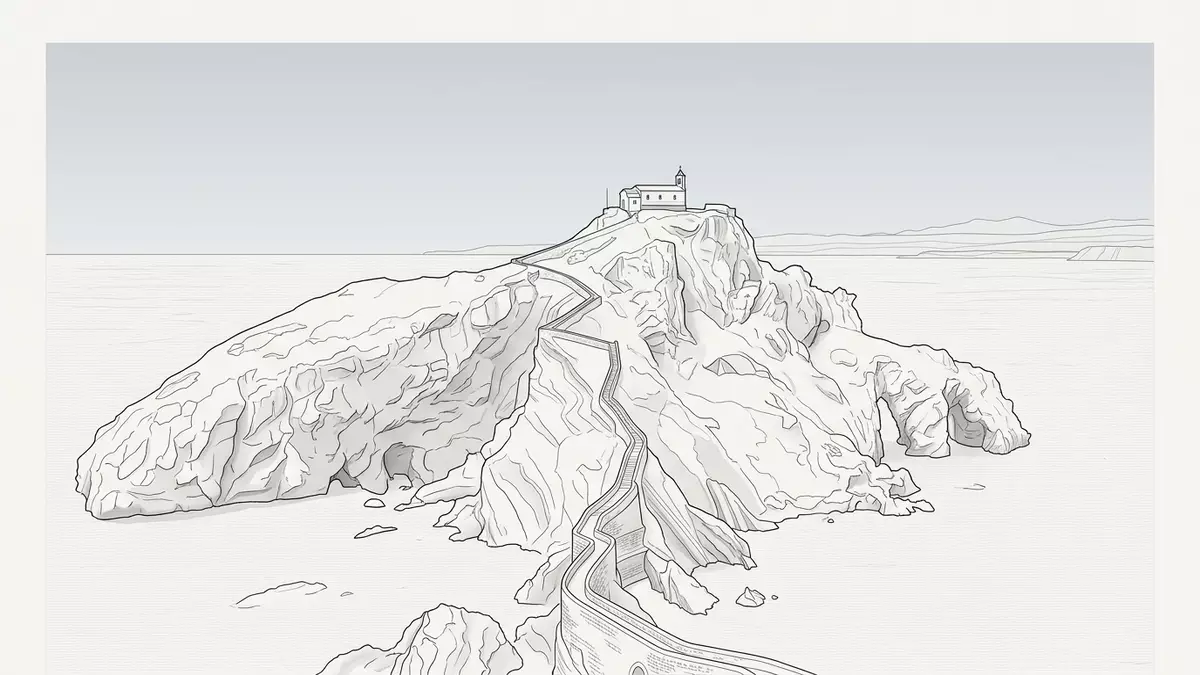
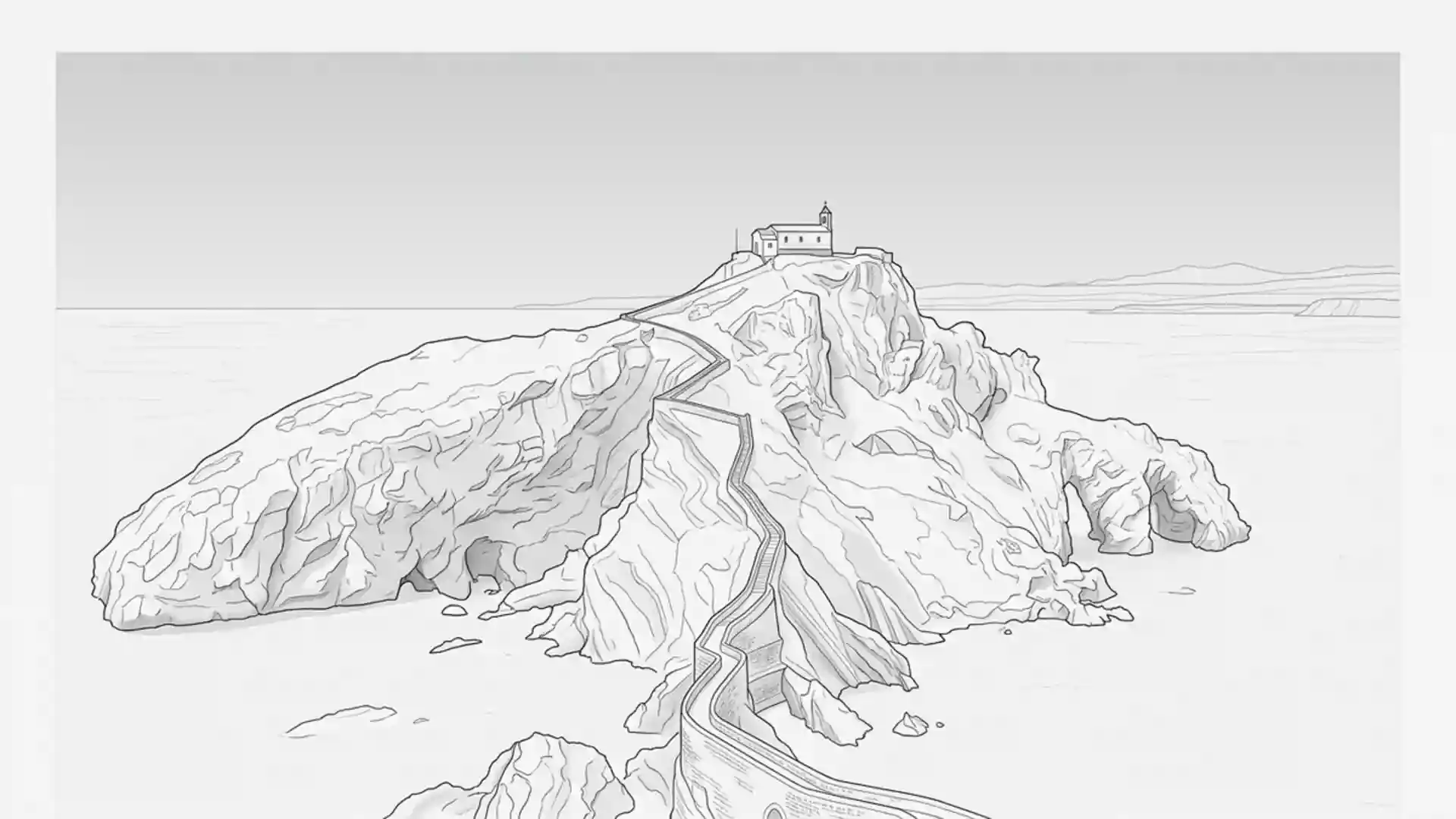
On the rugged Basque coast near Bermeo in northern Spain, Gaztelugatxe is a rocky islet crowned by a small hermitage and reached only on foot. What makes it memorable is the long stone causeway and staircase that climbs from the mainland to the chapel, tracing a stark line between the Atlantic waves below and the sky above.
A Basque islet shaped by stone and sea
Gaztelugatxe lies in the Bay of Biscay off the coast of Biscay province, connected to the mainland by a solid stone bridge that continues as a steep path up the rock. The hermitage on its summit stands about 80 m (262 ft) above sea level, so the approach rises clearly above the surrounding surf and cliffs.The hermitage stands about 80 m above sea level From the mainland, the bridge and stairway appear almost like an extension of the headland, zigzagging as they climb to the small terrace around the chapel.
The islet forms part of a dramatic stretch of the Basque coastline where hard rock cliffs meet the Atlantic. Erosion has carved sheer faces and detached outcrops, leaving Gaztelugatxe standing just off the shore while remaining close enough for the bridge to link it. Around the base of the rock, the sea breaks against boulders and ledges, while higher up the slopes are covered in low vegetation that gives way to the paved path near the top.The island is connected to the mainland by a man-made stone bridge
The long climb to the hermitage of San Juan
The hermitage at Gaztelugatxe is dedicated to Saint John the Baptist and is widely known in Spanish as San Juan de Gaztelugatxe. A chapel has stood on the rock since the early Middle Ages, with written references from the eleventh century and archaeological traces from the centuries around that date.Construction of the hermitage is dated to the early Middle Ages The church has been rebuilt more than once, with the current building dating from the late twentieth century after an earlier structure was destroyed by fire.The current church was rebuilt in the late twentieth century
The ascent itself is part of Gaztelugatxe’s character. A pedestrian route descends from the access area on the mainland down the hillside to meet the stone bridge that links shore and islet. From there, more than 200 stone steps climb in a series of ramps to the hermitage terrace, following the contours of the rock and turning back and forth above the sea.The approach includes a long staircase of over 200 steps The route is paved and in places bordered by low stone walls, and wayside crosses mark points along the climb.
History, devotion and a coastal lookout
Gaztelugatxe has long been a place of devotion and legend in the Basque Country. Medieval documents record the hermitage in the eleventh century under the Latin name Sancti Johannis de Castiello and mention its donation by Íñigo López, Lord of Biscay, and his wife Toda Ortiz to the monastery of San Juan de la Peña in Jaca.The Lord of Biscay donated the hermitage in the eleventh century Over the following centuries, the small community on the rock changed, became a convent for a period and later reverted to a more isolated hermitage.
The islet’s exposed position on the Bay of Biscay also gave it a strategic role. Accounts from the early modern period describe assaults and looting during conflicts along the coast, including attacks by ships from La Rochelle and other forces engaged in wars between Spain and France.Historical accounts describe military actions around the hermitage Despite damage from war, weather and fire, the site has remained an important Basque sanctuary, and the simple chapel and bell on the summit terrace reflect that continuity.
Visiting Gaztelugatxe: what travellers from Western Europe should know
- Gaztelugatxe lies on the Biscay coast of northern Spain in the municipality of Bermeo, between the town and the beach resort of Bakio; the approach road is signposted from the BI-3101 coastal route.
- The visit involves a paved downhill path from the access area, the stone bridge to the islet and a staircase of more than 200 steps, so the route includes steep gradients and many stairs.
- The terrain combines exposed coastal cliffs and paved paths, and the route to the hermitage requires sturdy footwear and a readiness for a sustained climb and descent on stone surfaces.
- The official language of the region is Spanish alongside Basque and the currency is the euro.
Searching for Gaztelugatxe on social platforms
These links open searches for Gaztelugatxe on each platform.
Frequently asked questions about Gaztelugatxe
Where is Gaztelugatxe and how is it connected to Bermeo?
Gaztelugatxe is a small islet off the Biscay coast of northern Spain, in the municipality of Bermeo, linked to the mainland by a stone bridge and path.
What should visitors expect from the walk to the hermitage?
The visit involves a downhill approach path, the stone bridge and a long staircase of more than 200 stone steps, with steep gradients both descending and climbing.
What makes Gaztelugatxe distinctive compared with other coastal viewpoints?
The combination of a medieval hermitage dedicated to Saint John the Baptist and a long man-made stairway rising above Atlantic cliffs gives Gaztelugatxe a striking character.