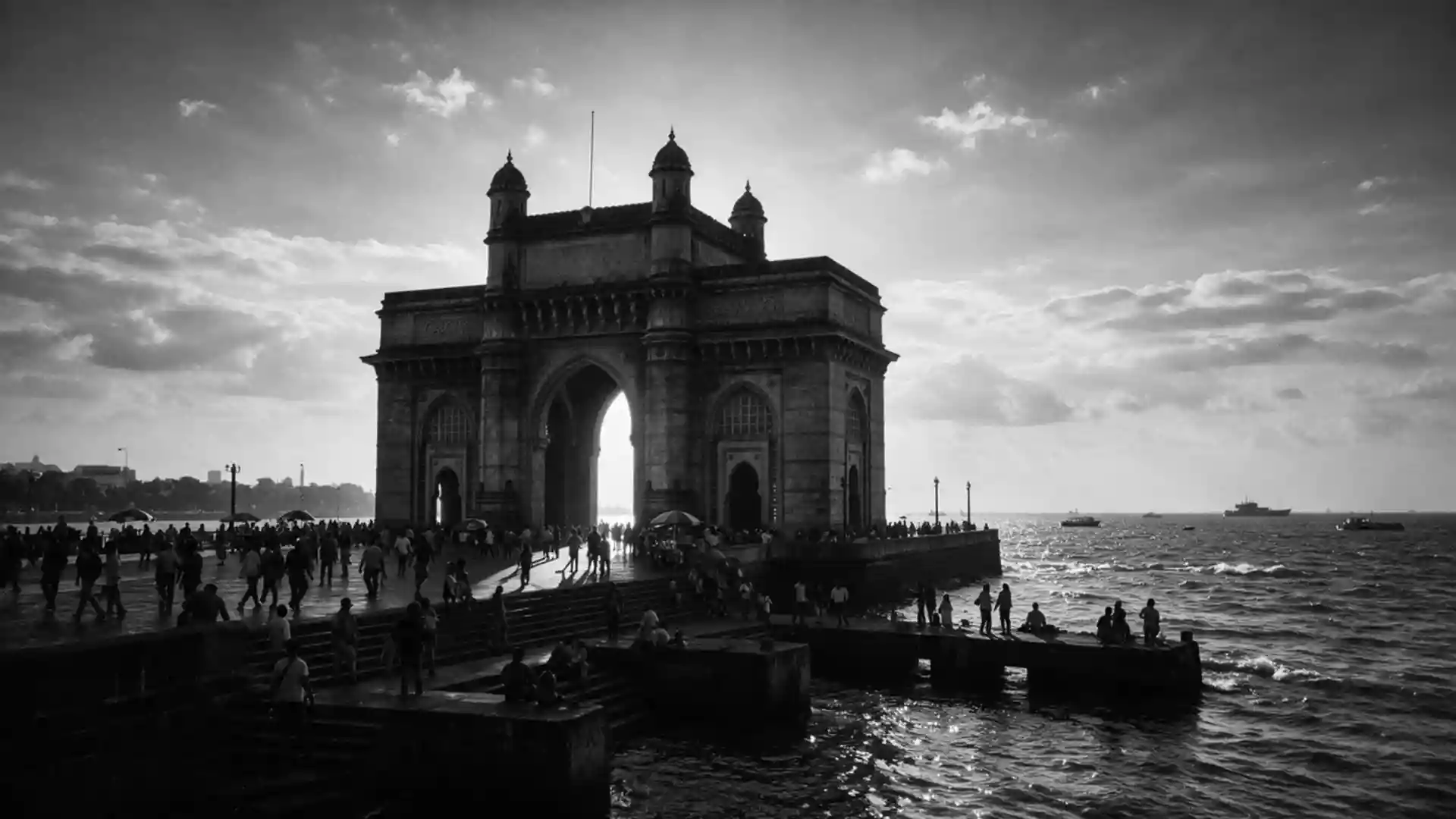
Gateway of India: Mumbai’s ceremonial arch on the Arabian Sea
Published on 09/02/2026 at 15:04 | Editorial responsibility: Rafael Müller, Editor-in-Chief AD HOC NEWS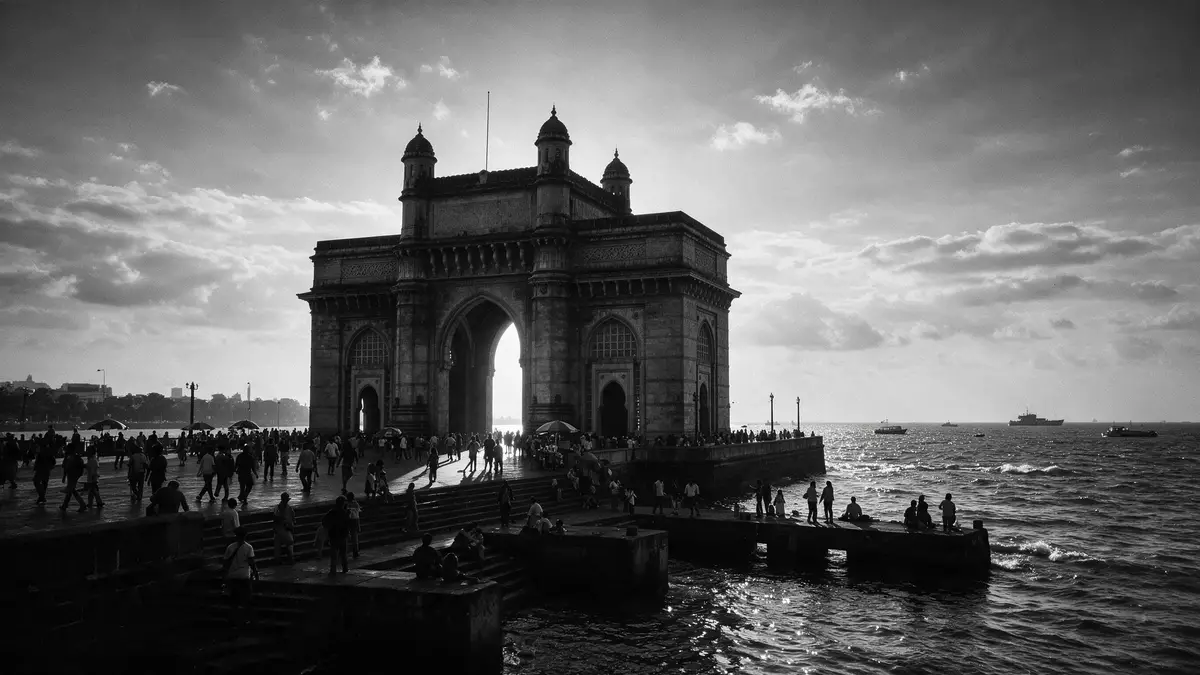
On the edge of Mumbai’s harbour, the Gateway of India rises as a ceremonial arch facing the Arabian Sea, built in the early twentieth century and completed in 1924. Conceived for the visit of King George V and Queen Mary to India in 1911, the monumental structure designed by Scottish architect George Wittet anchors the city’s waterfront with its Indo-Saracenic profile.
An Indo-Saracenic arch on Apollo Bunder
The Gateway of India stands at Apollo Bunder, a historic landing place on the southern tip of Mumbai’s peninsula where ships once approached the city directly from the open sea.Apollo Bunder on the Arabian Sea set the stage for the monument’s role as a formal point of arrival. The arch was commissioned after King George V and Queen Mary landed at this waterfront in December 1911, marking the first visit of a reigning British monarch to India.their 1911 landing in Bombay
Construction of the Gateway of India began after the foundation stone was laid in March 1911 by the Governor of Bombay, Sir George Sydenham Clarke, with Wittet’s final design sanctioned a few years later.foundation stone laid in March 1911 The foundations were completed around 1920, and the finished structure was formally inaugurated on 4 December 1924 by the Viceroy, Rufus Isaacs, Earl of Reading.inauguration in December 1924 In the decades that followed, the arch became the ceremonial gateway through which high-ranking officials entered and departed the country by sea.
Form, materials and details of the harbourfront monument
The Gateway of India is an arch monument in the Indo-Saracenic style, a colonial-era architectural language that blends Indian and Islamic motifs with British compositional habits.Indo-Saracenic style description The structure reaches about 26 m (85 ft) in height, with a central dome around 15 m (50 ft) in diameter rising over the main opening.height and dome diameter Yellow basalt stone forms the visible surfaces, laid over a reinforced concrete core that gives the arch its mass and durability. From a distance, the monument reads as a broad façade with multiple openings framed by projecting elements and a series of smaller decorative turrets above.
Close up, the gateway reveals layered detailing: moulded cornices, carved stone latticework known as jaali, and floral and geometric motifs drawn from regional traditions.jaali and stone detailing The main arch faces the harbour, while smaller side openings align with the promenade, creating a sequence of passageways under the structure. Steps descend from the seaward side directly towards the water, a reminder of the monument’s function as a threshold between ship and shore when passenger steamers of companies such as P&O called at this part of Mumbai.historic use as a landing pier
From royal arrival to symbolic departure
The reasons for building the Gateway of India lie in the political climate of the early twentieth century, yet its later history gives it a different resonance. After its completion, the arch served as a ceremonial entrance for visiting dignitaries and senior officials arriving in India by sea. The monument also became associated with a different moment: the departure of British troops through the gateway in 1948, following Indian independence declared in 1947.symbolic exit of British troops The same stone arch thus witnessed both imperial arrivals and the closing chapter of British rule.
In the broader story of Mumbai’s architecture, the Gateway of India sits among a group of colonial-era landmarks that defined the city’s waterfront and commercial districts during the late nineteenth and early twentieth centuries.role in Mumbai’s architectural landscape George Wittet’s other designs in the city helped shape this ensemble, but the harbourfront arch remains his most prominent work in Mumbai. Its combination of mass, coastal setting and layered ornament makes it a focal point for anyone approaching the southern tip of the city’s peninsula.
Visiting Gateway of India: what travellers from Western Europe should know
- Gateway of India stands at Apollo Bunder in the Colaba area of southern Mumbai, beside the Arabian Sea and near the historic harbour promenade.
- The immediate terrain is flat and paved, with broad steps on the harbour side of the monument leading down towards the water and open spaces around the arch.
- Nearby, the Taj Mahal Palace hotel and other colonial-era buildings line the waterfront, creating a dense architectural ensemble facing the harbour.
- The official language is Hindi alongside regional languages, and the currency is the Indian rupee.
- Entry requirements depend on your nationality; UK travellers can check the FCDO travel advice at gov.uk/foreign-travel-advice, Irish travellers the Department of Foreign Affairs at ireland.ie.
Searching for Gateway of India on social platforms
These links open searches for Gateway of India on each platform.Frequently asked questions about Gateway of India
Where is Gateway of India situated in Mumbai?
Gateway of India stands at Apollo Bunder in the Colaba district of southern Mumbai, directly beside the Arabian Sea and the city’s historic harbourfront.
What should visitors expect when they reach the monument?
The monument presents a large Indo-Saracenic stone arch facing the sea, with open paved areas, side openings and harbour steps forming a broad public space around it.
What makes Gateway of India distinctive among Mumbai’s landmarks?
Gateway of India is distinctive as a harbourfront arch built for a royal visit in 1911, completed in 1924, and later associated with the symbolic departure of British troops.