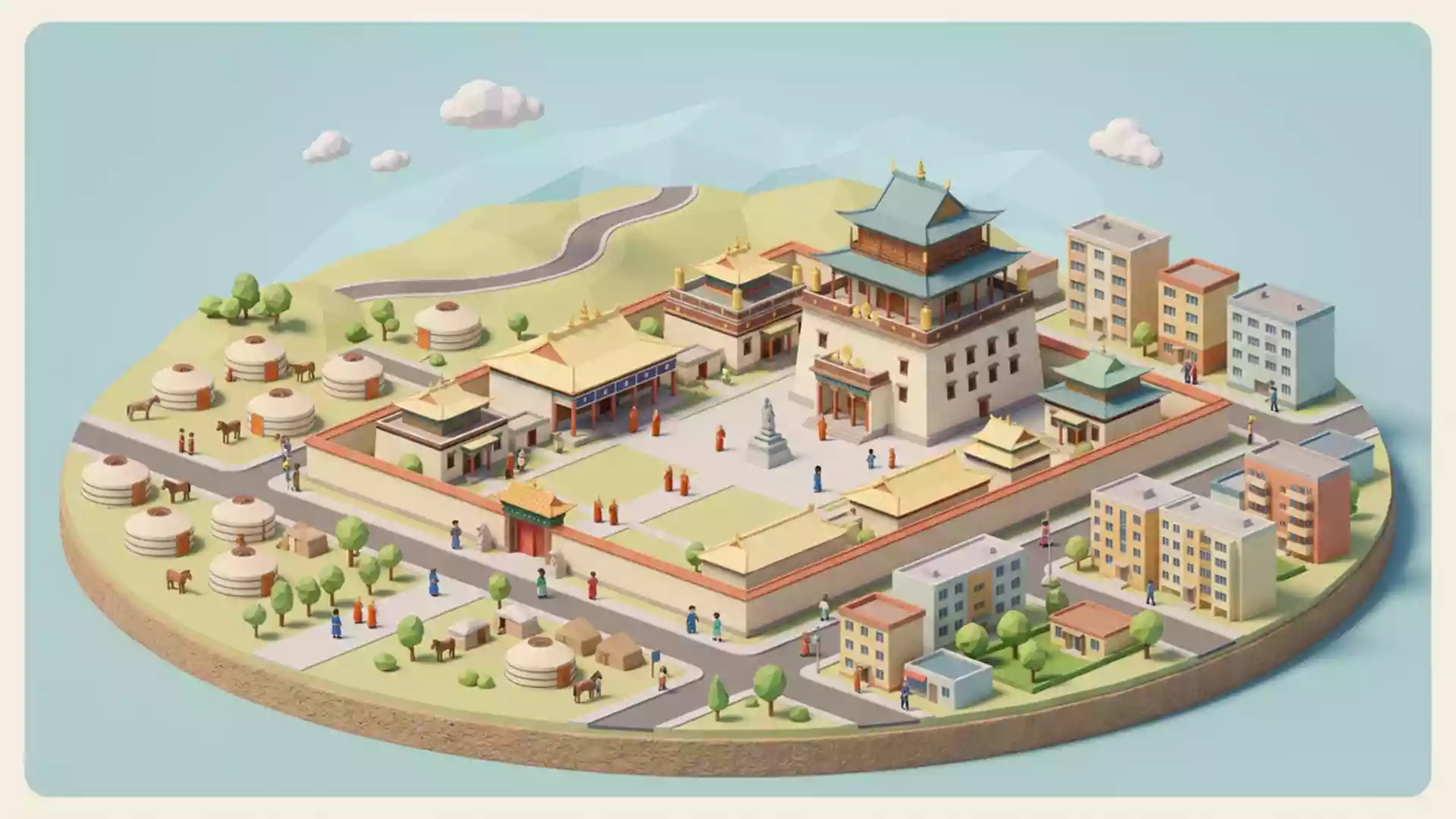
Gandantegchinlen Monastery and the layers of Ulaanbaatar
Published on 09/02/2026 at 15:02 | Editorial responsibility: Rafael Müller, Editor-in-Chief AD HOC NEWS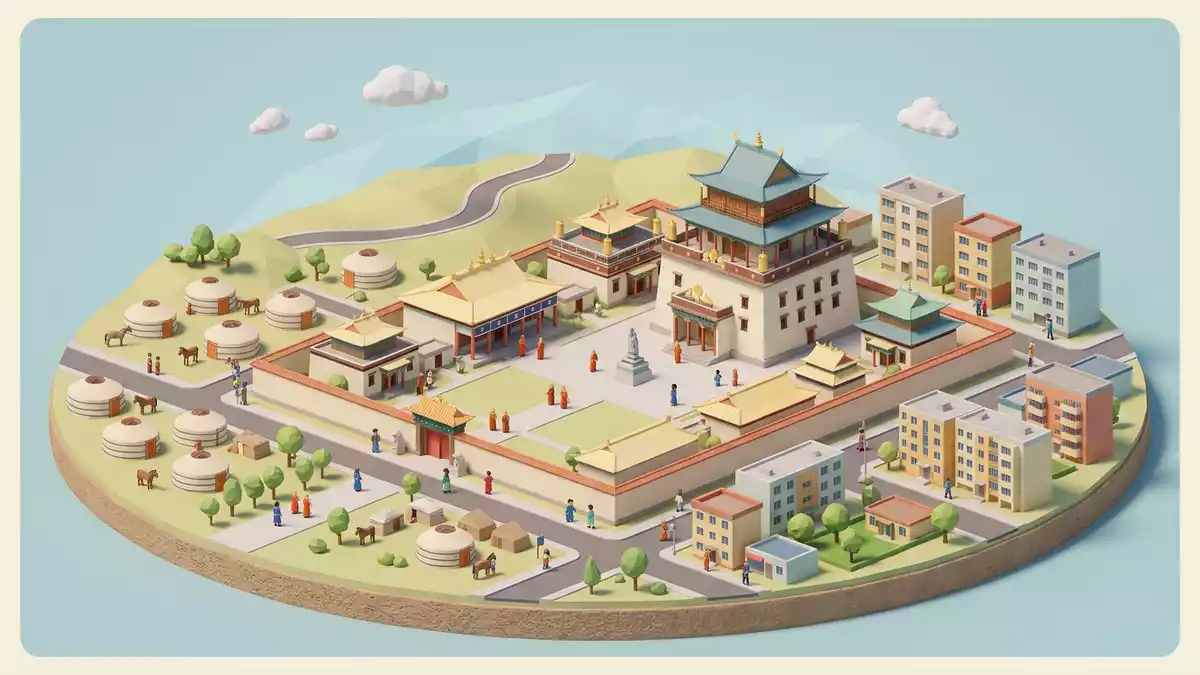
Gandantegchinlen Monastery stands in Bayangol, Ulaanbaatar, as a Buddhist complex with a long monastic lineage and a strong visual presence. Founded in 1809, it carries the name of Ganden Monastery in Tibet and remains one of the capital’s defining religious sites.founded in 1809
The monastery’s 19th-century core
The site took shape through the nineteenth century, when the fifth Jebtsundamba Khutuktu established the complex in Ulaanbaatar’s growing western quarter. Its early buildings include a stone temple from 1840 and 1841, which gives the monastery a clear historical centre.stone temple from 1840
The monastery’s name links Ulaanbaatar to wider Tibetan Buddhist geography. The word Gandantegchinlen refers to complete rejoicing, and the compound grew as a place of study as much as worship, with monastic colleges and ritual buildings beside one another.complete rejoicing
A survival story written in buildings
Gandantegchinlen Monastery was closed in 1939 during the anti-religious persecutions in Mongolia, then reopened in 1944. That sequence gives the place an unusually layered interior history: surviving structures, later restoration and the continued use of monastic space for worship.reopened in 1944
From 1944 to 1989 it was the country’s only active monastery, a fact that still shapes how it is read in the city. The complex is therefore both an architectural ensemble and a record of Mongolian Buddhist continuity under severe pressure.only active monastery
The great image and the temple courts
One of the monastery’s strongest visual anchors is the 26-metre statue of Avalokite?vara, cast in gilded bronze and set among the temple buildings. Its scale dominates the grounds without dissolving the smaller rhythms of prayer wheels, gates and courtyards around it.26-metre statue of Avalokite?vara
The monastery’s architecture mixes Mongolian, Tibetan and Chinese influences, which is visible in the varied rooflines and the different temple forms across the compound. That combination gives the site its character: a working monastery with a monumental centre and a cluster of smaller devotional spaces beside it.Mongolian, Tibetan and Chinese influences
Visiting Gandantegchinlen Monastery: what travellers from Western Europe should know
- The monastery lies in Bayangol District, Ulaanbaatar. It is reached from the city streets by road, and the complex sits within the capital rather than on an outlying pilgrimage route.
- The grounds contain several temples, a large statue and monastic buildings. Visitors encounter courtyards, steps and enclosed halls rather than a single enclosed monument.
- The architecture combines Mongolian, Tibetan and Chinese elements. That mix is visible across roofs, walls and gateways.
- Gandantegchinlen Monastery is a living Buddhist site. Monastic activity remains part of its identity, alongside its historical buildings.
Searching for Gandantegchinlen Monastery on social platforms
These links open searches for Gandantegchinlen Monastery on each platform.
Frequently asked questions about Gandantegchinlen Monastery
Where is Gandantegchinlen Monastery?
It is in Bayangol District, Ulaanbaatar, in Mongolia. The monastery sits within the capital’s urban fabric rather than in open countryside.
What does a visit involve?
The complex includes temples, monastic buildings and the large statue of Avalokite?vara. A visit means moving through courtyards and halls within an active religious setting.
What makes it distinctive?
Its long Buddhist history, 19th-century core and 26-metre statue give it a strong identity. The monastery also reflects the survival of religious life through difficult political periods.