Gamla Stan, the island old town at Stockholm’s heart
Published on 09/03/2026 at 14:35 | Editorial responsibility: Rafael Müller, Editor-in-Chief AD HOC NEWS
Gamla Stan is Stockholm’s historic old town, concentrated on the island of Stadsholmen and surrounded by smaller islets where Sweden’s political and religious power has gathered for centuries. Dating back to the thirteenth century and long known officially as “Staden mellan broarna”, it forms a dense urban district of cobbled streets, tall narrow houses and landmark churches that still anchor the city’s identity.
An island city between lake and sea
Stockholm grew first on Gamla Stan, a compact island squeezed between Lake Mälaren to the west and the Baltic inlet of Saltsjön to the east. The core of the district occupies Stadsholmen, with Riddarholmen, Helgeandsholmen and Strömsborg forming a small archipelago at the centre of the Swedish capital.Old Town dates from the 13th century and has remained continuously inhabited as Stockholm expanded north and south.
Gamla Stan’s position in the middle of the water gave rise to the older official name “Staden mellan broarna”, literally “the town between the bridges”.The medieval centre of Stockholm spans several linked islands, with bridges carrying traffic towards Norrmalm on the mainland and Södermalm to the south. Walking across these connections, the transition from newer commercial districts to the older stone and plaster of Gamla Stan is immediate.
Medieval fabric and later façades
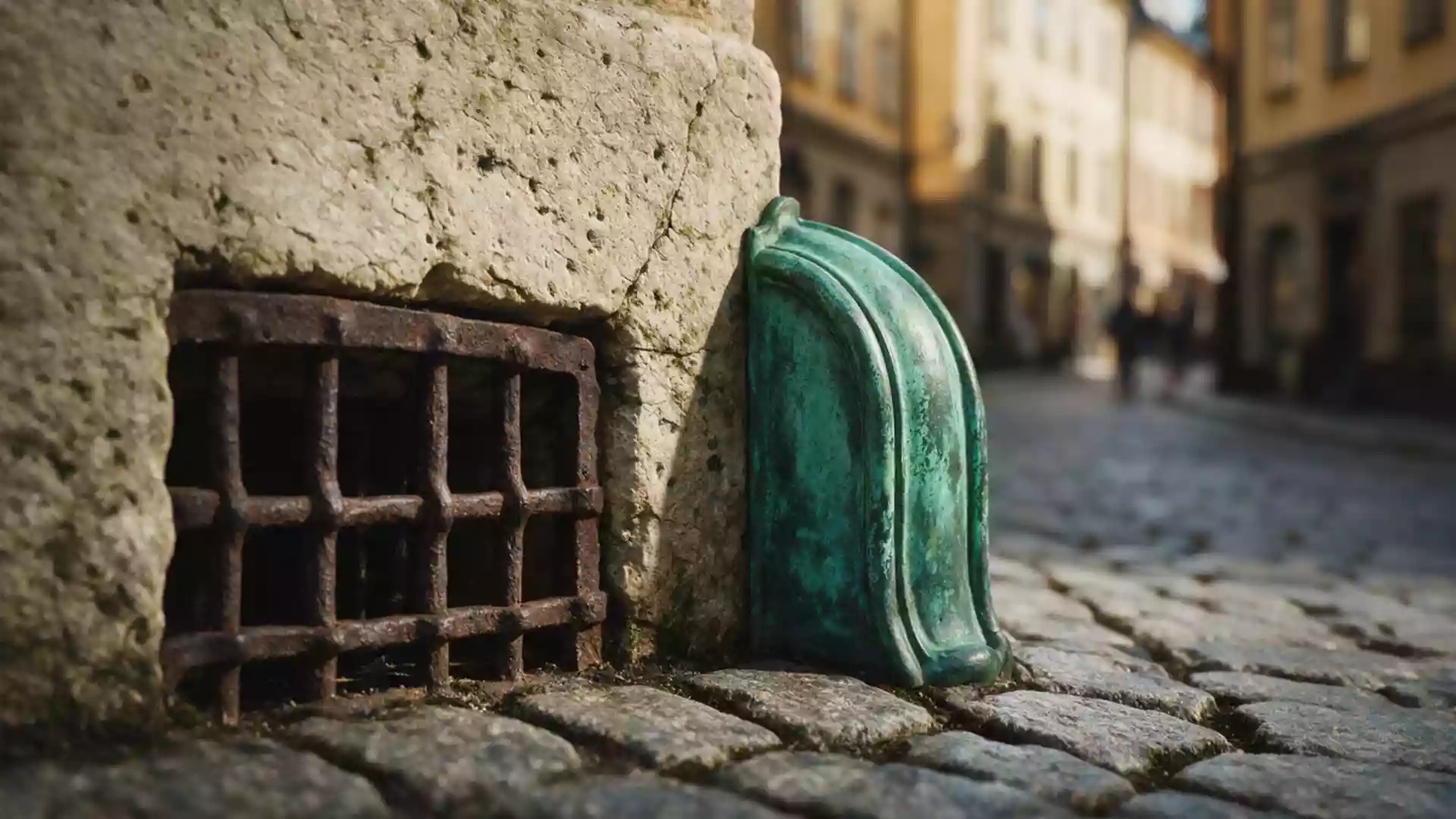
Although Gamla Stan’s street plan preserves a medieval structure, most of the standing buildings date from later centuries. Many townhouses and public buildings were rebuilt in stone after seventeenth-century fires, and the façades visible today largely belong to the 1600s and 1700s.Gamla Stan illustrates 750 years of history in a compact area where tall gabled houses line narrow passages paved with cobblestones.
The district’s architecture shows strong north German influence, with rows of multi-storey merchants’ houses and civic buildings pressed together along streets such as Västerlånggatan and Österlånggatan.Stockholm’s Gamla Stan began in 1252 and retains a remarkably intact streetscape for a northern European city centre. Colours on the plastered façades range from deep ochre to pale cream, giving the lanes a distinctive visual rhythm.
Royal, religious and civic landmarks
Gamla Stan concentrates several of Sweden’s key institutions within walking distance. On Stadsholmen, the Royal Palace occupies a dominant position, replacing an earlier fortress and continuing the island’s long association with the monarchy.Stads Island contains the Royal Palace and Storkyrkan, the cathedral that has witnessed coronations and national ceremonies.
Across a narrow stretch of water, Riddarholmen is marked by Riddarholmskyrkan, a church that has served as a royal burial site, while Helgeandsholmen carries the Swedish Parliament and the National Bank.Gamla Stan encompasses Stadsholmen, Riddarholmen and Helgeandsholmen as a single historic district. In the centre of the old town, Stortorget, meaning “the Great Square”, stands as Stockholm’s oldest public square, framed by high, narrow houses whose façades step around the space.
Visiting Gamla Stan: what travellers from Western Europe should know
- Gamla Stan lies at the geographic centre of Stockholm, between Lake Mälaren and the Baltic, reached by bridges from Norrmalm and Södermalm and by local metro and bus services.
- The old town’s streets are paved with cobblestones and include steep, narrow alleys and stairways, so walking involves uneven surfaces and short climbs between the quays and the upper lanes.
- Helgeandsholmen and Riddarholmen sit immediately beside Stadsholmen, with the Parliament, the National Bank and Riddarholmskyrkan forming a compact cluster of institutions within the wider Gamla Stan district.
- The official language is Swedish and the currency is the Swedish krona.
Searching for Gamla Stan on social platforms
These links open searches for Gamla Stan on each platform.
Frequently asked questions about Gamla Stan
Where is Gamla Stan located?
Gamla Stan is the old town of Stockholm in Sweden, centred on the island of Stadsholmen with nearby islets such as Riddarholmen and Helgeandsholmen.
What should visitors expect on a walk through Gamla Stan?
Visitors encounter narrow cobbled streets, tall plastered houses, historic churches, the Royal Palace and the central square of Stortorget within a compact island district.
What makes Gamla Stan distinctive among European old towns?
Gamla Stan combines a medieval street pattern with seventeenth- and eighteenth-century architecture, concentrated on linked islands that still house Sweden’s royal, parliamentary and banking institutions.