
Gamla Stan and the compact core of Stockholm
Published on 09/17/2026 at 22:49 | Editorial responsibility: Rafael Müller, Editor-in-Chief AD HOC NEWS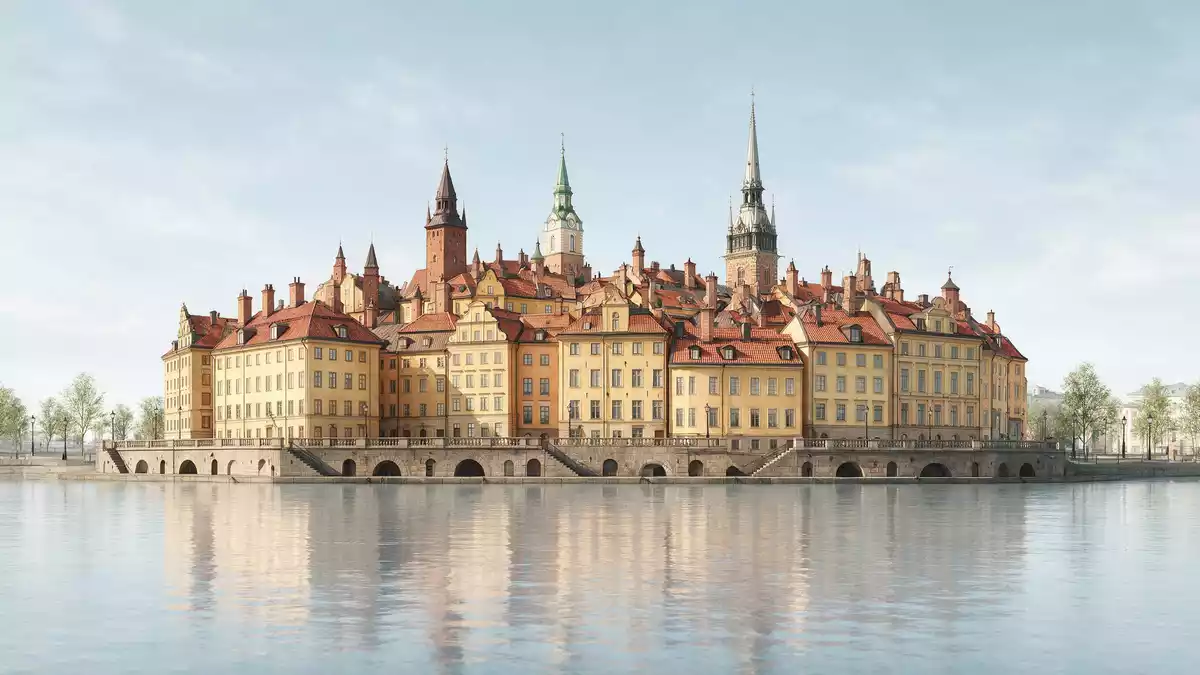
Gamla Stan is Stockholm’s old town, spread across Stadsholmen and the surrounding islets. Its streets, squares and civic buildings keep the medieval core of the city visible in a tight urban form.
Medieval streets around Stockholm Palace
The district reaches back to the thirteenth century and still reads as a compact historic centre rather than a loose museum quarter. The Royal Palace, Storkyrkan and Stortorget anchor its public life and give the area a clear civic centre.
The street pattern is narrow and irregular, with cobbled lanes and small squares shaped by long use. That layout matches a city that grew within a confined island setting, and it remains the most legible part of Stockholm’s early topography.
Stone houses and royal institutions
Many of the standing buildings date from the sixteenth and seventeenth centuries, with later layers added around them. Brick, plaster and stone dominate the streetscape, while facades carry the restrained vertical rhythm common in northern urban architecture.
Nicodemus Tessin the Younger worked on the Stockholm Palace, one of the district’s defining buildings. The palace, Storkyrkan and the old square system keep church, crown and town administration within one walkable historic nucleus.
Stortorget, Storkyrkan and the city’s earliest centre
Stortorget forms the best-known square in Gamla Stan, with merchant houses closing in around the open space. Nearby, Storkyrkan, also called Stockholm Cathedral, stands between the palace and the square and remains tied to the religious history of the city.
The old town also carries the memory of the Stockholm Bloodbath of 1520, which is associated with Stortorget. That episode belongs to the political history of the district as much as its architecture, because the square still sits at the centre of the old civic layout.
Visiting Gamla Stan: what travellers from Western Europe should know
- Gamla Stan lies in central Stockholm and is reached on foot from the city centre, by bus, and by the tunnelbana station Gamla stan. The district is stitched together by bridges, so the approach is shaped by water and crossings rather than by broad avenues.
- The streets are narrow and often cobbled. Some lanes rise and fall between small squares, and Storkyrkan stands on one of the highest points in the old town.
- The district includes the Royal Palace, Stortorget, Storkyrkan and the former Stock Exchange building. Those names recur across the area, so the map rewards slow walking rather than a direct route.
Searching for Gamla Stan on social platforms
These links open searches for Gamla Stan on each platform.
Frequently asked questions about Gamla Stan
Where is Gamla Stan?
Gamla Stan is the old town of Stockholm, in Sweden, centred on Stadsholmen and the nearby islets. It sits among bridges, squares and waterfront edges in the middle of the city.
What does a visit show?
It shows medieval street patterns, palace façades, church architecture and compact squares such as Stortorget. The area is best read on foot, where the relationship between the buildings is clear.
What makes Gamla Stan distinctive?
Its strength lies in the concentration of Stockholm’s early civic and religious landmarks within one small historic district. The Royal Palace, Storkyrkan and the old square system give the area a dense urban character.


