
Gamla Stan and Stockholm’s layered medieval streets
Published on 09/23/2026 at 15:23 | Editorial responsibility: Rafael Müller, Editor-in-Chief AD HOC NEWS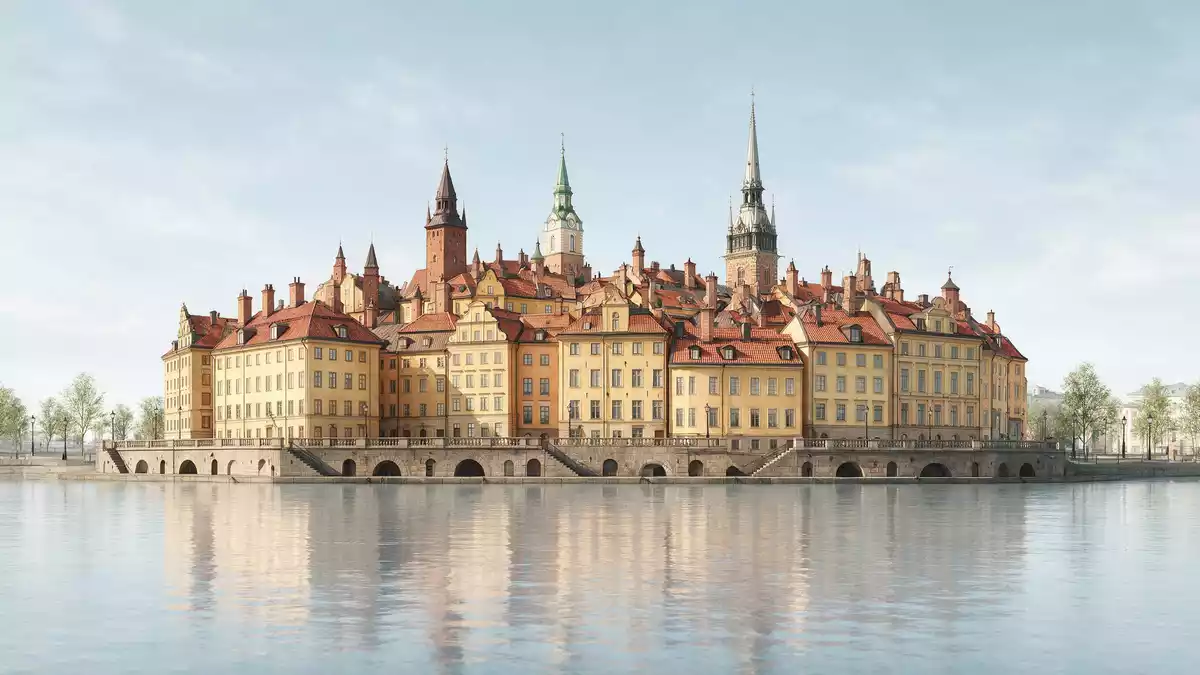
Gamla Stan is Stockholm’s old town, where narrow medieval lanes cross an island district between Lake Mälaren and the Baltic Sea. The visible cityscape combines cobbled streets with royal, religious and civic buildings from several centuries.
Founded during the thirteenth century, Gamla Stan remains a district of residences, workplaces, shops and historic institutions. Its streets preserve the scale of the medieval town, while its buildings show Renaissance, Baroque and later architectural layers.
Gamla Stan grew around Stadsholmen
The oldest part of Stockholm developed on Stadsholmen, the island at the centre of Gamla Stan. The settlement was first recorded as a town in 1252, during the leadership of Birger Jarl, and its early urban form expanded around waterways and trade.
Gamla Stan also includes the smaller islands of Riddarholmen, Helgeandsholmen and Strömsborg. The historic name Staden mellan broarna, meaning “the town between the bridges”, describes this position between Stockholm’s surrounding districts.
The street network retains medieval alignments, although buildings were rebuilt, extended and replaced across the centuries. In the western part of the district, a fire in 1625 led to new construction with straighter streets and more regular blocks.
Much of the visible building stock dates from the sixteenth and seventeenth centuries. Legally protected historic buildings sit beside cafés, restaurants, workshops and shops, keeping the old town an inhabited urban quarter rather than a single monument.
Stortorget, Storkyrkan and the royal quarter
Stortorget forms the best-known square in Gamla Stan. Coloured façades frame its compact space, while the Nobel Prize Museum occupies one side and Köpmangatan leads away through the old town.
Stortorget is also associated with the Stockholm Bloodbath of 1520, when executions followed the coronation of Christian II. The event belongs to the violent political history of the Kalmar Union and remains part of the square’s historical identity.
Storkyrkan, Stockholm Cathedral, stands close to the Royal Palace. The church is dedicated to Saint Nicholas and has existed since the thirteenth century, when Stockholm was a Catholic town. Its interior includes the late medieval sculpture Saint George and the Dragon.
The Royal Palace occupies a central position on Stadsholmen. The present Baroque palace was completed in 1754 after the Tre Kronor palace was destroyed by fire in 1697. The Royal Palace in Gamla Stan remains both a royal workplace and a historic landmark.
Riddarholmen adds another architectural register. Riddarholmen Church, with its tall cast-iron spire, is connected with the burial history of Swedish monarchs and stands among palaces and government buildings.
A living district of stone, colour and narrow lanes
Gamla Stan’s character comes from accumulation rather than a single style. North German influences appear alongside Gothic church architecture, Renaissance merchant houses, Swedish Baroque façades and nineteenth-century alterations.
Västerlånggatan and Österlånggatan run through the district, but smaller lanes reveal the older scale of the island. Mårten Trotzigs gränd narrows to 90 centimetres at its tightest point and rises through stone steps between adjoining streets.
Buildings are tightly packed, with painted façades in ochre, rust, red and muted yellow. Doorways, cellar openings, gables and projecting upper floors mark different construction periods across the same blocks.
Skeppsbron follows the eastern waterfront beside the Royal Palace. Its merchant buildings face the water, while the western side opens towards the narrow channels between Stadsholmen and the mainland.
Gamla Stan also carries civic institutions beyond its royal buildings. The House of Nobility, the Stockholm Stock Exchange Building and the Swedish Parliament’s surroundings belong to the wider historic centre.
Swedish remains the official language, and the currency is the Swedish krona. The district’s restaurants, cafés, galleries and independent shops occupy historic premises alongside homes and public buildings.
Visiting Gamla Stan: what travellers from Western Europe should know
- Gamla Stan lies in central Stockholm on Stadsholmen, between Lake Mälaren and the Baltic inlet. Bridges connect it with Norrmalm, Södermalm and Riddarholmen.
- The Gamla stan metro station serves the district. Green and red metro routes stop there, near the western edge of the island.
- Cobbled surfaces, slopes and steps shape many streets. Mårten Trotzigs gränd is a narrow stepped lane, reaching 90 centimetres at its tightest point.
- Stortorget, the Royal Palace, Storkyrkan and Riddarholmen Church lie within the historic centre. The district’s streets also contain homes, businesses and public institutions.
Searching for Gamla Stan on social platforms
These links open searches for Gamla Stan on each platform.
Frequently asked questions about Gamla Stan
Where is Gamla Stan?
Gamla Stan is Stockholm’s historic old town, centred on Stadsholmen between Lake Mälaren and the Baltic Sea. The wider district includes Riddarholmen, Helgeandsholmen and Strömsborg.
What can visitors expect in Gamla Stan?
Visitors find cobbled streets, narrow lanes, colourful townhouses, churches, royal buildings, museums, cafés, shops and working neighbourhood streets. Stortorget, Storkyrkan and the Royal Palace form the central group of landmarks.
What makes Gamla Stan distinctive?
Gamla Stan combines a medieval street pattern with buildings from the sixteenth century onwards. Its narrowest lane, Mårten Trotzigs gränd, reaches 90 centimetres, while the Royal Palace and Storkyrkan anchor the historic centre.


