
Gamcheon Munhwa Maeul: Busan’s hillside maze of colour and art
Published on 08/27/2026 at 20:42 | Editorial responsibility: Rafael Müller, Editor-in-Chief AD HOC NEWS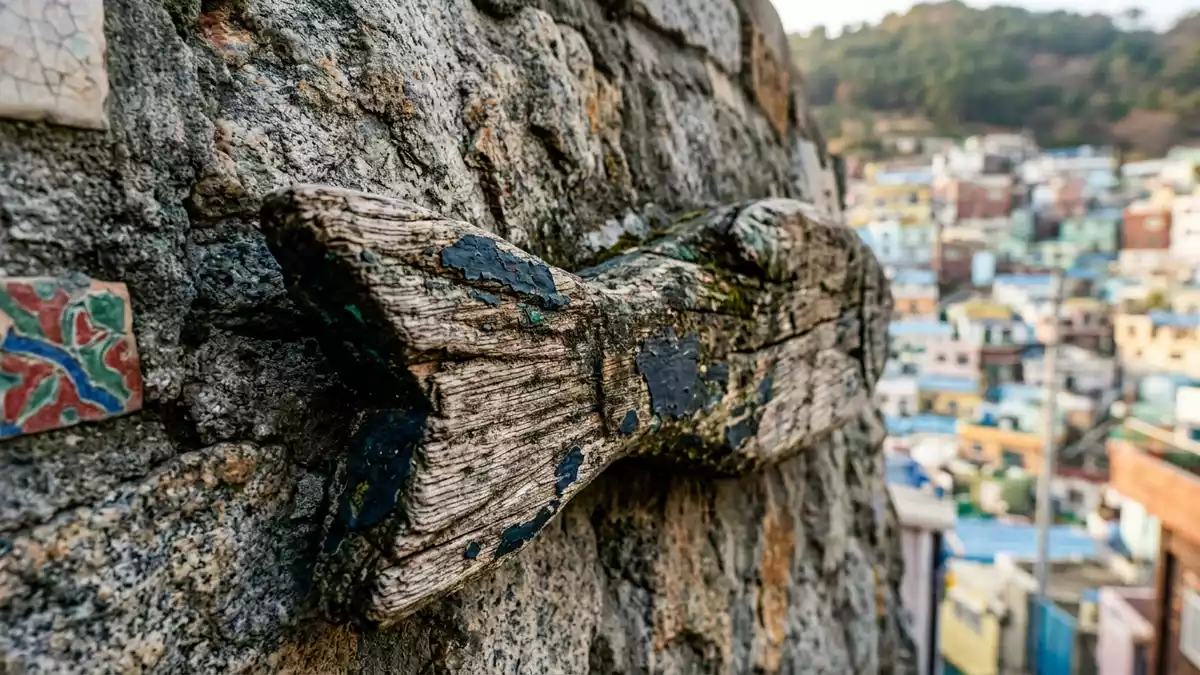
On the steep hills of western Busan, Gamcheon Munhwa Maeul spreads across the slope in tightly packed tiers of small houses, painted in bright colours and threaded by narrow alleyways. Locally known as Gamcheon Culture Village, it occupies Gamcheon-dong in Saha District and has roots in the mid-twentieth century, when Korean War refugees settled on this hillside. In the late 2000s, large-scale art projects turned the neighbourhood into an open-air gallery, weaving sculptures and murals through the existing streets.
From refugee hillside to terraced neighbourhood
Gamcheon Munhwa Maeul lies in Gamcheon-dong, part of Busan’s Saha District, on a slope above the city’s port in South Korea. The village grew during the 1950s Korean War period, when people displaced by fighting across the peninsula built modest homes on steep, previously marginal terrain above Busan, which had become a major refuge in the south.During the 1950s Korean War Busan served as a key destination for those fleeing northward advances, and many of them settled here in simple structures that followed the shape of the mountain.
The terraced pattern of Gamcheon Munhwa Maeul is one of its defining features. Houses step up the hillside so that each row sits above the one below, creating a layered landscape when seen from the port or valley. Over time, families extended and adapted their dwellings while the tight layout of alleyways, staircases and small public spaces remained. Later accounts highlight the presence of followers of the Taegeukdo religious movement among early residents, giving the community a distinct identity within Busan’s wider urban fabric.an ascetic religious community known as Taegeukdo
A hillside transformed into a cultural village
In 2009, a major art-led regeneration programme began to reshape Gamcheon Munhwa Maeul while retaining its built form. Projects supported by local authorities and South Korea’s Ministry of Culture, Sports and Tourism invited artists, students and residents to work together on murals, sculptures and the restoration of houses.In 2009, Saha District launched an art-led regeneration project The “Village Art Project” and related initiatives set out individual themes for certain houses and introduced new visual landmarks along staircases and lanes.the 2009 Village Art Project was launched
The result is a neighbourhood that still functions as a residential area but carries a dense layer of public art. Many façades are painted in saturated blues, greens and yellows, and various walls hold large murals, while small plazas and courtyards contain sculptures and installations. Vacant houses were turned into themed spaces such as the House of Peace, House of Light and House of Darkness, alongside photo galleries and book cafés, adding cultural venues to the existing network of streets.ten artists from Busan turned five vacant houses into artistic spaces
Walking the maze of alleys, stairways and viewpoints
Moving through Gamcheon Munhwa Maeul means following staircases, passageways and small lanes that twist around the contours of the slope. Some alleyways run between closely spaced houses, while others open onto terraces where several levels of the village are visible at once. From higher points, the lines of coloured roofs and façades stack up in front of the viewer, with glimpses towards Busan’s harbour beyond. The stepped plan is evident at many angles, as houses and paths mirror the gradient.
Along the way, installed artworks mark key corners or viewing spots. Sculptures stand at junctions, painted characters appear on retaining walls and small galleries occupy former dwellings. Official descriptions describe Gamcheon Munhwa Maeul with nicknames such as the “Machu Picchu of Korea” and the “Santorini of Korea”, drawing attention to its dramatic hillside setting and cluster of pastel-coloured buildings.Often affectionately referred to as the “Machu Picchu of Busan” or the “Santorini of Korea” Despite these comparisons, the layout remains specific to Busan’s topography, combining tight urban grain with long views down towards the city.
Visiting Gamcheon Munhwa Maeul: what travellers from Western Europe should know
- Gamcheon Munhwa Maeul stands on the slopes of Gamcheon-dong in Saha District, south-west of central Busan and inland from the main port area. Local buses run from metro stations such as Toseong towards stops near the village.
- The hillside setting means frequent staircases and sloping lanes; walking routes involve climbs between different levels via narrow steps and alleyways.
- Gamcheon Munhwa Maeul is within South Korea. The official language is Korean and the currency is the South Korean won.
- Entry requirements depend on your nationality; UK travellers can check the FCDO travel advice at gov.uk/foreign-travel-advice, Irish travellers the Department of Foreign Affairs at ireland.ie.
Searching for Gamcheon Munhwa Maeul on social platforms
These links open searches for Gamcheon Munhwa Maeul on each platform.
Frequently asked questions about Gamcheon Munhwa Maeul
Where is Gamcheon Munhwa Maeul located within Busan?
Gamcheon Munhwa Maeul occupies Gamcheon-dong in Saha District on a hillside in western Busan, above the city’s port and south-west of the central districts.Gamcheon Culture Village - Tourist Attractions
What should visitors expect during a walk through the village?
Visitors encounter sloping lanes, staircases and alleyways lined with small, brightly painted houses, alongside murals, sculptures and a number of converted art spaces in former dwellings.
What makes Gamcheon Munhwa Maeul distinctive among Busan’s neighbourhoods?
The combination of terraced refugee-era housing, its hillside position in Saha District and the extensive art projects from 2009 onwards together give the village a distinctive character compared with other parts of Busan.Gamcheon Culture Village: Busan's Vibrant Art Destination


