
Gamcheon Munhwa Maeul, Busan’s hillside art village
Published on 09/01/2026 at 09:50 | Editorial responsibility: Rafael Müller, Editor-in-Chief AD HOC NEWS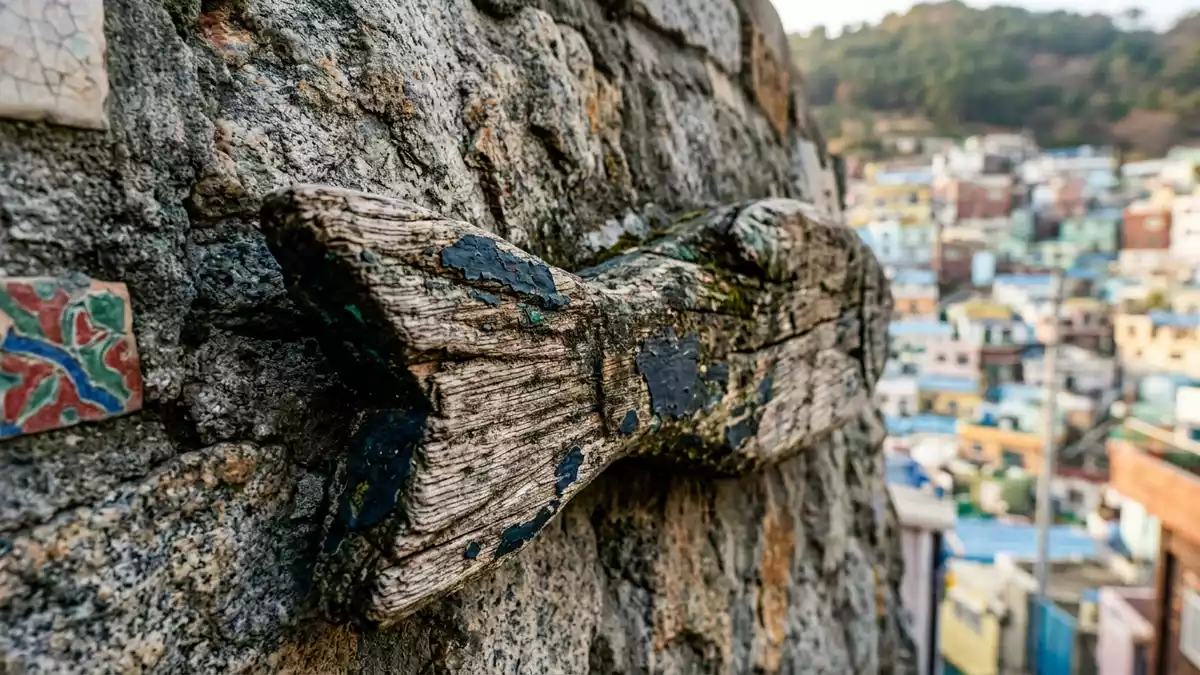
Gamcheon Munhwa Maeul in Busan is a hillside neighbourhood where compact houses, lanes and stairways step up a coastal slope in dense terraces that now carry murals and small art spaces. Formed as a community during the mid?twentieth century and later reshaped by organised art projects, it has become one of Busan’s most distinctive urban landscapes, with views across the lower city and the port.
A terraced village above the harbour
Gamcheon Munhwa Maeul occupies the slopes of Gamcheon-dong in Saha District on the western side of Busan, rising from streets near the harbour into the foothills of a coastal mountain.Gamcheon Culture Village was formed by refugees of the Korean War who built houses in a staircase fashion along the hillside, leaving narrow alleys and stairways between the buildings.Gamcheon Culture Village is described as a town within Gamcheon-dong, Saha District The terraces follow the contours of the hill, so roofs and small yards on one level lie close to windows and balconies on the next.
The core of the village is reached near Gamnae 2-ro in Saha-gu, a street that runs along the lower edge of the hillside and serves as a reference point for addresses.203 Gamnae 2-ro, Saha-gu, Busan is used as the address From here the built-up slope rises in successive steps of small dwellings, giving many positions their own angle onto the harbour and the lower city. The housing is closely packed, yet the change in level means that lines of sight open and close as lanes turn and stairways climb.
From war-time housing to open-air art village
The settlement is traditionally dated to the 1950s, when people displaced by fighting during the Korean War needed housing near the port and available work. They built compact dwellings in rows that allowed space for lanes and access paths without flattening the slope. The houses are generally modest in height, but the accumulated levels give the overall village a striking vertical profile when seen from below.
Decades later, local initiatives and supported projects introduced contemporary art into the neighbourhood, turning many exterior walls, stairway landings and small squares into sites for murals, sculptures and installations.The many alleys in the community are decorated with murals and sculptures Visitors now encounter painted facades, themed houses and small galleries adapted to the tight spaces between buildings or fitted into former residential interiors.The village is described as revived by an art project in 2009 and now containing murals, sculptures and small art galleries This combination of layered housing and dispersed artworks gives Gamcheon Munhwa Maeul a dual identity as both lived-in neighbourhood and outdoor art village.
Exploring lanes, stairways and art spaces
Walking through Gamcheon Munhwa Maeul means following lanes that bend and branch between houses, with stairways linking one level to the next. The routes are irregular rather than straight, tracing the slope and the line of the buildings instead of a rigid grid. In several places stair flights climb for a sustained stretch between terraces, with resting spots and small corners where artworks or installations are placed.
Public art appears in many forms: wall paintings on plaster or brick, freestanding sculptures in small courtyards, and interior installations in converted houses that now serve as galleries or themed spaces.Visitor guides highlight themed houses and art pieces in different corners of the village Some works occupy vantage points where the harbour or lower city forms a backdrop; others are tucked into narrow alleys, revealing themselves at close range. The colours of the artworks mingle with those of the houses, many of which are painted in varied tones, reinforcing the impression of a layered, visually rich hillside.
Visiting Gamcheon Munhwa Maeul: what travellers from Western Europe should know
- Gamcheon Munhwa Maeul lies in Gamcheon-dong in Saha-gu in western Busan, on the hillside above port districts. Travellers usually arrive via the Busan Metro on Line 1 to Toseong Station and then continue by local village buses up to stops near Gamnae 2-ro at the edge of the neighbourhood.
- The terrain inside the village is steep and stepped. Many routes involve climbing stairways between terraces or following sloping lanes, and some paths are narrow with uneven paving where the housing follows the natural gradient.
- Gamcheon Munhwa Maeul is in South Korea, where the official language is Korean and the currency is the South Korean won.
- Entry requirements depend on your nationality; UK travellers can check the FCDO travel advice at gov.uk/foreign-travel-advice, Irish travellers the Department of Foreign Affairs at ireland.ie.
Searching for Gamcheon Munhwa Maeul on social platforms
These links open searches for Gamcheon Munhwa Maeul on each platform.
Frequently asked questions about Gamcheon Munhwa Maeul
Where is Gamcheon Munhwa Maeul in Busan?
Gamcheon Munhwa Maeul is in Gamcheon-dong in Saha District in the western part of Busan, on a hillside above harbour areas and streets such as Gamnae 2-ro.
What should visitors expect when exploring the village?
Visitors encounter steep lanes, stairways and compact terraces of houses, together with murals, sculptures and small art spaces integrated into the neighbourhood.
What makes Gamcheon Munhwa Maeul distinctive among Busan’s districts?
Its combination of war-time hillside housing laid out in staircase fashion and later-added public art creates a layered urban landscape that is markedly different from flatter parts of the city.


