
Fushimi Inari Taisha and the mountain of vermilion gates
Published on 08/27/2026 at 17:44 | Editorial responsibility: Rafael Müller, Editor-in-Chief AD HOC NEWS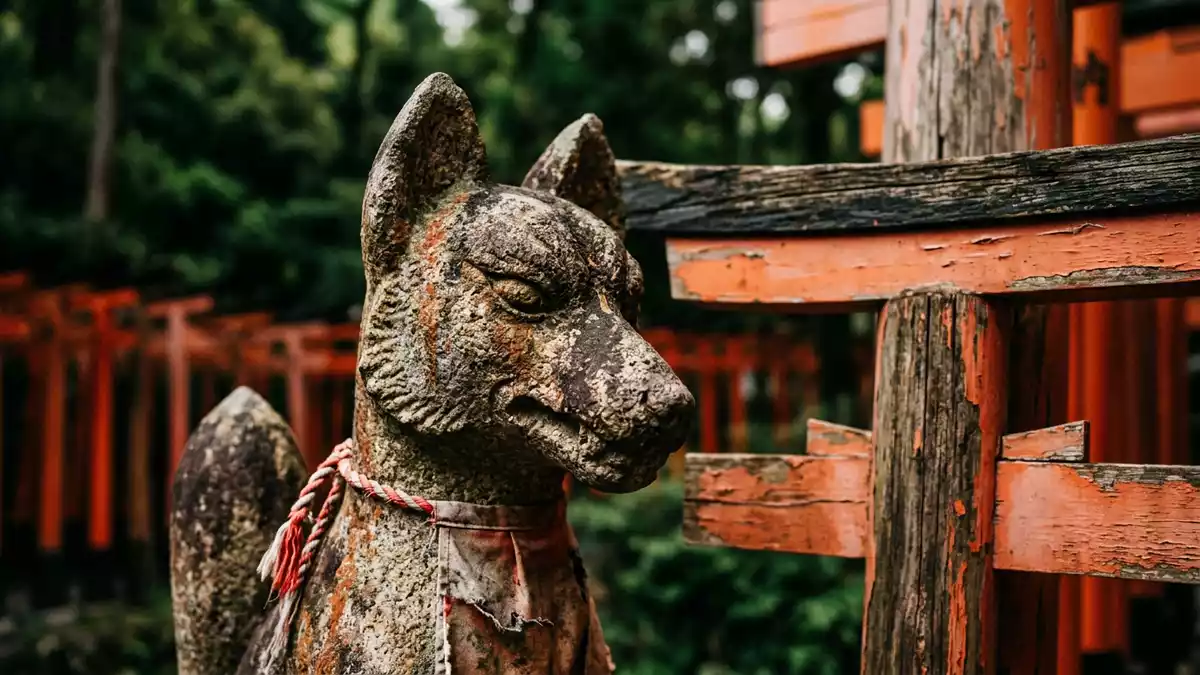
Fushimi Inari Taisha in Kyoto is a major Shinto shrine that stretches from formal inner courtyards into the wooded slopes of Mount Inari, with paths marked by dense lines of vermilion torii gates. Founded in the early eighth century and dedicated to the deity Inari Okami, it links monumental architecture at the foot of the hill with a long shrine landscape that climbs across Inariyama.
A head shrine with deep Nara-period roots
Fushimi Inari Taisha is the principal shrine of Inari worship in Japan, recognised as the head shrine for tens of thousands of Inari shrines scattered across the country.head shrine of the some 30,000 Inari shrines The shrine is traditionally dated to 711 CE in the Nara period, when Inari Okami was enshrined on the nearby hill of Inariyama by the Hata clan, an influential immigrant family in the Kyoto basin.formally founded in 711 CE by the Hata clan The location on the southern edge of Kyoto links the shrine both to the old capital and to the agricultural lands that surrounded it during the early imperial centuries.
In the tenth century Fushimi Inari Taisha appears in the Engishiki Jinmyocho, an official list of shrines throughout Japan, and in 942 it was elevated to the highest rank for Shinto shrines, reflecting its importance in court ritual and regional devotion.recorded in the Engishiki Jinmyocho and elevated to the highest rank Over the centuries the shrine received imperial patronage, with its status consolidated during the Heian period when selected shrines received imperial edicts to present important events and decrees to the kami.began receiving imperial patronage in the early Heian Period This long institutional history gives the complex a layered character: a religious centre with both national recognition and strong local connections.
Architecture at the foot of Mount Inari
At the base of Mount Inari, Fushimi Inari Taisha forms a sizeable shrine compound of painted timber buildings set around courtyards, with the main hall and gate facing a broad approach. The current main shrine complex dates to the late fifteenth century and is designated as an Important Cultural Property of Japan, preserving late medieval shrine architecture in a functioning religious setting.main shrine structure was built in 1499 and is designated as an Important Cultural Property The buildings show the familiar elements of major Shinto shrines: raised floors, deep eaves, and decorative metalwork, combined with the strong colour that runs throughout the site.
Immediately in front of the inner compound stands the large Romon gate, donated in 1589 by the warlord and regent Toyotomi Hideyoshi.Romon Gate donated in 1589 by Toyotomi Hideyoshi The gate acts as a formal threshold between the outer approach and the more concentrated shrine precinct within, and its origin under Hideyoshi links the site to the turbulent politics of the late sixteenth century. Around the main buildings, stone fox statues, associated with Inari as messenger figures, appear on plinths and beside paths, reinforcing the shrine’s specific iconography and making its connection to rice, prosperity and protection visible in sculptural form.
Torii tunnels and the shrine landscape on Inariyama
Beyond the main compound, Fushimi Inari Taisha extends into the forested slopes of Mount Inari, with paths lined by thousands of vermilion torii gates donated by individuals and companies. A particularly dense section near the foot of the mountain is known as Senbon Torii, literally “thousands of torii”, where the gates stand extremely close together to form continuous tunnel-like passages.Senbon Torii meaning “thousands of torii” Each gate carries inscriptions, typically the name of the donor and the date, so the route doubles as a visible record of support and thanksgiving.
The torii-lined path climbs the mountain in stages, passing subsidiary shrine structures, smaller clearings and viewpoints before looping back towards the main precinct. Descriptions from shrine and travel sources place the count of large and small torii on the mountain at roughly 10,000, a figure that gives a sense of how thoroughly the colour and form of the gates define the terrain.approximately 10,000 large and small torii stand in rows The gates are funded by donations that express gratitude or seek continued success, and the practice has accumulated over generations, so the landscape of painted timber structures marks both the hillside and the history of offerings.torii funded by businessmen, corporations or groups
Visiting Fushimi Inari Taisha: what travellers from Western Europe should know
- Fushimi Inari Taisha stands in Fushimi Ward in the south of Kyoto, at the base of Mount Inari; JR Inari Station on the Nara Line and Keihan Fushimi-inari Station both lie close to the main entrance.
- The shrine complex includes formal buildings on level ground and extended paths on the hillside; the route up Mount Inari involves sustained walking on stone steps and uneven mountain paths.
- The official language is Japanese and the currency is the yen.
- Entry requirements depend on your nationality; UK travellers can check the FCDO travel advice at gov.uk/foreign-travel-advice, Irish travellers the Department of Foreign Affairs at ireland.ie.
Searching for Fushimi Inari Taisha on social platforms
These links open searches for Fushimi Inari Taisha on each platform.
Frequently asked questions about Fushimi Inari Taisha
Where is Fushimi Inari Taisha located?
Fushimi Inari Taisha stands in Fushimi Ward in the southern part of Kyoto, at the base of Mount Inari, and is closely linked to JR Inari and Keihan Fushimi-inari stations.
What should visitors expect on a visit?
Visitors encounter a large shrine complex with painted timber buildings and fox statues on level ground, followed by extended walking routes up Mount Inari lined by numerous vermilion torii gates.
What makes Fushimi Inari Taisha distinctive among Kyoto’s shrines?
The combination of its early eighth-century foundation, status as head shrine of national Inari worship, and the extensive mountainside of donated vermilion torii gates gives Fushimi Inari Taisha a character that ties formal architecture to a long, colour-marked sacred landscape.


