
Fushimi Inari Taisha and the mountain of a thousand gates
Published on 09/14/2026 at 16:07 | Editorial responsibility: Rafael Müller, Editor-in-Chief AD HOC NEWS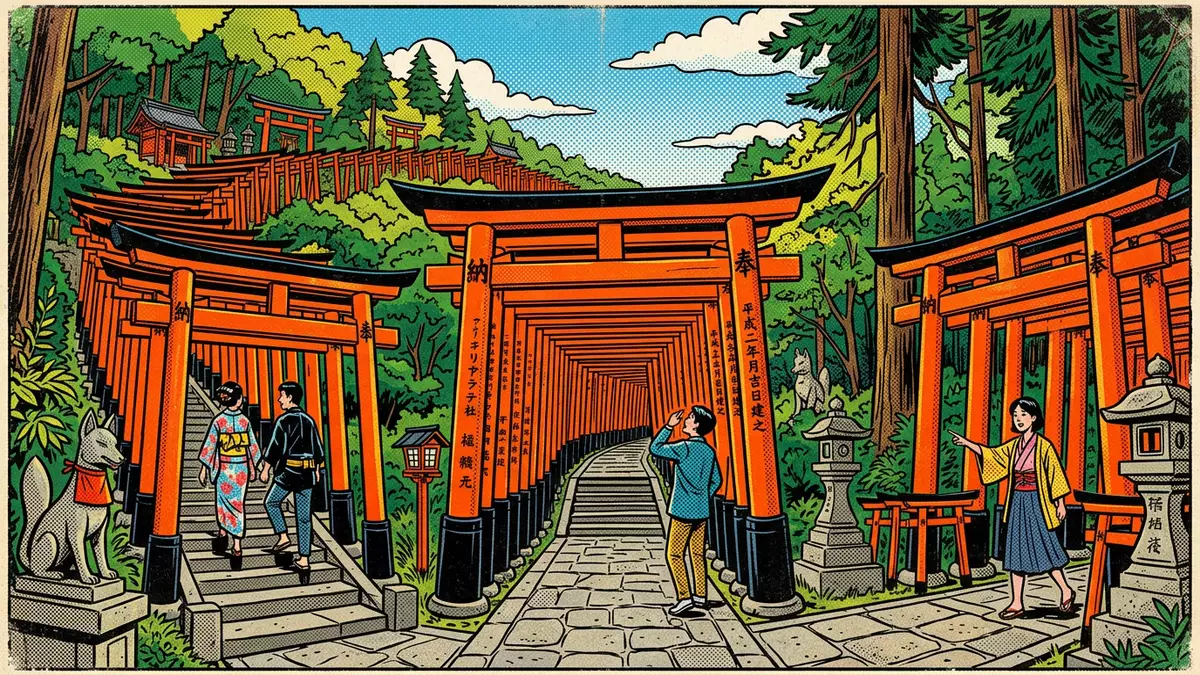
Fushimi Inari Taisha in Kyoto is a Shinto shrine complex that climbs the slopes of Mount Inari, combining historic worship halls at its base with long hillside paths lined by vermilion gates. Founded in the early eighth century and associated with the deity Inari Okami, it links formal shrine architecture to a winding pilgrimage route over the mountain.
Head shrine of Inari worship on Mount Inari
Fushimi Inari Taisha stands in the Fushimi ward, at the southern edge of Kyoto, on the western foot of Mount Inari, a low hill that rises directly behind the main shrine precinct.Shinto shrine in Kyoto It is recognised as the head shrine for Inari worship across Japan, with thousands of affiliated shrines in other regions using its deity and iconography as a model.head shrine of Inari worship
The shrine’s origins lie in the Nara period, with official records giving 711 as the year when Inari Okami was first enshrined on Mount Inari by the Hata clan, an influential family in the Kyoto basin.establishment in 711 Over the centuries it received imperial recognition, including inclusion in the Engishiki register in 927 and elevation to the highest rank among Shinto shrines in 942, and its main buildings were rebuilt at the end of the fifteenth century.high-ranking shrine and rebuilding in 1499
Vermilion halls and stone foxes at the foot of the hill
The base of Fushimi Inari Taisha forms a compact precinct of shrine buildings, centred on a main hall and fronted by a broad approach. At the entrance stands a Romon gate donated in 1589 by the warlord Toyotomi Hideyoshi, a large two-storey structure that marks the transition from town streets into the sacred grounds.Romon Gate donated in 1589 Behind it, the main shrine building, dating from 1499, is designated as an Important Cultural Property, with painted timber, gabled roofs and decorative metalwork tying it to late medieval shrine architecture.main structure built in 1499
Within the precinct, visitors encounter numerous smaller sanctuaries, votive tablets and stone fox statues. The fox, or kitsune, is closely associated with Inari worship and appears here with keys, scrolls or sheaves of rice, set on pedestals beside halls or lining minor paths as guardians. Courtyards and side shrines cluster around the main building, creating short circuits through lanterns, subsidiary altars and offering spaces before the paths begin to rise into the forest.
The hillside pilgrimage through thousands of torii gates
Fushimi Inari Taisha is best known for its long paths of vermilion torii gates, which carry worshippers from the rear of the main precinct up and around Mount Inari. Behind the main hall a section called Senbon Torii, literally “a thousand gates”, forms two parallel rows of closely spaced wooden torii that create a covered passage for those walking in either direction.Senbon Torii with parallel rows of gates Each gate is painted in bright vermilion with black bases and carries inscriptions on its uprights, naming the individual, company or group that donated it to the shrine.
The gate-lined paths continue beyond this first section, climbing the slopes of Mount Inari in loops and spur trails. Along the way, clusters of smaller shrines with stone altars, additional fox statues and modest wooden buildings break the route into stages. The network of paths forms a circuit over the hill, returning eventually to the shrine precinct, and gives Fushimi Inari Taisha a distinctive combination of formal architecture at the foot of the mountain and informal, repetitive gate structures up the hillside.mountainside circuit from the base
Visiting Fushimi Inari Taisha: what travellers from Western Europe should know
- Fushimi Inari Taisha lies in the Fushimi area of southern Kyoto, with the main approach facing a street served by local rail lines and Inari Station on the JR Nara Line.
- The shrine precinct is level, but the route over Mount Inari follows stepped paths and slopes, with long sections of staircases under the torii gates.
- The hill is heavily wooded, and parts of the circuit pass through forested terrain with uneven surfaces, stone paving and occasional narrow passages between clusters of small shrines.
- The official language is Japanese and the currency is the yen.
Searching for Fushimi Inari Taisha on social platforms
These links open searches for Fushimi Inari Taisha on each platform.Frequently asked questions about Fushimi Inari Taisha
Where is Fushimi Inari Taisha?
Fushimi Inari Taisha is in the Fushimi ward of Kyoto in Japan, at the western foot of Mount Inari, with the shrine precinct backing directly onto the hillside.
What should visitors expect on a visit?
A visit combines formal shrine buildings at the base of the hill with longer walks through forested paths lined by vermilion torii gates and clusters of smaller shrines.
What makes Fushimi Inari Taisha distinctive?
The combination of its role as the head shrine of Inari worship, its early eighth-century foundation and its extended mountainside route through dense rows of donated torii gates makes it distinctive among Kyoto shrines.


