

Fuji-san and the layered landscape of Fujinomiya
Published on 08/23/2026 at 12:52 | Editorial responsibility: Rafael Müller, Editor-in-Chief AD HOC NEWS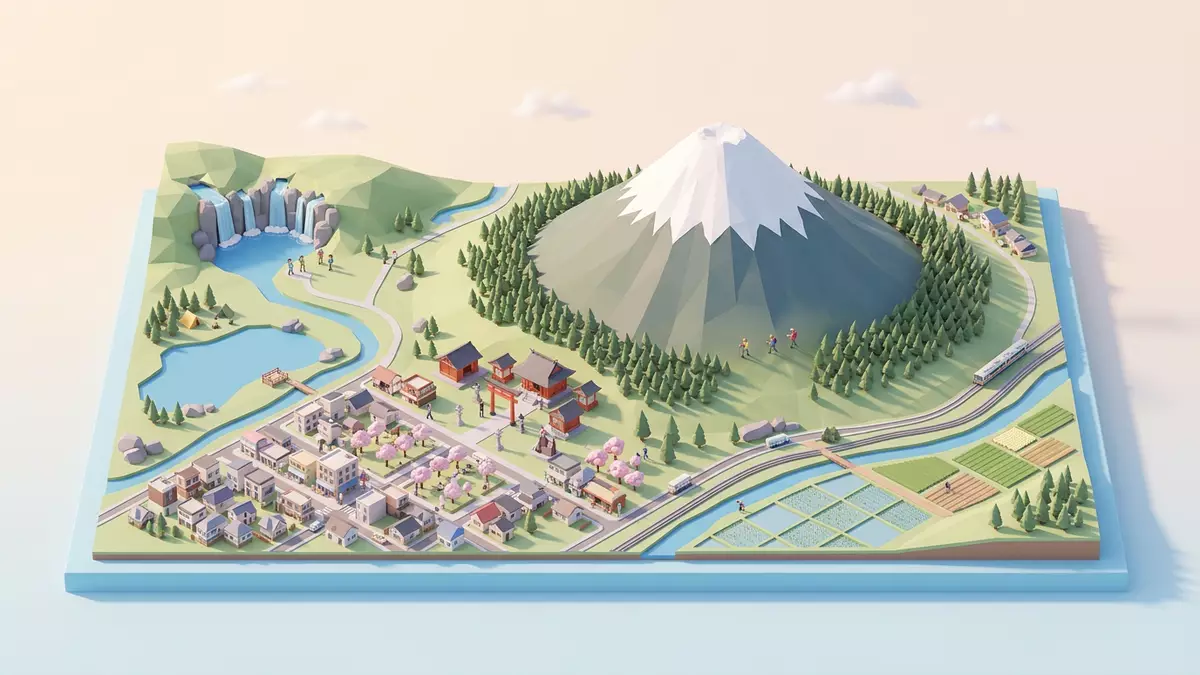
Fuji-san rises as Japan’s highest mountain, a solitary stratovolcano with a summit at 3,776 m (12,388 ft). In Fujinomiya, its western side is tied to shrine approaches, climbing routes and the UNESCO-listed cultural landscape.
Fuji-san above Fujinomiya and Shizuoka
The mountain sits across Shizuoka and Yamanashi prefectures, with Fujinomiya on the Shizuoka side. Its profile is the familiar cone, but the mountain is more than a silhouette: it is also a named cultural landscape, inscribed in 2013 under the title Fujisan, sacred place and source of artistic inspiration.
The UNESCO listing brings together the summit zone and a wider ring of shrines, trails and natural features. That framework places Fujinomiya within a mountain setting shaped by pilgrimage, worship and art, not just by height.
A mountain of worship and image
Fuji-san carries a strong place in Japanese religious and artistic history. The mountain is linked to pilgrimage, ascetic practice and later forms of mountain worship, while its form appears repeatedly in painting, printmaking and literary tradition.
The mountain’s cultural status was formally recognised in 2013, and the inscription covers twenty-five component parts. Among them are shrines, lodging houses, lakes, springs, lava tree moulds and the pine grove at Miho no Matsubara.
Routes, edges and the mountain surface
The Fujinomiya side is part of the climbing landscape, where the route system and summit area are part of the mountain’s identity. The Fujinomiya Trail begins at the highest fifth station, and the mountain’s upper slopes are volcanic ground rather than forested hillside.
The same landscape also includes the crater rim walk and the broad sweep of the peak’s upper cone. A detailed route map for the Fujinomiya approach is available at the Fujinomiya Trail, which identifies the trailhead and the rocky character of the ascent.
Visiting Fuji-san: what travellers from Western Europe should know
- Fuji-san can be approached from Fujinomiya in Shizuoka Prefecture, and the Fujinomiya Trail links the mountain to the city’s climbing access point.
- The upper mountain is volcanic terrain, and the ascent from the Fujinomiya side involves rocky ground and high altitude.
- The mountain belongs to a wider cultural landscape that includes shrines, springs, lakes and lava tree moulds.
- The official language is Japanese and the currency is the yen.
- Entry requirements depend on your nationality; UK travellers can check the FCDO travel advice at gov.uk/foreign-travel-advice, Irish travellers the Department of Foreign Affairs at ireland.ie.
Searching for Fuji-san on social platforms
These links open searches for Fuji-san on each platform.
Frequently asked questions about Fuji-san
Where is Fuji-san?
Fuji-san stands on Honshu in Japan, across Shizuoka and Yamanashi prefectures. Fujinomiya lies on the Shizuoka side.
What does a visit involve?
The mountain presents high volcanic ground, shrine-linked routes and climbing access from the Fujinomiya Trail. The setting extends beyond the summit to lakes, springs and worship sites.
What makes Fuji-san distinctive?
Its combination of a 3,776 m (12,388 ft) volcanic peak and a UNESCO cultural landscape defines it. The mountain is both a physical landmark and a place of pilgrimage and art.


