Frederiksborg Slot and its island castle world in Hillerød
Published on 08/28/2026 at 16:06 | Editorial responsibility: Rafael Müller, Editor-in-Chief AD HOC NEWS
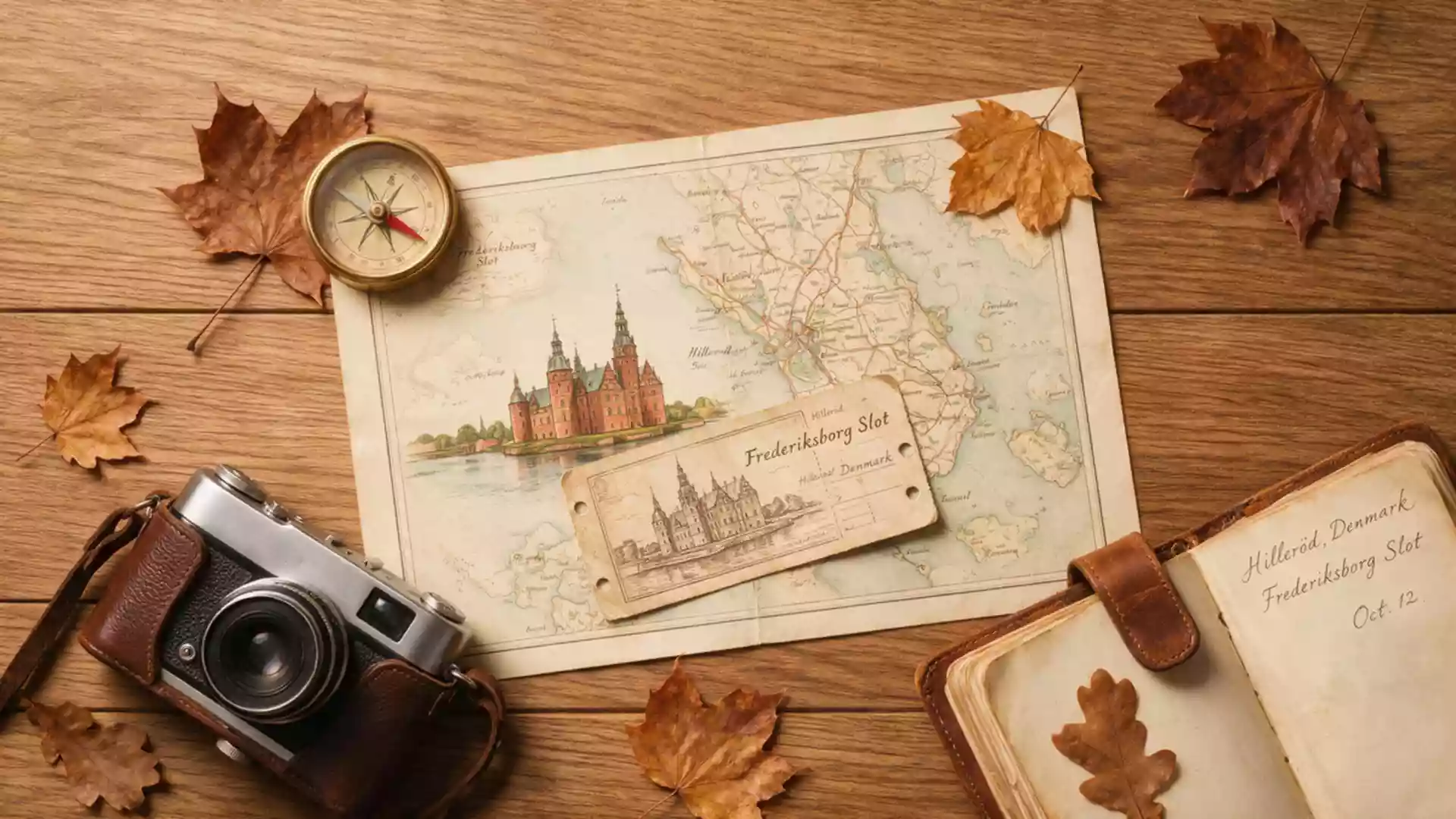
Frederiksborg Slot in Hilleröd is a sprawling Renaissance castle complex lifted out of the water on small islands in the Castle Lake, with palace, chapel and gardens forming an enclosed world of their own. Built in the early seventeenth century for King Christian IV and later transformed into Denmark’s Museum of National History, it combines fortified architecture, ceremonial spaces and a carefully composed landscape in one setting.
Renaissance power built on islands in a lake
Frederiksborg Slot is a palatial complex in the town of Hilleröd in eastern Denmark, set on three islets in Slotssøen, the Castle Lake. The present castle rises from foundations begun around the start of the seventeenth century, when Christian IV of Denmark and Norway ordered a new residence to replace his father Frederik II’s earlier castle on the same estate.Between 1600 and 1620 Christian IV demolished the older buildings and raised the Renaissance castle known today.The resulting complex is described as the largest Renaissance castle ensemble in the Nordic region.
The architecture follows the rich, gabled forms of Dutch and French Renaissance style, with red brick and sandstone detailing rising above the surrounding water. Bridges connect the island courtyards to the town, while towers, spires and copper roofs give the castle a vertical profile that can be seen from across Hilleröd.Contemporary descriptions of the building refer to its Dutch Renaissance character and date its main construction to approximately 1602–1620. The setting on the lake turns the fortifications, service ranges and main palace wings into a continuous architectural composition mirrored in the water.
From royal residence to museum of national history
Frederiksborg Slot began as a royal residence and ceremonial centre, associated with the Oldenburg kings of Denmark and Norway. Danish monarchs used the castle as a residence for about a century after Christian IV’s building campaign, with state occasions and royal ceremonies taking place in its halls.The history of the site notes that Frederiksborg Castle served as a royal residence during the seventeenth century and into the eighteenth century. Coronations of Danish kings took place in the castle chapel over a long period, underlining its political importance.Accounts of Hilleröd mention that Danish kings were crowned at Frederiksborg from 1660 to 1840.
The castle’s role changed after a major fire in 1859, which destroyed large parts of the interior while leaving the chapel and certain state rooms intact.Following the fire, brewer J. C. Jacobsen of Carlsberg offered to finance the reconstruction and establish a museum of national history in the castle. Restoration works led to the creation of Det Nationalhistoriske Museum, the Museum of National History, which opened in 1878 and has since presented several centuries of Danish history through portraits, history paintings, furniture and decorative arts inside the rebuilt rooms.Descriptions of the castle emphasise that since 1878 Frederiksborg has housed the Museum of National History.
Castle courtyards, chapel and baroque gardens
Within the island complex, visitors encounter courtyards framed by ornate façades, with richly carved portals and a central fountain forming a focal point in the main square. The castle chapel, which survived the nineteenth-century fire, retains its elaborate interior, combining Renaissance and later decorative elements around the royal pews and organ. The museum galleries extend through the palace wings, guiding visitors past painted ceilings, tapestries and portrait collections that trace the country’s political and cultural history.
Beyond the buildings, Frederiksborg Slot is anchored in a formal landscape. On the far side of the lake a baroque garden stretches away from the castle, aligned along a central axis with terraces, clipped hedges and water features.The baroque garden dates from the early eighteenth century, when a formal layout was created after the demolition of Christian IV’s separate pleasure palace Sparepenge in 1720. Paths run through woodland and around the water, giving views back towards the brick towers and copper roofs of the castle rising from the lake. The combination of architectural detail, ceremonial interiors and the baroque garden structure makes Frederiksborg Slot a place where Danish history is presented against a carefully composed scenic backdrop.
Visiting Frederiksborg Slot: what travellers from Western Europe should know
- Frederiksborg Slot stands in Hilleröd in North Zealand, north of Copenhagen, with the castle address recorded as Frederiksborg Slot 10 in the town.
- The castle complex occupies small islands in the Castle Lake, approached by bridges and surrounded by parkland and a formal baroque garden, so walking routes include both paved courtyards and garden paths.
- Hilleröd is linked to Copenhagen by rail, and public descriptions mention S-trains to Hillerød Station, from where local buses serve a stop named “Frederiksborg Slot”.
- The official language is Danish and the currency is the Danish krone.
- Entry requirements depend on your nationality; UK travellers can check the FCDO travel advice at gov.uk/foreign-travel-advice, Irish travellers the Department of Foreign Affairs at ireland.ie.
Searching for Frederiksborg Slot on social platforms
These links open searches for Frederiksborg Slot on each platform.Frequently asked questions about Frederiksborg Slot
Where is Frederiksborg Slot located?
Frederiksborg Slot stands on islands in the Castle Lake in Hilleröd, a town in North Zealand in eastern Denmark.
What can visitors expect inside Frederiksborg Slot?
Visitors encounter palace rooms and galleries housing the Museum of National History, alongside the preserved chapel and courtyards framed by Renaissance façades.
What makes Frederiksborg Slot distinctive among Danish castles?
The combination of a large Dutch Renaissance palace built by Christian IV, its island setting in the lake and the baroque garden gives Frederiksborg Slot a distinctive profile.