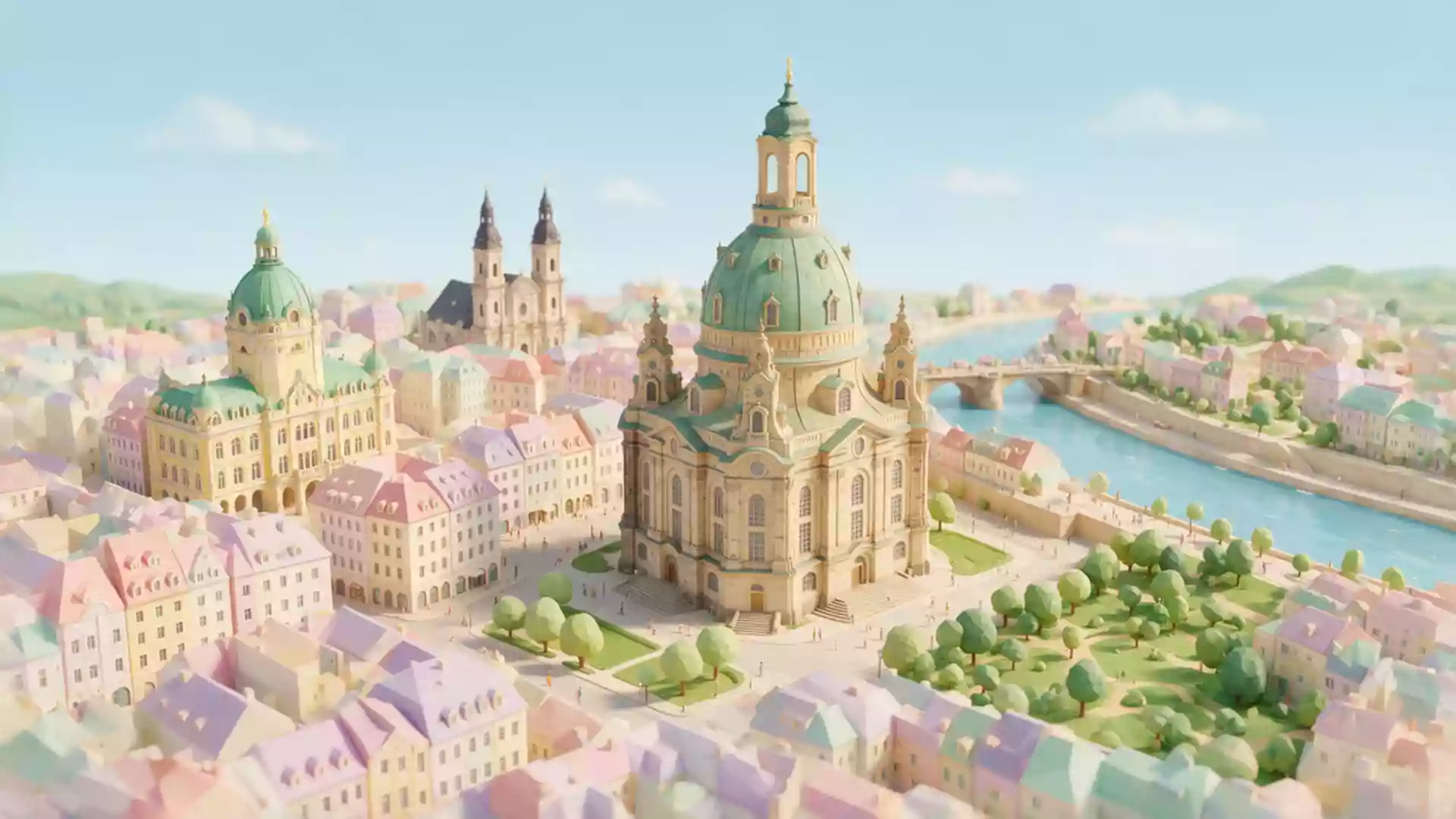
Frauenkirche and the great stone dome over Dresden
Published on 09/11/2026 at 06:31 | Editorial responsibility: Rafael Müller, Editor-in-Chief AD HOC NEWS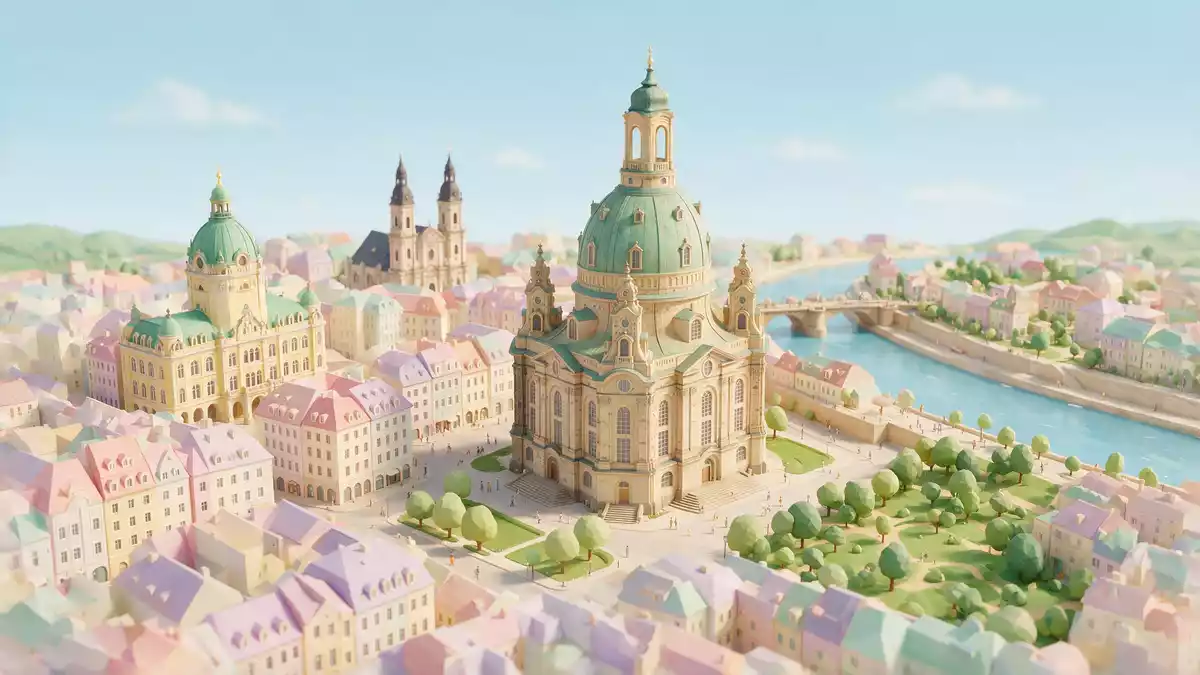
Frauenkirche in Dresden is a Lutheran church crowned by a vast sandstone dome that has shaped the city’s skyline for centuries and again since its reconstruction in the late twentieth century. Built as a central Baroque church in the eighteenth century and rebuilt after its wartime destruction, it stands on Neumarkt as a focal point of Dresden’s historic centre.
A Baroque central church shaped by George Bähr
The present Frauenkirche follows an eighteenth-century Baroque design by the Saxon architect George Bähr, whose plans were realised between 1726 and 1743 under the city council’s oversight.built between 1726 and 1743 The building takes the form of a central church with a strong emphasis on a unified interior space rather than a long nave, a layout that reflects Protestant worship in which preaching and congregational participation stand alongside the altar.
The core structure stands on an almost centralised ground plan with radiating galleries, focusing attention on the altar wall and the towering organ above it.a masterpiece of Baroque architecture Inside, tiers of seating and galleries curve around the central space, creating a theatre-like arrangement in which the pulpit, altar, baptismal font and organ are all visually connected with the congregation. Stone columns and pilasters are integrated into the oval interior, supporting galleries that rise one above another and framing tall sections of wall decorated with light-coloured surfaces and gilded details.
The “Stone Bell” dome and sandstone structure
From the outside, Frauenkirche is dominated by its sandstone dome, known as the “Stone Bell”, which rises above a robust base of Baroque façades and towers over Neumarkt.large dome known as the Stone Bell The dome sits on a drum with large window openings and is crowned by a stone lantern, creating a vertical sequence from the square below to the pinnacle of the church. Its profile is markedly curved, giving the dome a bell-like form that distinguishes it from many other European church domes.
The church walls and dome are faced in pale sandstone that weathers to warm tones, a material closely associated with Dresden’s historic buildings.sandstone-clad dome and façades Walkers crossing Neumarkt see a mass of Baroque architectural elements: pilasters, cornices, sculpted details and a series of tower-like projections rising towards the dome. In the rebuilt church, darker stones salvaged from the ruins are visible among newer pale blocks, creating a subtle patchwork that hints at the building’s layered history and the reconstruction that restored its form.
Destruction, reconstruction and memory in stone
Frauenkirche’s form carries a long history that reaches back to an earlier parish church and then to the Baroque structure completed in 1743, which dominated Dresden’s skyline for about two centuries.shaped the cityscape of Dresden for two hundred years During the Second World War, Allied bombing raids on Dresden in February 1945 caused the sandstone dome to collapse and the church to burn, leaving a pile of rubble in the centre of the city.dome collapsed in February 1945 For decades, these remains stayed in place, forming a stone memorial within the scarred urban landscape.
In the 1990s, an international reconstruction project began, using original plans and surviving stones to rebuild the church as closely as possible to its eighteenth-century appearance.reconstruction began in 1994 and was completed in 2005 A formal reconstruction process started in 1993 and continued until 2005, with cranes reassembling the dome and stone masons fitting salvaged blocks into their original positions where possible.reconstructed from 1993 to 2005 The result is a church that matches Bähr’s Baroque design while clearly showing, in places where older stones stand alongside new, that it is also a reconstructed monument to destruction and rebuilding.
Visiting Frauenkirche: what travellers from Western Europe should know
- Frauenkirche stands on Neumarkt in Dresden’s Altstadt, surrounded by historic streets; trams and local buses serve stops close to the square from the central railway station.
- The approach from the surrounding streets is level, but inside the church the galleries and viewing areas are reached by staircases that involve sustained climbing.
- Neumarkt is bordered by landmarks such as the Residenzschloss and Brühlsche Terrasse, making it straightforward to combine a visit to Frauenkirche with walks through the reconstructed old town.
- The official language is German and the currency is the euro.
Searching for Frauenkirche on social platforms
These links open searches for Frauenkirche on each platform.Frequently asked questions about Frauenkirche
Where is Frauenkirche in Dresden?
Frauenkirche stands on Neumarkt in Dresden’s Altstadt, surrounded by other historic buildings in the city centre.
What should visitors expect inside Frauenkirche?
Visitors encounter a large central worship space with curved galleries, a prominent altar wall and an organ, all framed by light-coloured Baroque decoration.
What makes Frauenkirche distinctive among European churches?
The combination of its vast sandstone dome, centralised Baroque plan and visible reconstruction from wartime ruins gives Frauenkirche a distinctive presence in Dresden’s skyline.