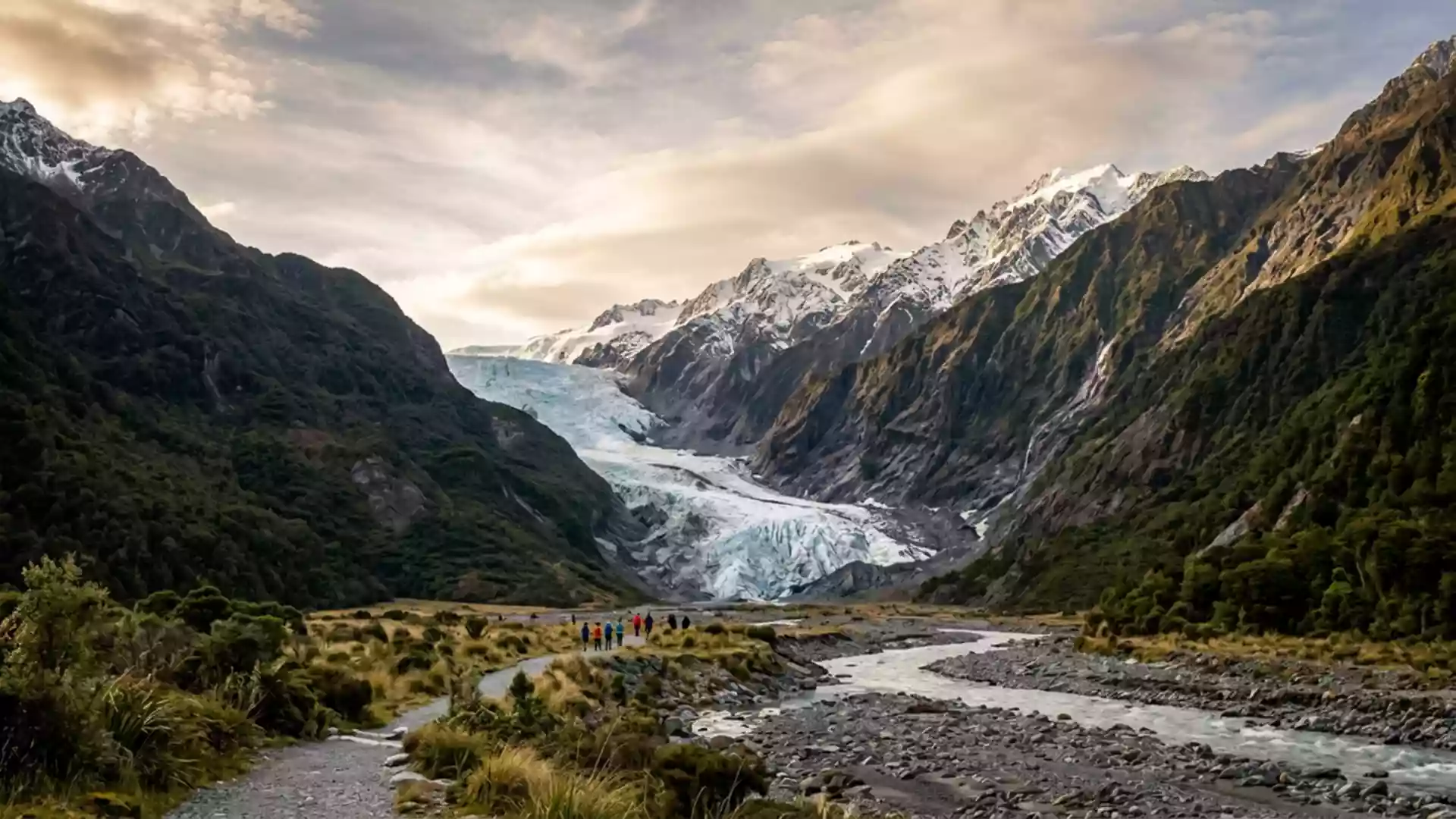
Franz Josef Glacier and the rainforest icefall of Franz Josef
Published on 08/27/2026 at 08:54 | Editorial responsibility: Rafael Müller, Editor-in-Chief AD HOC NEWS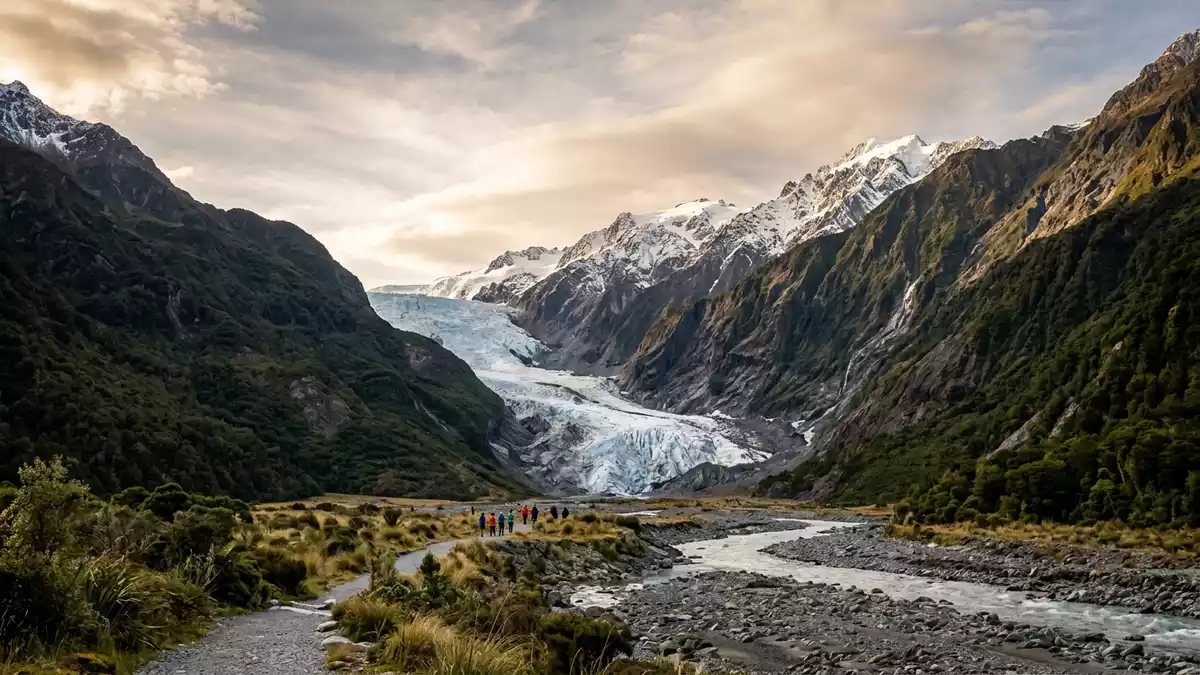
Franz Josef Glacier sweeps down from the Southern Alps into dense temperate rainforest above the West Coast settlement of Franz Josef on New Zealand’s South Island. The glacier’s combination of steep descent, low elevation and lush surroundings makes this corner of Westland Tai Poutini National Park feel like a rare meeting point between alpine ice and coastal forest.
An alpine glacier in a lowland forest
Franz Josef Glacier lies in Westland Tai Poutini National Park, on the western coast of New Zealand’s South Island, where a chain of high peaks funnels snow and ice towards the Tasman Sea.The glacier is described as about 12 kilometres long, running from an elevated snowfield down a confined valley until the ice reaches low altitude forest.It is classed as a temperate maritime glacier, meaning that it sits in a relatively mild, wet climate rather than a polar environment.
The glacier’s M?ori name, K? Roimata o Hine Hukatere, is widely used alongside its European name and translates as “the tears of Hine Hukatere”, a reminder that this valley carries both ice and story.The glacier sits within an area recognised as part of the wider Te W?hipounamu region, which is inscribed as a World Heritage site, tying Franz Josef Glacier to a landscape of mountains, fiords and coastal ecosystems protected for their natural values.
Steep ice, fast movement and a narrow valley
From its névé high in the Southern Alps, Franz Josef Glacier drops sharply towards the coast, giving it an unusually steep profile for a valley glacier.The ice descends from around 3,000 m (9,843 ft) to near 300 m (984 ft) above sea level over a distance of less than 15 km (9.3 mi), concentrating altitude loss into a relatively short run.
This steep gradient, combined with the confined shape of the valley, contributes to comparatively rapid ice flow.Measurements on the glacier have recorded movement of several metres per day in parts of the icefall, a speed that has helped give Franz Josef Glacier a reputation as one of the faster moving glaciers in New Zealand.
A meeting point of ice and temperate rainforest
One of the most striking aspects of Franz Josef Glacier is how close the valley brings blue-white ice to dense, evergreen forest.The glacier descends to a terminal face only a few hundred metres above sea level, so that the lower valley floor supports temperate rainforest vegetation even as the river carries meltwater from the ice front.Franz Josef Glacier is one of a small number of glaciers worldwide that flow down into a temperate rainforest zone, which is why the setting feels so distinctive when compared with high, barren icefields elsewhere.
The mix of glacier, river and forest creates a layered landscape: ice cascades in the upper valley, recent moraine and gravel sit along the river, and beyond them stand tall rainforest trees with understoreys of ferns and mosses. The small settlement of Franz Josef lies down-valley from the glacier, with views towards the ice from various points around the village on clear days.
Visiting Franz Josef Glacier: what travellers from Western Europe should know
- Franz Josef Glacier lies inland from the West Coast of New Zealand’s South Island, near the village of Franz Josef. The main road connection follows State Highway 6 along the coast before turning inland towards the glacier valley.
- The approach into the valley combines vehicle access and walking on formed paths. Sections of the valley include uneven ground, river stones and slopes, and the glacier itself is accessed on guided routes that involve alpine terrain.
- The wider area forms part of Westland Tai Poutini National Park, and the neighbouring Fox Glacier sits to the south along the same coastal strip. The official language is English and the currency is the New Zealand dollar.
- Entry requirements depend on your nationality; UK travellers can check the FCDO travel advice at gov.uk/foreign-travel-advice, Irish travellers the Department of Foreign Affairs at ireland.ie.
Searching for Franz Josef Glacier on social platforms
These links open searches for Franz Josef Glacier on each platform.
Frequently asked questions about Franz Josef Glacier
Where is Franz Josef Glacier?
Franz Josef Glacier is in Westland Tai Poutini National Park on the West Coast of New Zealand’s South Island, inland from the settlement of Franz Josef.
What can visitors expect when they see the glacier?
Visitors encounter a glacier flowing down a steep valley towards low-elevation rainforest, with viewpoints from the valley floor and guided access routes that lead closer to the ice.
What makes Franz Josef Glacier distinctive among glaciers?
The glacier’s steep descent, relatively fast ice movement and the way it reaches into a temperate rainforest zone make it stand out among temperate maritime glaciers.