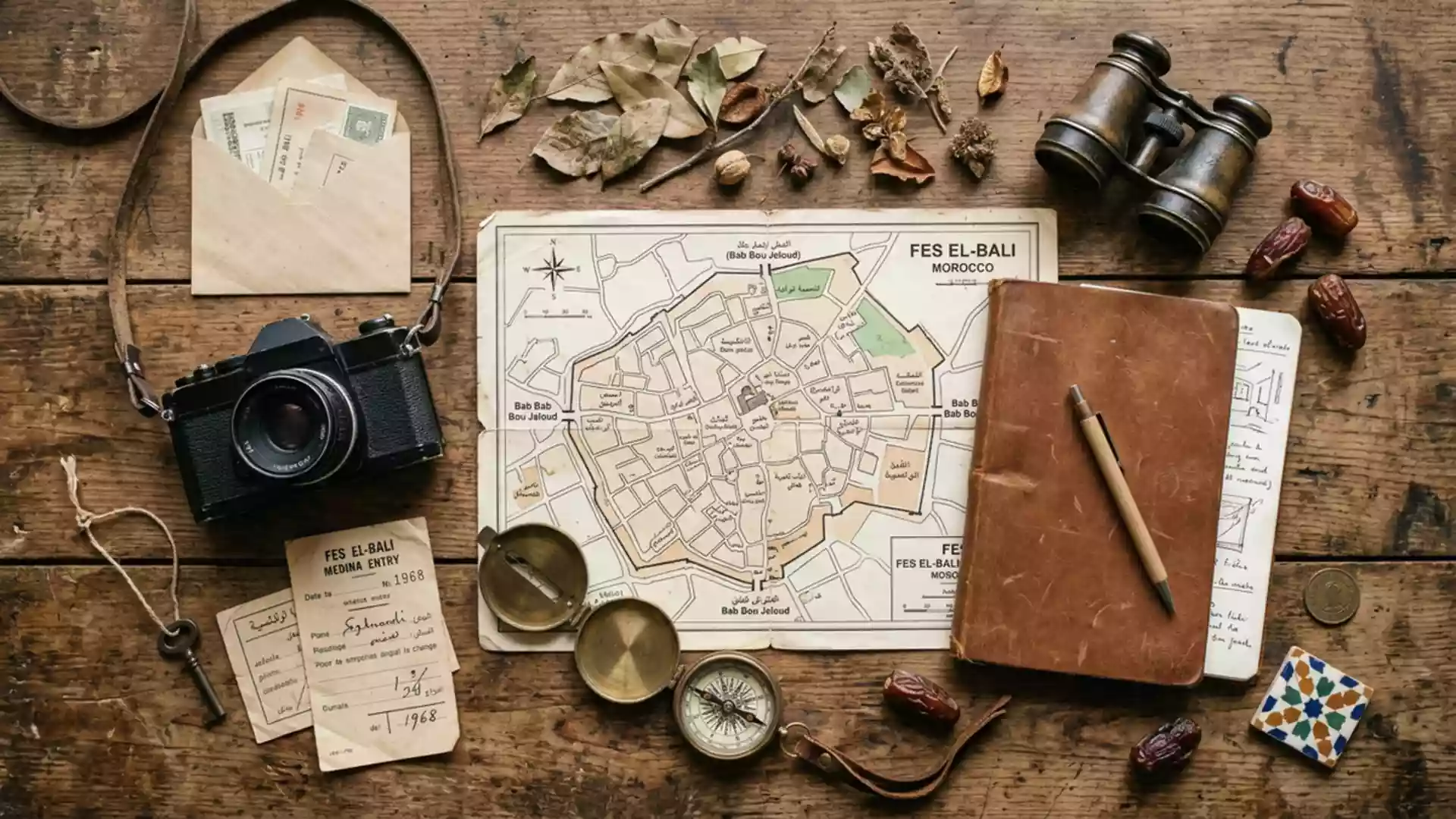
Fes el Bali, the walled medieval heart of Fes
Published on 09/17/2026 at 14:06 | Editorial responsibility: Rafael Müller, Editor-in-Chief AD HOC NEWS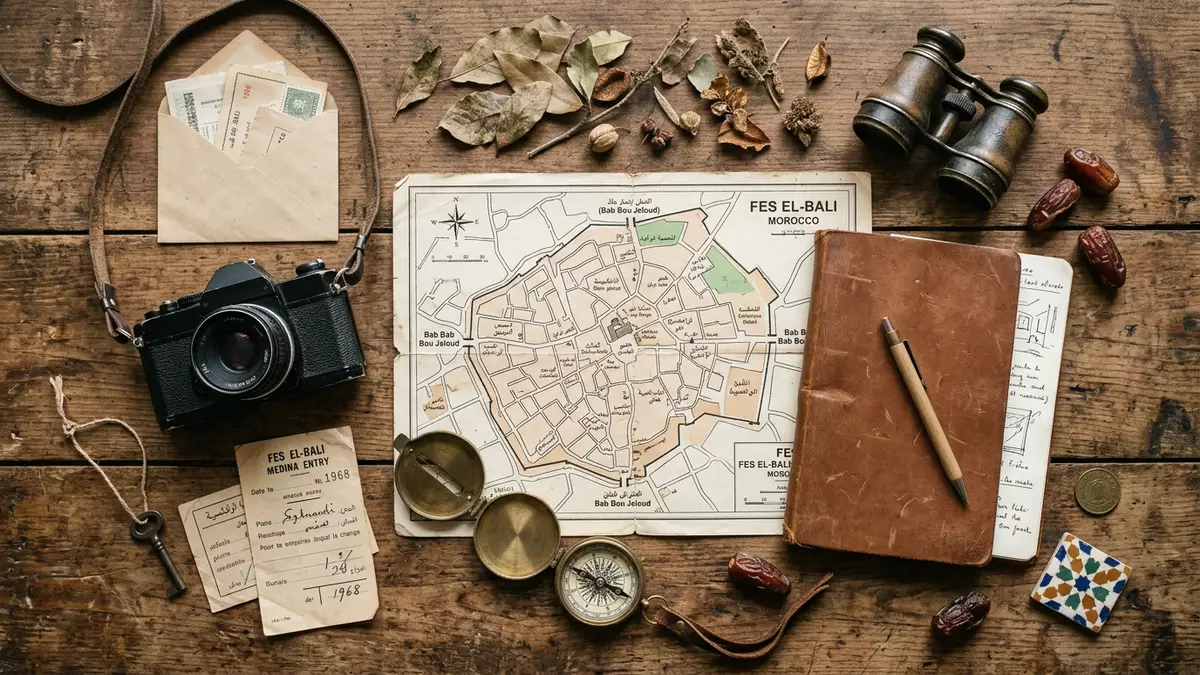
Fes el Bali is the historic walled core of Fes in northern Morocco, a dense medieval medina where lanes, markets and religious buildings still fill a compact hillside cityscape. Founded as a capital of the Idrisid dynasty in the late eighth and early ninth centuries, it preserves an intricate street pattern and architecture that reflect more than a millennium of urban life.
The oldest walled quarter of Fes
Fes el Bali is the oldest part of the city of Fes, enclosed by walls that define the historic medina and separate it from later districts. Together with the neighbouring quarter of Fes Jdid and the French-planned Ville Nouvelle, it forms one of the main urban areas of Fes, with the older fabric concentrated inside the ramparts.oldest part of Fez Within these walls, streets are narrow, often stepped and irregular, adapting to the slope above the Oued Fes river rather than following a rectilinear grid.
The district took shape as a political and religious centre during the Idrisid period, when Idris I and his successor Idris II established Fes as a capital between 789 and 808. Their foundation created a core of mosques, markets and houses on both banks of the river, which later dynasties fortified and expanded into the large walled city known as Fes el Bali.founded as capital of the Idrisid dynasty The result is a medieval urban fabric where successive rulers added monuments while the basic pattern of lanes and neighbourhoods remained.
A car-free labyrinth of lanes and souks
Inside Fes el Bali, movement follows narrow pedestrian lanes and covered passages, creating a large urban area where motor vehicles do not run within the historic core. This car-free character is tied to the width and layout of the streets, many of which are only wide enough for people, pack animals and handcarts to pass.zona urbana sin coches Lanes often end in cul-de-sacs, bend sharply or pass under buildings, giving the medina its reputation as a labyrinth.
Residential quarters, religious institutions and commercial areas lie side by side, with souks specialising in leather, metalwork, textiles and everyday goods. The tanneries, including the well-known dyeing pits, form one of the most recognisable industrial spaces in the medina, while streets such as Talaa Kebira and Talaa Seguira carry dense rows of shops and workshops.principales puntos de interés de Fez el-Bali Squares like Nejjarine and Seffarine mark small openings in the urban fabric, often framed by fountains, caravanserais or guild buildings.
UNESCO World Heritage medina with landmark institutions
Fes el Bali forms the core of the site inscribed by UNESCO in 1981 under the name “Medina of Fez”, recognising its pre-modern urban layout and concentration of historic monuments.World Heritage since 1981 The World Heritage area covers hundreds of hectares of walled city and includes a buffer zone outside the ramparts to protect longer views of the skyline.UNESCO World Heritage Site
Within Fes el Bali stand major religious and educational institutions dating back to the ninth century, among them the Qarawiyyin Mosque and university and the Andalusian Mosque. Later periods added madrasas such as Bou Inania and Attarine, along with mausoleums, caravanserais and neighbourhood mosques that together form a dense ensemble of architecture in stone, brick, plaster and wood.emblematic buildings of Morocco Many houses rise several storeys around internal courtyards, with façades facing the street kept relatively plain while decoration concentrates on doorways and interior spaces.
Visiting Fes el Bali: what travellers from Western Europe should know
- Fes el Bali lies on a hillside above the Oued Fes in northern Morocco, enclosed by historic walls and reached from the wider city by gates and streets leading into the medina.
- Within the walls, movement is on foot through narrow, sometimes stepped lanes and covered passages; approaches to monuments and markets can involve long walks along uneven surfaces.
- Fes is in Morocco, where the official language is Arabic and the currency is the Moroccan dirham.
- Entry requirements depend on your nationality; UK travellers can check the FCDO travel advice at gov.uk/foreign-travel-advice, Irish travellers the Department of Foreign Affairs at ireland.ie.
Searching for Fes el Bali on social platforms
These links open searches for Fes el Bali on each platform.
Frequently asked questions about Fes el Bali
Where is Fes el Bali located?
Fes el Bali is the historic walled medina of Fes in northern Morocco, lying on a slope above the Oued Fes river and distinct from newer districts of the city.
What can travellers expect when walking through Fes el Bali?
Travellers encounter narrow pedestrian lanes, stepped passages, markets, mosques and madrasas set within a compact hillside cityscape, with movement largely on foot through irregular streets.
What makes Fes el Bali distinctive among historic cities?
Fes el Bali combines a car-free medieval street pattern, major religious and educational institutions and continuous habitation, and has been recognised as part of the Medina of Fez UNESCO World Heritage Site since 1981.