
Fes el Bali and the living medieval maze of Fes
Published on 09/15/2026 at 08:25 | Editorial responsibility: Rafael Müller, Editor-in-Chief AD HOC NEWS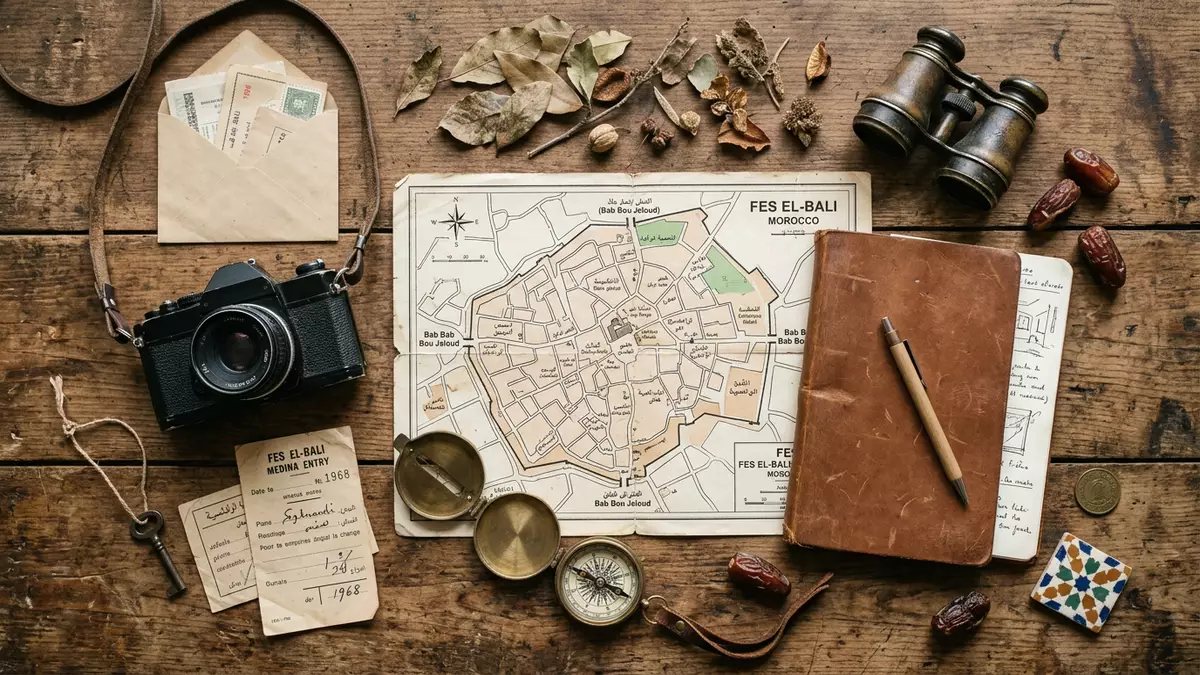
Fes el Bali is the oldest walled quarter of Fes in northern Morocco, a compact medieval city where narrow streets, religious institutions and markets still share the same dense urban fabric that formed under early Islamic dynasties in the late eighth and early ninth centuries.oldest walled quarter Founded as a capital by Idrisid rulers between 789 and 808, it later gained World Heritage status under the name Medina of Fez, recognising a historic core that has remained continuously inhabited and architecturally rich for more than a millennium.founded between 789 and 808
A compact medieval city shaped by dynasties and learning
The history of Fes el Bali begins with Idris ibn Abdallah and his successors, whose Idrisid dynasty made Fes a political and religious centre in the western Islamic world during the very late eighth and early ninth centuries.Idrisid dynasty capital Early settlements grew on both banks of the Fez River, with communities arriving from North Africa and Al-Andalus, before later dynasties consolidated them into a single fortified urban entity identified as Fes el Bali.
Through the eleventh to thirteenth centuries, ruling powers such as the Almoravids and Almohads enclosed Fes el Bali within continuous walls, a process further refined when Marinid rulers centred their authority in Fes again in 1276, giving the quarter much of its present extent.city within a single rempart Within these boundaries, religious life focused on major mosques and teaching institutions, including the historic University of al-Qarawiyyin, which helped establish Fes as an enduring centre of Islamic scholarship and law in North Africa.University of al-Qarawiyyin
Urban fabric, gates and pedestrian streets
The defining experience of Fes el Bali lies in its tight street network, a layered fabric of alleys, lanes and covered passages that largely excludes cars and preserves a scale set in the early medieval period.old medina of Fez The quarter is encircled by substantial walls cut by historic gates, some marking approaches from the surrounding hills, others opening towards the newer neighbourhoods of Fes Jdid and the later Ville Nouvelle.three main districts of Fez
Inside the walls, main thoroughfares run along the valley and up the slopes, lined with souks, caravanserais and workshops that cluster by craft, while side passages lead to quieter residential quarters, neighbourhood mosques and small madrasas.religious schools and caravanserais The absence of vehicles gives the streets a human scale, with goods moved by handcarts and pack animals, and the rhythm of daily life set by foot traffic, calls to prayer and market activity.
UNESCO recognition and enduring role in Morocco
In 1981 Fes el Bali, together with neighbouring Fes Jdid, was inscribed on the UNESCO World Heritage List under the title Medina of Fez, the first site in Morocco to receive this status.first Moroccan World Heritage Site The inscription highlights the quarter’s pre-modern street pattern, its ensemble of religious, educational and residential buildings, and the continuity of traditional urban life within its walls.Medina of Fez World Heritage
Fes el Bali forms one of the three main districts of Fes alongside Fes Jdid and the Ville Nouvelle, and it retains a central role in Moroccan cultural identity, with long-standing links to trade routes between Mediterranean ports, Atlantic cities and Saharan caravan networks.links to wider trade routes Its dense concentration of mosques, madrasas and markets reflects centuries of investment by successive dynasties and continues to frame the experience of Fes as an imperial city.
Visiting Fes el Bali: what travellers from Western Europe should know
- Fes el Bali lies in the northern interior of Morocco within the city of Fes, reached by road from other Moroccan centres and connected to regional rail services that stop in Fes.
- The historic core consists of narrow, stepped streets, uneven paving and occasional steep gradients, so movement inside the walls involves walking over varied surfaces and using stairways in places.
- The surrounding landscape includes hills and the valley of the Fez River, and viewpoints on the slopes near the walls give elevated perspectives over roofs, minarets and market streets within the medina.
- The official language is Arabic and the currency is the Moroccan dirham.
- Entry requirements depend on your nationality; UK travellers can check the FCDO travel advice at gov.uk/foreign-travel-advice, Irish travellers the Department of Foreign Affairs at ireland.ie.
Searching for Fes el Bali on social platforms
These links open searches for Fes el Bali on each platform.
Frequently asked questions about Fes el Bali
Where is Fes el Bali and what kind of place is it?
Fes el Bali is the oldest walled district of Fes in northern Morocco, forming the historic medina with a dense network of pedestrian streets and enclosed quarters.
What should visitors expect when entering Fes el Bali?
Visitors encounter narrow alleys, stepped passages and market streets within substantial walls, with mosques, madrasas and residential quarters closely interwoven in a compact urban landscape.
What makes Fes el Bali distinctive among historic cities?
Fes el Bali stands out for its continuous habitation since Idrisid times, its largely preserved medieval street layout, and its recognition as the Medina of Fez UNESCO World Heritage Site.


