
Fes el Bali and the layered old city of Fes
Published on 09/08/2026 at 21:09 | Editorial responsibility: Rafael Müller, Editor-in-Chief AD HOC NEWS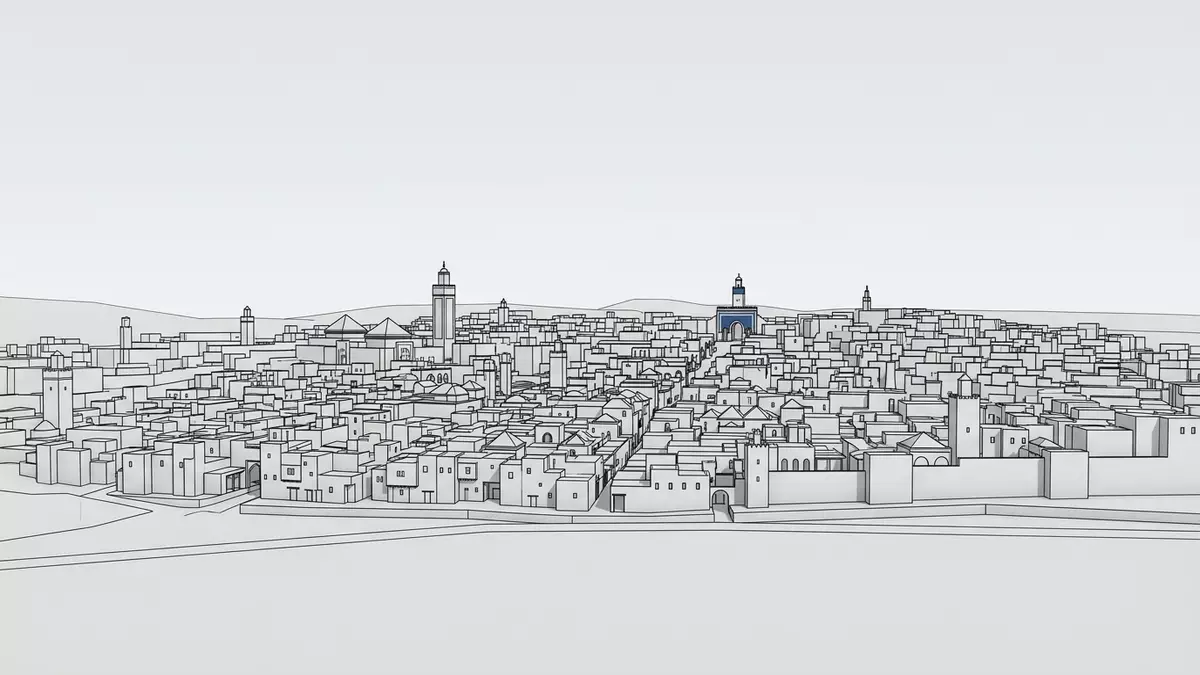
Fes el Bali is the oldest walled part of Fes, and it still reads as a compact historic quarter rather than a museum piece. Founded under the Idrisid dynasty between 789 and 808 AD, it anchors the Medina of Fez, a UNESCO World Heritage Site since 1981.[https://en.wikipedia.org/wiki/Fes_el_Bali][https://whc.unesco.org/en/list/170/]
The old city shaped by Idrisid foundations
The district began as a capital of the Idrisid dynasty, then grew through the Almoravid and Marinid periods into the dense medina that survives today. Its identity rests on that long sequence of rule, worship and trade, all visible in the city fabric.[https://en.wikipedia.org/wiki/Fes_el_Bali][https://www.britannica.com/place/Fes]
UNESCO describes the Medina of Fez as founded in the ninth century and enlarged under the Marinids in the thirteenth and fourteenth centuries. The designation covers the urban fabric and walls, which remain the clearest markers of the old quarter.[https://whc.unesco.org/en/list/170/]
Walls, gates and the pedestrian maze
Fes el Bali keeps a tightly woven street pattern of alleys, souks and neighbourhood lanes. Bab Bou Jeloud is the best-known western gate, while other gates and long stretches of wall still frame the quarter.[https://en.wikipedia.org/wiki/Fes_el_Bali][https://www.britannica.com/place/Fes]
The city’s medieval logic is easy to read in the way major streets lead towards the great religious centres. Al-Qarawiyyin sits at the heart of that system, alongside mosques, madrasas, fondouks and residences that form the built core of the medina.[https://en.wikipedia.org/wiki/Fes_el_Bali][https://www.britannica.com/place/Fes]
Faith, scholarship and craft in one quarter
Al-Qarawiyyin Mosque and University gives the district one of its strongest historical anchors. Britannica identifies the mosque as ninth-century and the university as founded in 859, making the ensemble one of the most important academic and religious complexes in Morocco.[https://www.britannica.com/place/Fes]
Handicraft remains part of the district’s visual character, with tannery basins, workrooms, market fronts and merchant inns spread through the lanes. That mix of learning, devotion and commerce gives the quarter its layered appearance, with sacred buildings, workshops and homes packed into the same urban frame.[https://en.wikipedia.org/wiki/Fes_el_Bali]
Visiting Fes el Bali: what travellers from Western Europe should know
- Fes el Bali lies in the historic core of Fes, within the Medina of Fez. Bab Bou Jeloud is a common western point of entry into the old quarter.
- The district is largely pedestrian, with narrow lanes, bends and a dense wall pattern. Comfortable walking shoes are useful because the ground changes from paving to uneven surfaces.
- The old city is closely linked to Fes Jdid and the newer Ville Nouvelle beyond the walls. Taxis and main roads serve the outer city, while the medina itself is read on foot.
- The official language is Arabic and the currency is the Moroccan dirham. Entry requirements depend on your nationality; UK travellers can check the FCDO travel advice at gov.uk/foreign-travel-advice, Irish travellers the Department of Foreign Affairs at ireland.ie.
Searching for Fes el Bali on social platforms
These links open searches for Fes el Bali on each platform.
Frequently asked questions about Fes el Bali
Where is Fes el Bali?
It is the oldest walled part of Fes in Morocco, and it forms part of the Medina of Fez. The quarter sits inside the historic city fabric rather than as a separate modern district.
What does a visit feel like?
The area is a tight pedestrian web of lanes, gates and market streets. Visitors pass mosques, madrasas, fondouks and workshops within a compact historic setting.
What makes Fes el Bali distinctive?
Its strongest features are the Idrisid foundation, the Marinid-era urban core and the UNESCO-listed medina walls. Al-Qarawiyyin and the dense street pattern give the quarter its most recognisable character.


