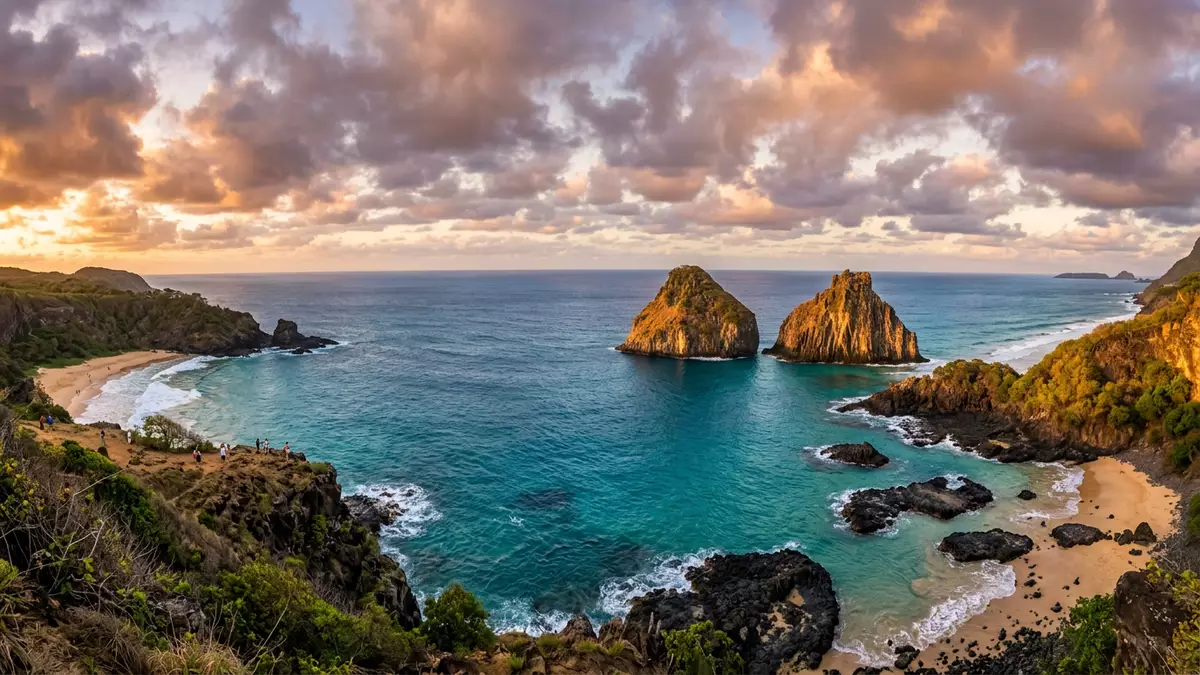
Fernando de Noronha’s cliffs, beaches and volcanic outline
Published on 08/08/2026 at 15:09 | Editorial responsibility: Rafael Müller, Editor-in-Chief AD HOC NEWS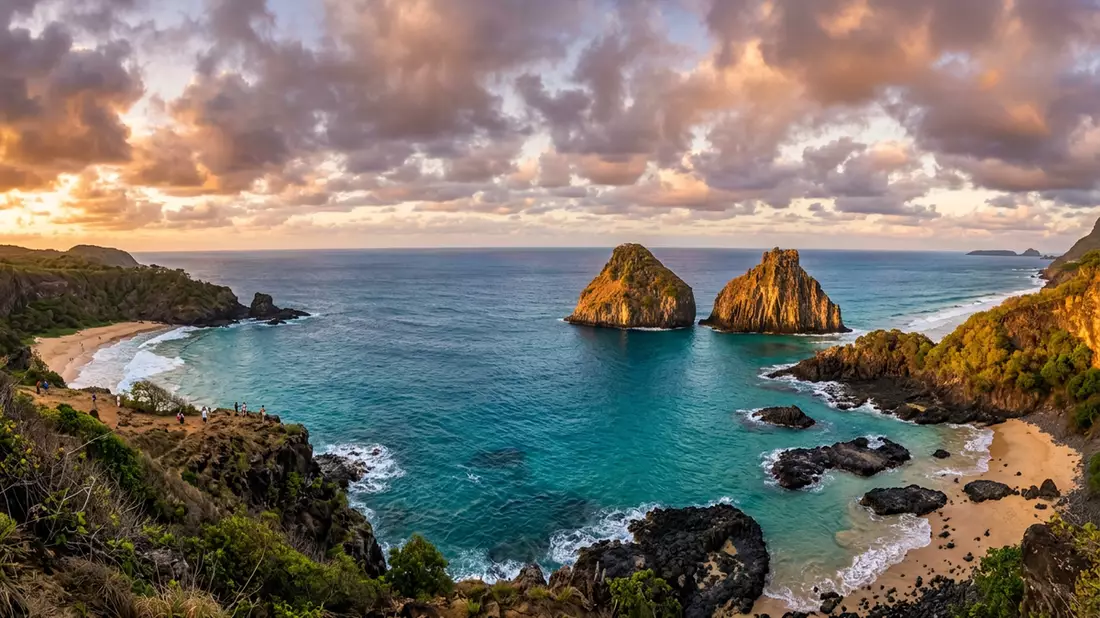
Fernando de Noronha is an Atlantic island group off the coast of Brazil, known for its volcanic profile, clear water and steep shoreline. The settlement of Vila dos Remédios sits among a landscape shaped by dark rock, coves and exposed headlands.
Volcanic rock and a broken coastline
The islands are the surface expression of volcanic activity in the South Atlantic. Basaltic cliffs, narrow beaches and rocky points give the main island a compact outline that reads as much geological as geographical.
That geology is visible from many parts of the island. Dark rock bands meet pale sand, and the coast alternates between sheltered coves and open edges facing the ocean.
Forts, chapels and the old centre
Vila dos Remédios contains some of the best-known historic buildings on the island, including Fortaleza de Nossa Senhora dos Remédios. The fortress dates from the Portuguese colonial period and remains one of the clearest built reminders of the island’s strategic role.
Other historic structures include the Igreja de Nossa Senhora dos Remédios and nearby civic remains from the same era. Their scale is modest, which suits an island where settlement and fortification developed around a small centre rather than a large town.
Beaches, viewpoints and marine life
The coast includes beaches such as Baía do Sancho and Praia do Leão, both framed by cliffs and access paths that break the shore into separate pockets. Offshore, the surrounding waters are associated with turtles, reef fish and dolphins.
The island’s viewing points make the terrain easy to read from above. Cliffs, bays and offshore rock forms sit close together, and the contrast between land and water is immediate.
Visiting Fernando de Noronha: what travellers from Western Europe should know
- The island is reached from Brazil by air, with flights to the island’s airport.
- Admission arrangements and opening hours are set by the site's operator and change with the season; the official website is the only binding source.
- The dry season offers clearer conditions for beaches and viewpoints, while the wetter months bring a greener landscape.
- Some paths are steep, uneven or sandy, and several shore access points involve steps or a downhill approach on foot.
- Portuguese is the main language, and cashless payment is common in many visitor businesses.
- Entry requirements depend on your nationality. UK travellers should check the FCDO travel advice at gov.uk/foreign-travel-advice; Irish travellers the Department of Foreign Affairs at ireland.ie; EU and EEA citizens their own national foreign ministry.
Searching for Fernando de Noronha on social platforms
These links open searches for Fernando de Noronha on each platform.
Frequently asked questions about Fernando de Noronha
Where is Fernando de Noronha?
It is an island group in the Atlantic Ocean off Brazil, with the main settlement and airport on the principal island.
What should visitors expect?
Expect cliffs, beaches, short roads and footpaths, and a landscape that shifts quickly between rock, sand and sea.
What makes it distinctive?
The island combines volcanic scenery, a colonial centre and marine life in a compact coastal setting.