Fernando de Noronha and its volcanic island arc
Published on 08/26/2026 at 10:09 | Editorial responsibility: Rafael Müller, Editor-in-Chief AD HOC NEWS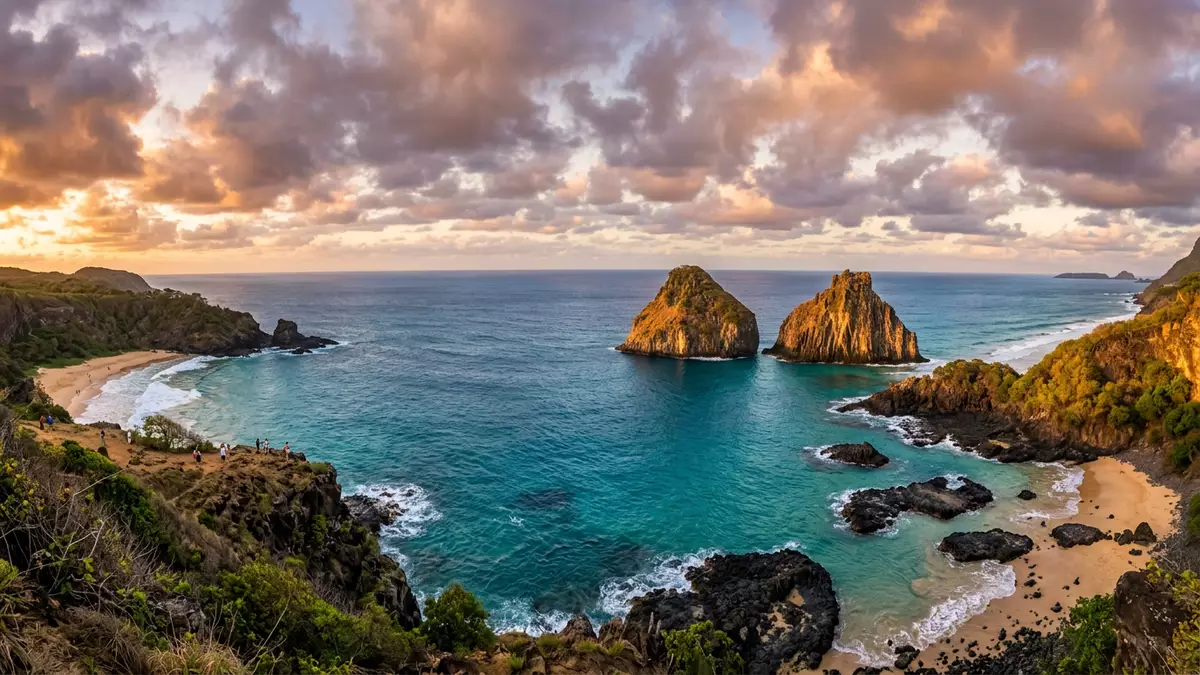
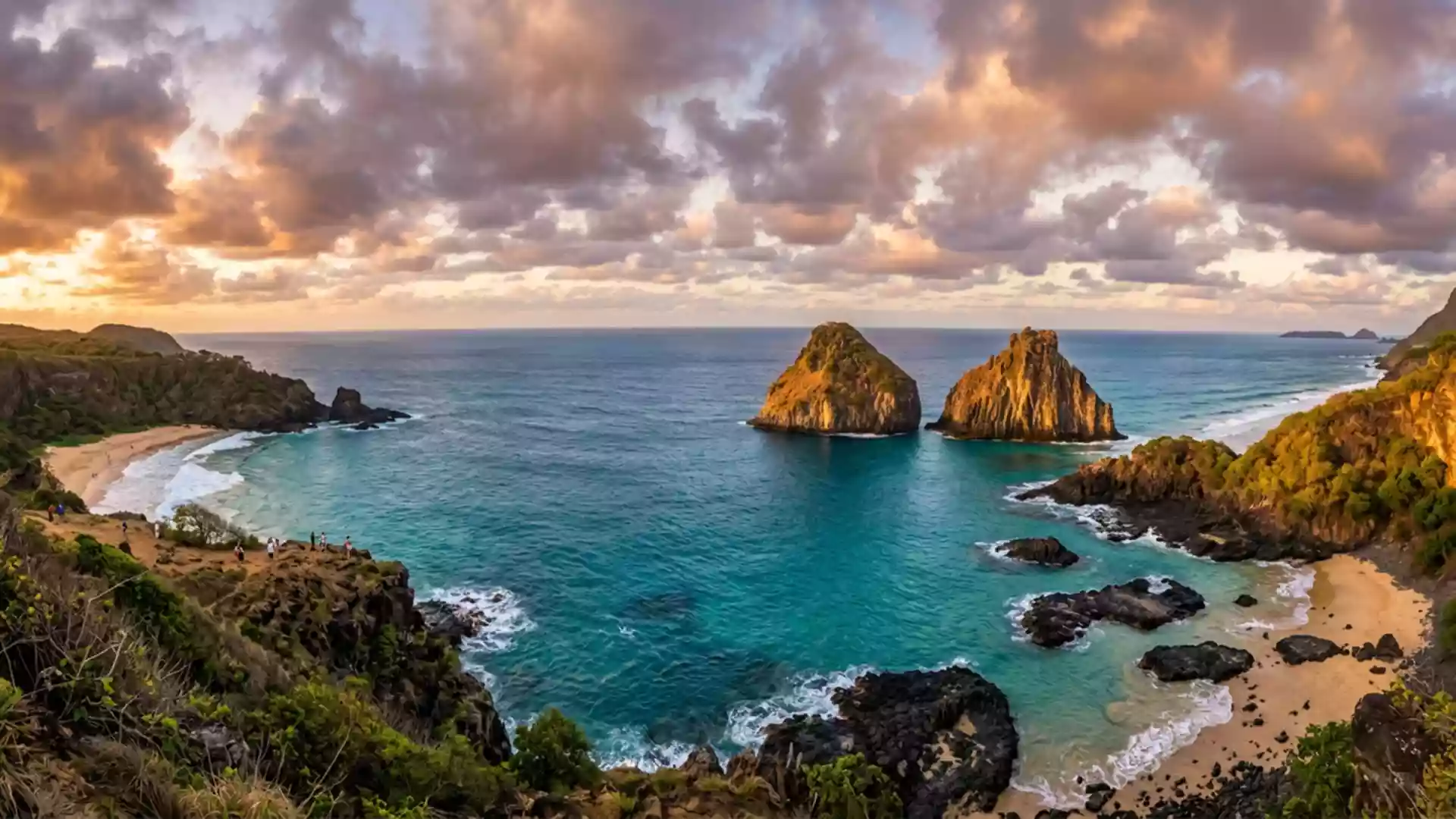
Fernando de Noronha is a volcanic archipelago in the South Atlantic, about 340 km off the Brazilian coast, and part of a UNESCO World Heritage site with Rocas Atoll. Its profile is shaped by steep slopes, dark rock and coves cut into an exposed island edge.
Volcanic rock and a low island skyline
The islands belong to the Brazilian Atlantic Islands World Heritage site, inscribed in 2001, and the UNESCO record describes volcanic peaks rising from a submerged mountain chain. That geological setting gives Fernando de Noronha its compact outline and its abrupt meeting of rock, sea and sky.World Heritage site
The archipelago is an outpost of Brazil in the Atlantic, with the main island ringed by smaller islets and a coastline marked by headlands and sheltered bays. The landscape is part mountain chain, part marine reserve, and the connection between the two defines the island's visual character.
Forts, settlement and imperial layers
Fernando de Noronha carries a layered human history as well as a geological one. The archipelago is linked to the Portuguese navigator Amerigo Vespucci, to Fernão de Loronha, and to the long period when the islands were folded into the Portuguese Atlantic world.Fernão de Loronha
Its built heritage includes forts and other defensive structures from the colonial era, set against the volcanic ground they occupy. That combination of military masonry and black rock gives the island a different historical register from its beaches and reefs.colonial forts
Reefs, bays and a protected marine landscape
The World Heritage designation reflects more than scenery: the area is recognised for marine life, reefs and nesting grounds. The island's appeal lies in the visible contrast between exposed cliffs, pale sand and water that changes colour across short distances.nesting grounds
Marine National Park status has helped keep large stretches of the archipelago under environmental protection, and the result is a place where the coast remains the central experience. The scenery is marine rather than urban, with footpaths, lookouts and beaches replacing any dense settlement pattern.
Visiting Fernando de Noronha: what travellers from Western Europe should know
- The archipelago lies in Brazil, far out in the Atlantic, and access is by air to the island's airport, followed by local transport on the island itself.
- The terrain includes steep ground, rocky viewpoints and stretches of shoreline reached on foot. Paths can involve steps, uneven surfaces and short climbs.
- The official language is Portuguese and the currency is the Brazilian real.
- Entry requirements depend on your nationality; UK travellers can check the FCDO travel advice at gov.uk/foreign-travel-advice, Irish travellers the Department of Foreign Affairs at ireland.ie.
Searching for Fernando de Noronha on social platforms
These links open searches for Fernando de Noronha on each platform.
Frequently asked questions about Fernando de Noronha
Where is Fernando de Noronha?
It is an archipelago in Brazil, out in the South Atlantic, far from the mainland coast. The islands belong to Pernambuco.
What does a visit involve?
The place combines marine scenery, volcanic landforms and older forts. Walking terrain, viewpoints and beaches define much of the experience.
What makes it distinctive?
The combination of volcanic islands and UNESCO-listed marine habitat is the key feature. Its dark rock, bays and colonial remains create a strong visual contrast.