
Fenway Park, Boston’s classic ballpark of brick and steel
Published on 09/16/2026 at 15:51 | Editorial responsibility: Rafael Müller, Editor-in-Chief AD HOC NEWS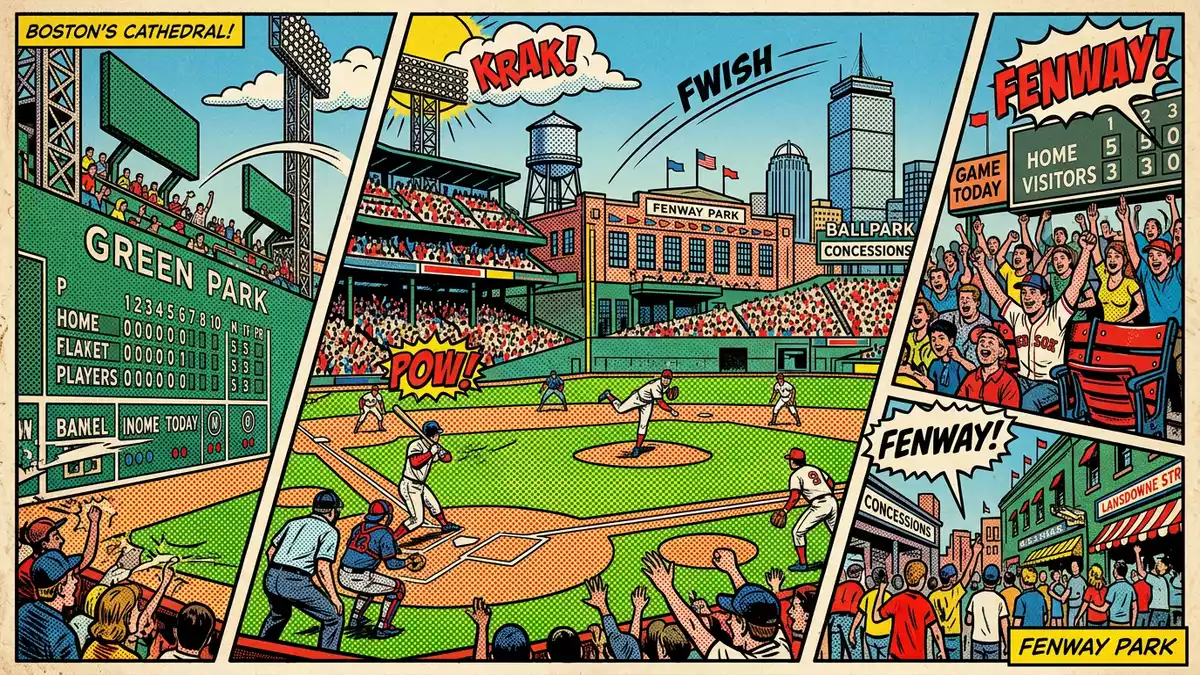
Fenway Park in Boston is a steel-and-concrete baseball stadium that opened in 1912 as the home field of the Boston Red Sox and has remained in use for Major League games ever since.opened in 1912 It stands in the Fenway–Kenmore neighbourhood and is known for its compact footprint and unusually shaped playing field, both defined by the surrounding city streets.Fenway–Kenmore neighbourhood
Brick, steel and an early twentieth-century ballpark
Fenway Park was planned and built in the early 1910s, at a time when American baseball venues were moving from timber structures to more durable materials.steel and concrete park Ground was broken in September 1911, and the park opened for professional play on 20 April 1912.20 April 1912 Architect James E. McLaughlin designed the complex, working with Osborn Engineering of Cleveland for structural engineering and the Charles Logue Building Company as builder.James E. McLaughlin
From the street, Fenway Park presents a red brick exterior wrapped around a steel frame, a characteristic appearance for early twentieth-century ballparks in the United States.red brick facade Inside, the original design combined a single-tier grandstand in steel and concrete behind home plate and along the foul lines with outfield bleachers, giving a seating bowl that hugged the diamond closely.single-tier grandstand Subsequent alterations in the 1930s replaced many of the wooden bleachers with concrete stands, but the essential compact character of the park has been retained.
A playing field shaped by the city around it
Fenway Park was set out on an irregular urban block, and the shape of the site gave the baseball field its distinctive proportions.asymmetrical block The foul lines and outfield walls do not form a simple geometric pattern; instead they follow bends and angles that match the surrounding streets, creating short distances in some directions and deeper reaches in others.field dimensions This layout makes the relationship between spectator seating and playing area unusually tight, with grandstands and terraces very close to the action.
The best-known feature of the field is the high wall in left field known as the Green Monster, originally built as a barrier to block non-paying views from outside the park and later given its distinctive colour.Green Monster wall The wall was raised and clad during reconstruction works in the 1930s, and its surface was painted green in the 1940s, giving the ballpark a visual anchor that has become inseparable from its identity.left-field wall height Elsewhere in the outfield, the contours include corners and recesses that affect how balls rebound and how fielders position themselves, contributing to the character of games played in Boston.
Fenway Park as a lived-in sports venue
Since its opening in 1912, Fenway Park has served continuously as the home ballpark of the Boston Red Sox, making it the longest-used stadium in Major League Baseball.oldest active ballpark The first professional game there took place on 20 April 1912, when the Red Sox defeated the New York Highlanders, a team later known as the New York Yankees.first professional game Over the following decades, the stadium was altered but not replaced, so contemporary visitors watch baseball in a structure whose core fabric dates to the early years of the twentieth century.
Inside, the seating is arranged in several distinct sections that reflect successive periods of construction, from the original grandstand to later upper tiers and enclosed seating areas.early seating layout The proximity of the stands to the diamond means that many seats have sharply angled sightlines, with views folding around the basepaths and outfield fences. The floodlights installed in the 1940s enabled night games, extending the use of the park beyond daytime fixtures while leaving the brick-and-steel shell and asymmetrical field in place.lights installed
Visiting Fenway Park: what travellers from Western Europe should know
- Fenway Park stands in the Fenway–Kenmore neighbourhood of Boston, Massachusetts, with its main entrances on streets that frame the stadium block.
- The seating tiers rise steeply above the field, and many approaches within the park use stairways and narrow interior corridors.
- The surrounding area includes major city streets and a mix of residential and institutional buildings, so the ballpark sits firmly within an urban setting.
Searching for Fenway Park on social platforms
These links open searches for Fenway Park on each platform.Frequently asked questions about Fenway Park
Where is Fenway Park located?
Fenway Park stands in the Fenway–Kenmore neighbourhood of Boston, Massachusetts, on a compact urban block bounded by several long-established streets.
What can visitors expect inside Fenway Park?
Visitors encounter steep seating tiers, close views of the diamond and outfield walls, and interior concourses that run through the brick-and-steel structure.
What makes Fenway Park distinctive among baseball stadiums?
Its asymmetrical field layout, high Green Monster wall in left field and early twentieth-century brick-and-concrete construction give Fenway Park a character unlike more regular modern ballparks.


