
Fenway Park, Boston’s classic ballpark of brick and steel
Published on 08/28/2026 at 10:36 | Editorial responsibility: Rafael Müller, Editor-in-Chief AD HOC NEWS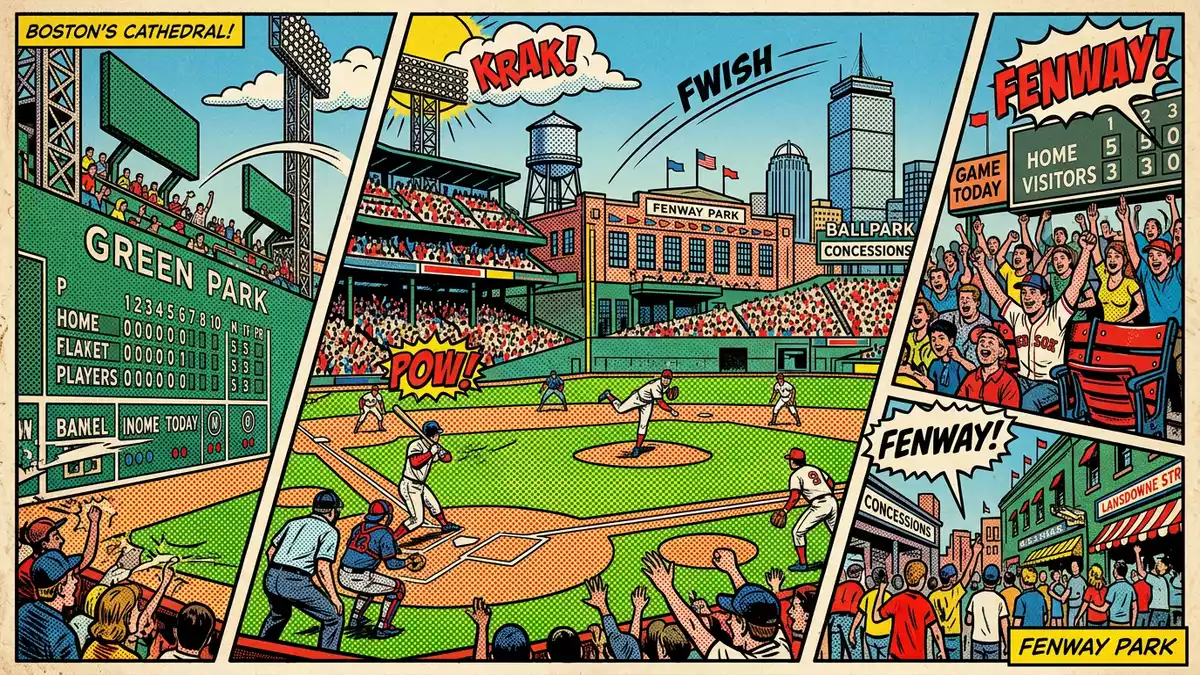
Fenway Park in Boston is a compact early twentieth-century baseball stadium where the game unfolds within a tight brick-and-steel bowl and along famously irregular outfield walls. Opened in 1912 as the home of the Boston Red Sox, it is the oldest active ballpark in Major League Baseball and one of the most enduring sports settings in the United States.
A century-old ballpark in the Fenway neighbourhood
Fenway Park stands in the Fenway–Kenmore neighbourhood of Boston, an area whose name comes from low-lying marshland that was progressively filled in during the late nineteenth century.the Fenway neighbourhood Construction began in 1911 under the Charles Logue Building Company, working to designs by architect James McLaughlin and engineers from Osborn Engineering of Cleveland.architect James McLaughlin The park opened for the 1912 Major League season and has remained the Red Sox home field ever since.home field of the Boston Red Sox
The opening year produced two notable first games: an exhibition against Harvard College on 9 April 1912 and, eleven days later, the first professional game, a Red Sox victory over the New York Highlanders, the team that would become the New York Yankees.first professional game Early seating was largely constructed from steel, concrete and timber, with grandstands and bleachers wrapped closely around the playing field.steel and concrete grandstands Over later decades, renovations enlarged and reconfigured those stands, yet the ballpark retained its compact footprint within the surrounding streets.
Brick facades and quirky outfield geometry
From the street, Fenway Park presents red brick facades and visible steel structure, a typical combination for the “Golden Age” of ballpark construction between 1909 and 1915, when clubs across the leagues replaced wooden stadiums with permanent materials.steel-and-concrete structures Inside, the seating bowl rises on multiple tiers of grandstand and later-added boxes, arranged tightly around the diamond so that spectators sit close to the action. The ballpark’s overall form is asymmetrical, with the outfield walls shaped by the edges of the property and successive phases of building.
Most distinctive is the tall left-field wall known as the Green Monster, a feature that has become inseparable from Fenway Park’s identity. The wall began as a wooden structure and gained its present height and character after 1930s rebuilding works, later being painted green.left field wall originally made of wood Along the foul lines and into centre and right field, the distances to the wall vary, with figures such as 310 ft (94.5 m) down the left-field line, about 420 ft (128 m) to deep centre and just over 300 ft (around 92 m) towards the short porch by the famous Pesky’s Pole in right field.outfield dimensions For visiting spectators, these dimensions and angles are as much part of the visual experience as they are of the game itself.
History layered into a working neighbourhood stadium
Over its lifetime Fenway Park has hosted thousands of Major League games and has staged the World Series on numerous occasions, embedding it deeply in Boston’s sporting history.World Series appearances The stadium has also served as a venue for American football teams, including the Boston Patriots in the 1960s, and for other professional sports such as soccer.home park for Boston Patriots In recognition of its age and historic role, the ballpark was added to the National Register of Historic Places in 2012, marking its centennial year.National Register of Historic Places
Inside the park, much of the character comes from details that have accumulated over decades: manually operated scoreboards, seating sections added in successive renovations and views framed between steel columns and roof beams. The surrounding streets form a dense urban setting, with the ballpark’s brick elevations running along Jersey Street, the address historically associated with Fenway Park.address on Jersey Street On game days, the immediate area functions as a lively stadium district, yet at other times the structure reads as a substantial but well-integrated neighbour to the residential and institutional buildings around it.
Visiting Fenway Park: what travellers from Western Europe should know
- Fenway Park stands in the Fenway–Kenmore area of Boston, west of the city’s central business district. The closest rapid-transit stop is Kenmore station on Boston’s Green Line light rail.
- The stadium interior is reached by stairways and ramps from street level, and upper seating sections are accessed via further flights of steps within the stands.
- The official language in Boston is English and the currency is the United States dollar.
- Entry requirements depend on your nationality; UK travellers can check the FCDO travel advice at gov.uk/foreign-travel-advice, Irish travellers the Department of Foreign Affairs at ireland.ie.
Searching for Fenway Park on social platforms
These links open searches for Fenway Park on each platform.
Frequently asked questions about Fenway Park
Where is Fenway Park located in Boston?
Fenway Park is located in the Fenway–Kenmore neighbourhood, west of central Boston, with its main entrance on Jersey Street.
What can a visitor expect inside the ballpark?
Visitors encounter a historic baseball stadium with close-set tiers of seating, exposed steel structure and outfield walls whose varied distances create a distinctive field layout.
What makes Fenway Park distinctive among Major League ballparks?
Its opening in 1912, compact urban footprint, brick-and-steel construction and the Green Monster in left field combine to make it the oldest and most characteristic venue in Major League Baseball.


