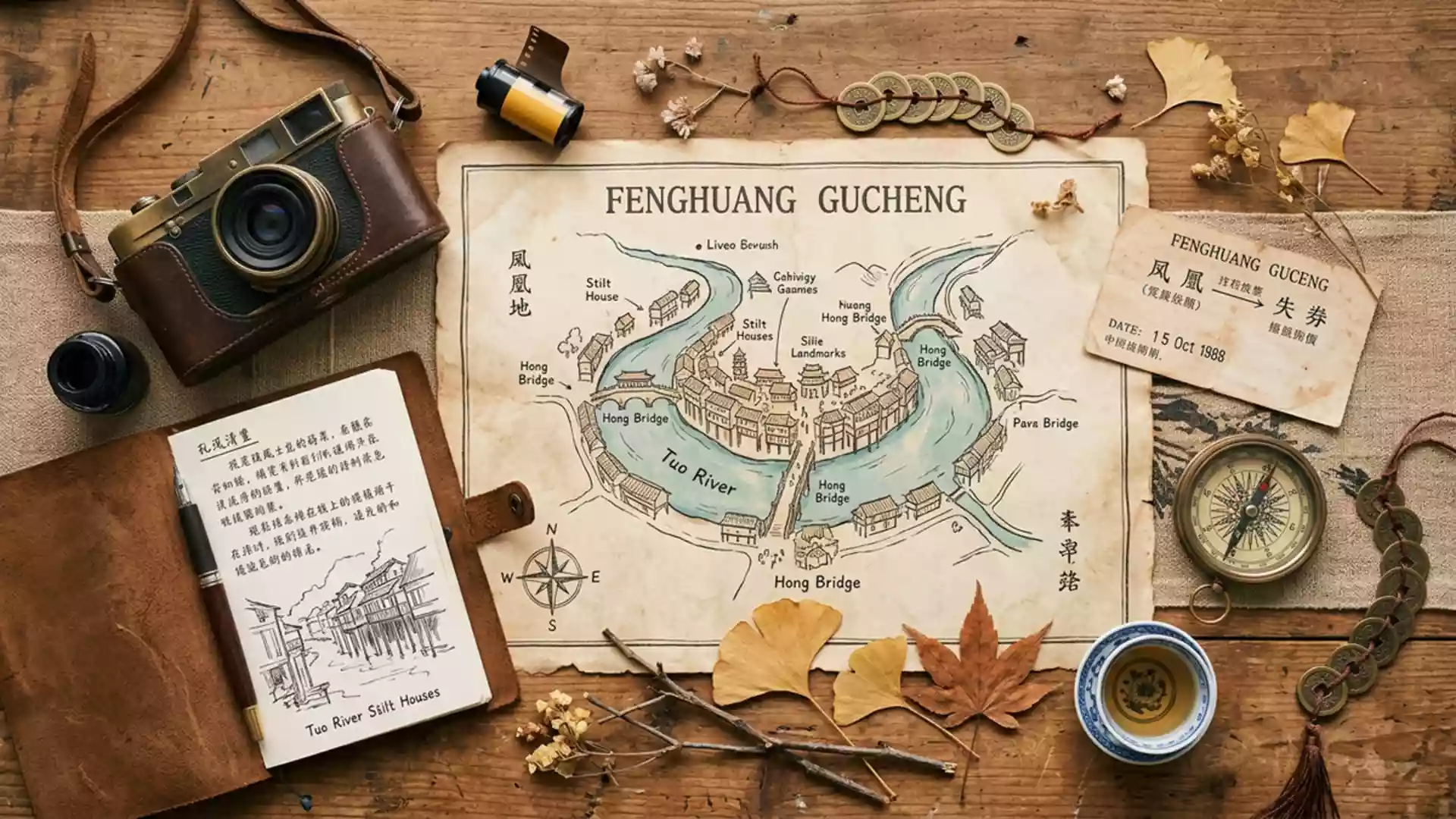
Fenghuang Gucheng, riverside old town of western Hunan
Published on 08/27/2026 at 21:18 | Editorial responsibility: Rafael Müller, Editor-in-Chief AD HOC NEWS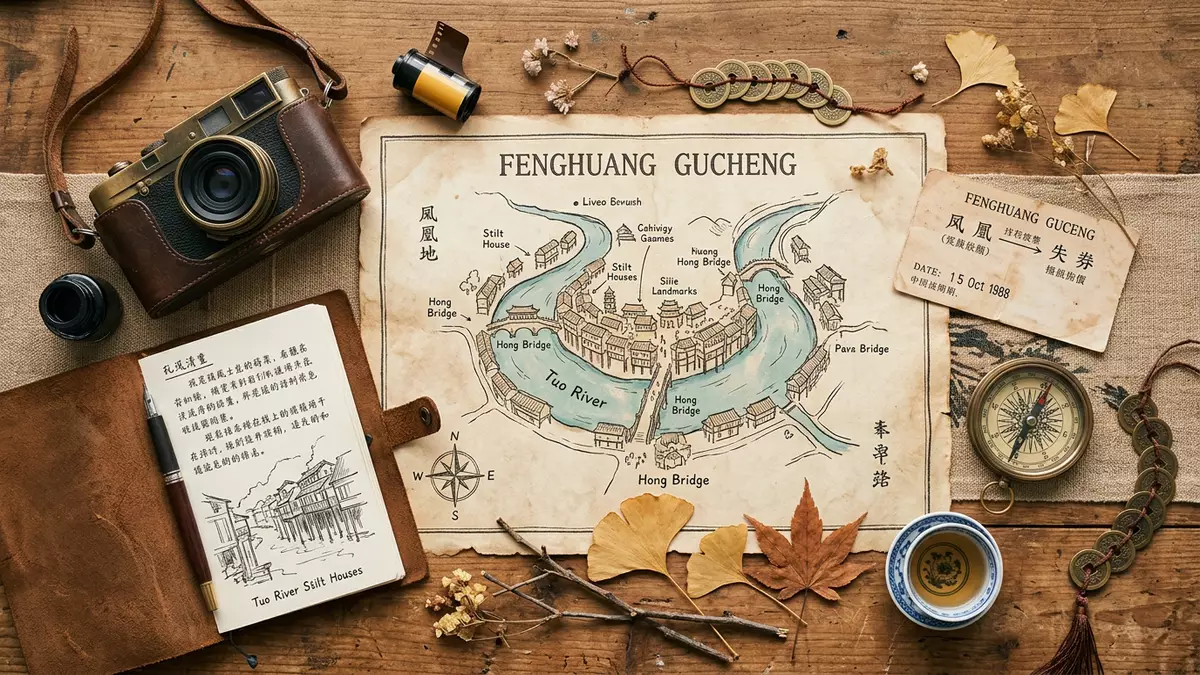
Fenghuang Gucheng in Fenghuang, western Hunan, is a riverside old town where wooden houses, ancient walls and stone lanes still gather along the Tuojiang River. Built in the Qing dynasty and protected as a national historical and cultural town in China, it offers a compact glimpse of a small river port shaped by Han, Miao and Tujia traditions.
A Qing?era town on the Tuojiang River
Fenghuang Gucheng, often rendered in English as Fenghuang Ancient Town or Phoenix Ancient Town, occupies the historic core of Fenghuang County in Hunan Province. The present walled town is widely dated to 1704 in the reign of the Qing emperor Kangxi, giving the old streets and riverfront houses a history of more than three centuriesbuilt in 1704. The settlement lies in a mountainous corner of western Hunan, close to the border with Guizhou, with the Tuojiang River cutting through the old town and forming its most recognisable axisriverside town in western Hunan.
Chinese cultural authorities classify Fenghuang Gucheng as a national historical and cultural town and the ancient city has been included on China’s list of preparatory World Cultural Heritage sitesnational historical and cultural townon the UNESCO Tentative List. The tentative World Heritage listing describes an ancient town with an area of around 1.8 km, a network of about 20 streets and dozens of lanes, and more than 200 historic civil residences.
Wooden diaojiaolou and stone lanes
The most striking everyday view in Fenghuang Gucheng is the band of stilted wooden houses lining the inner banks of the Tuojiang River. These diaojiaolou dwellings stand on timber supports driven into the river edge, with overhanging balconies, tiled roofs and stacked levels that form a stepped skyline along the waterstilted wooden houses along the Tuojiang River. Behind the riverfront, stone?paved streets and alleys run between rows of traditional houses, many built in Ming and Qing styles with timber frames, internal courtyards and brick or stone wallsdistinctive Ming and Qing architectural remains.
Several named structures punctuate this fabric. The Hong (Rainbow) Bridge spans the river as a covered bridge with enclosed upper levels, while the East Gate Tower and sections of ancient city walls frame the historic entrance to the townRainbow Bridge and East Gate Tower. Within the old streets stand ancestral halls, such as the Yang Family Ancestral Hall, and former residences associated with figures including the writer Shen Congwen and the politician Xiong Xiling, now preserved as heritage buildings and small museums. Together, the riverfront dwellings, bridges, towers and halls give Fenghuang Gucheng a layered architectural profile centred on timber, stone and brick.
Minority cultures and literary ties
Fenghuang County forms part of the Xiangxi Tujia and Miao Autonomous Prefecture, and Fenghuang Gucheng reflects this mix in its population and cultural heritage. A significant share of residents in and around the town are Miao and Tujia, and traditional dress, crafts and local festivals associated with these communities remain visible in the surrounding areamore than half its people are Miao or Tujiarich culture of Miao and Tujia minorities. Within the town, Han Chinese architectural elements sit alongside designs influenced by minority building traditions, adding to the sense of a small river port shaped by several cultures.
Fenghuang Gucheng also has a notable literary connection. Shen Congwen, one of twentieth?century China’s major modern writers, grew up in Fenghuang and used the town and its surroundings as the setting for works such as the novella “Border Town”hometown of the writer Shen Congwen. His former residence within the old town now forms part of the group of preserved heritage sites, and the landscapes along the Tuojiang River echo the riverside scenes described in his fiction.
Visiting Fenghuang Gucheng: what travellers from Western Europe should know
- Fenghuang Gucheng lies in Fenghuang County in western Hunan Province, inland in central China, with the Tuojiang River running through the historic area and regional connections to cities such as Zhangjiajie and HuaihuaFenghuang in western Hunan.
- The townscape combines riverside walkways with flights of stone steps, sections of uneven paving and narrow alleys, so moving between the riverbank, bridges and upper streets involves frequent short climbs.
- The official language is Chinese and the currency is the Chinese yuan.
- Entry requirements depend on your nationality; UK travellers can check the FCDO travel advice at gov.uk/foreign-travel-advice, Irish travellers the Department of Foreign Affairs at ireland.ie.
Searching for Fenghuang Gucheng on social platforms
These links open searches for Fenghuang Gucheng on each platform.
Frequently asked questions about Fenghuang Gucheng
Where is Fenghuang Gucheng located?
Fenghuang Gucheng forms the old town of Fenghuang County in western Hunan Province in central China, with the Tuojiang River running through the historic district.
What can visitors expect on a visit to Fenghuang Gucheng?
Visitors encounter stilted wooden houses along the river, stone?paved lanes, ancient bridges and gate towers, together with preserved ancestral halls and former residences set within the old streets.
What makes Fenghuang Gucheng distinctive among Chinese old towns?
The town combines a Qing?era riverside layout, diaojiaolou dwellings and city walls with the cultural presence of Miao and Tujia communities and literary ties to Shen Congwen.