Fasil Ghebbi, Gondar’s stone fortress of Ethiopian emperors
Published on 09/09/2026 at 17:07 | Editorial responsibility: Rafael Müller, Editor-in-Chief AD HOC NEWS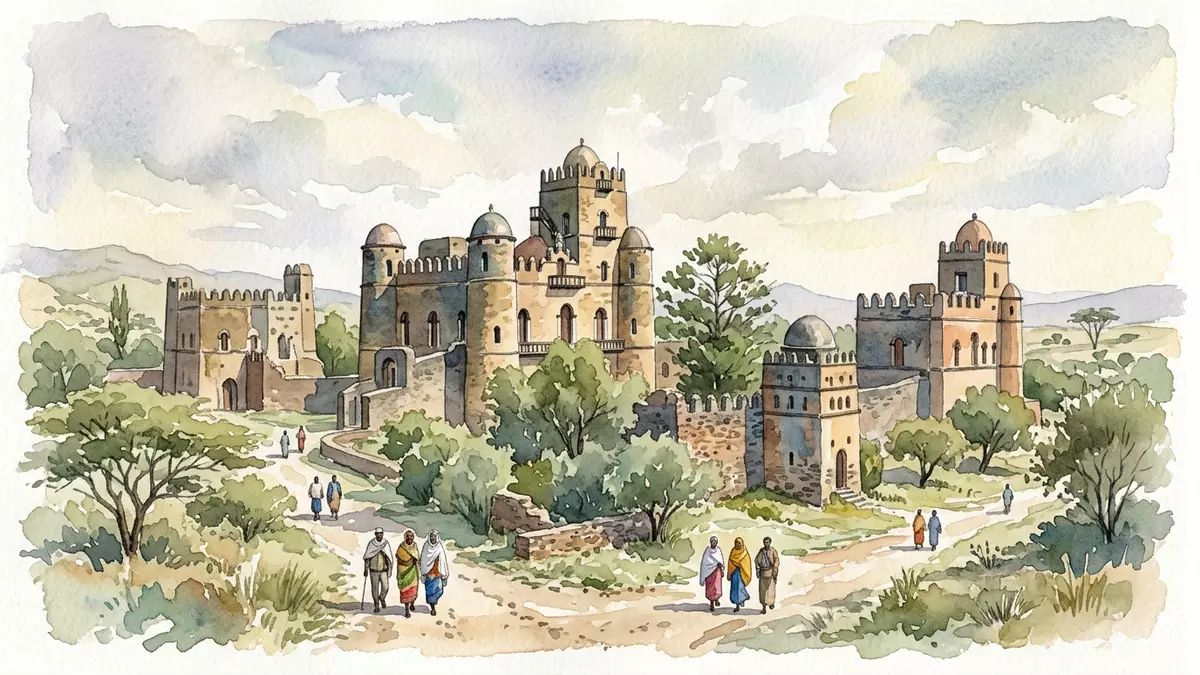
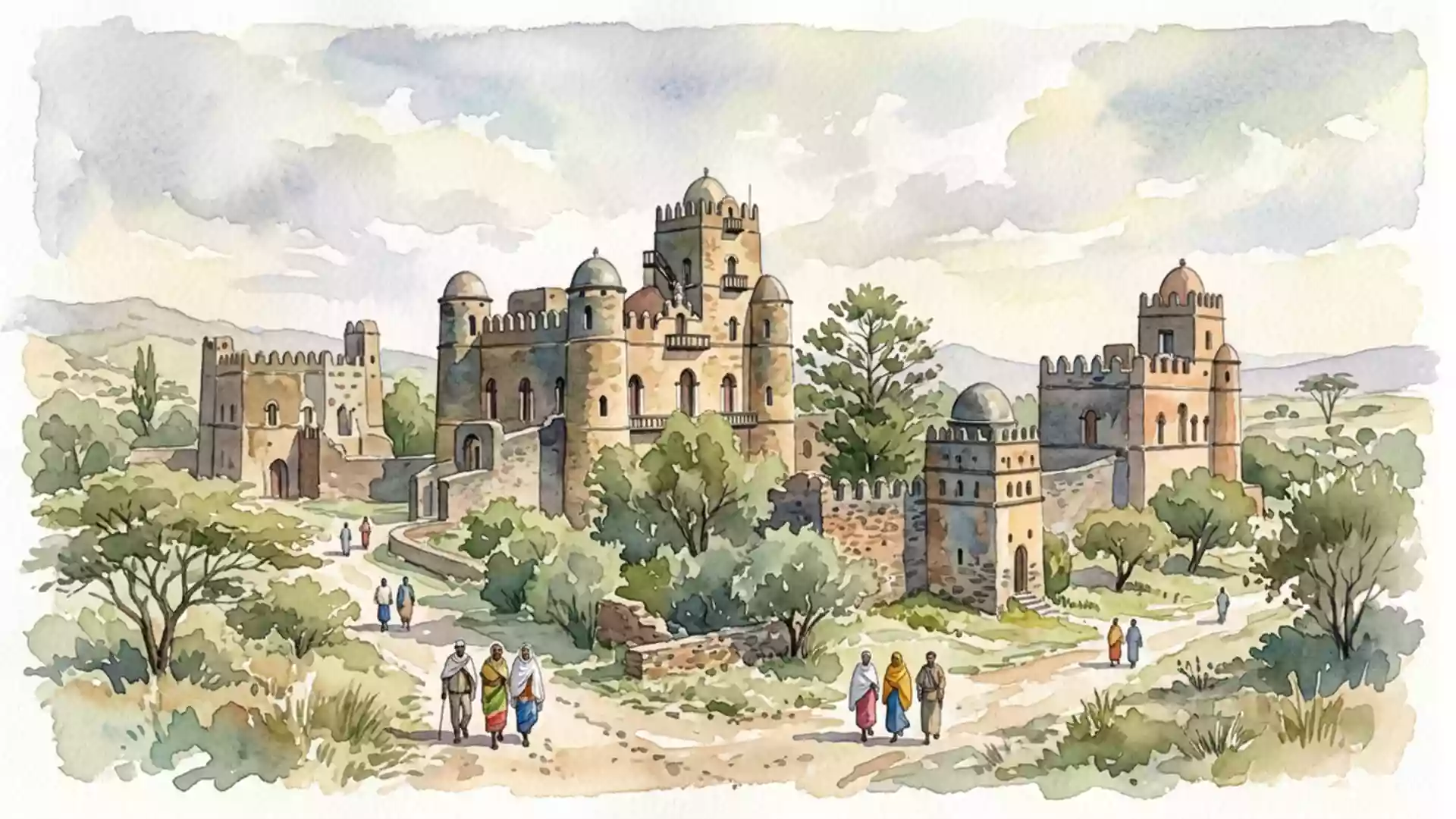
Fasil Ghebbi in Gondar is a walled stone fortress where seventeenth-century Ethiopian emperors built palaces, churches and public buildings in stone and lime mortar. Inside its enclosure, successive rulers turned a royal residence into a dense complex of towers, courtyards and chapels that still frame Gondar’s historic core.
The royal enclosure of Fasilides
Fasil Ghebbi takes its name from Emperor Fasilides, who established Gondar as a fixed imperial capital in the seventeenth century and built his main stone castle inside this enclosure. Around 1636 Fasilides broke with the earlier custom of mobile royal camps and founded a fortress-city whose palaces formed the centre of Ethiopian imperial power for generations.Emperor Fasilides founded Gondar as a capital around 1636 Successors added their own castles and service buildings, turning the enclosure into a layered record of the Gondarine period.
The fortress stands within the old urban core of Gondar in the Amhara Region of northern Ethiopia and occupies an area of around 70,000 square metres enclosed by high defensive walls.The fortress-city occupies about 70,000 square metres Within those walls, the main palace complex includes the Castle of Emperor Fasilides and later castles associated with Iyasu, David and other rulers, together with a library, a chancellery and banqueting halls. The enclosure also contains Ethiopian Orthodox churches and monasteries, reflecting its combined political and religious role.The listed components include multiple castles and churches
Stone, lime mortar and the Gondarine style
The fabric of Fasil Ghebbi is distinctively Ethiopian, built in rough-hewn stone bound with lime mortar, with square and round towers rising above thick perimeter walls. Many structures show influences from Nubian, Hindu and Arab building traditions, later combined with Baroque elements introduced by Jesuit missionaries to Gondar, giving the castles their mix of local forms and imported details.Nubian, Hindu, Arab and Baroque influences blend in the architecture The result is a group of stone palaces that differ markedly from European castles yet share their emphasis on towers, battlements and enclosed courtyards.
Inside the walls, palaces and service buildings are arranged around open spaces, with bridges crossing defensive features and gateways marking transitions between sectors of the enclosure. The broader World Heritage property extends beyond the core fortress to include related sites around Gondar, such as the Bath of Fasilides and the church of Debre Berhan Selassie, which belong to the same Gondarine architectural and religious landscape.The serial property includes baths, churches and palaces around Gondar
World Heritage and Ethiopian imperial history
Fasil Ghebbi was inscribed as a UNESCO World Heritage Site in 1979 as “Fasil Ghebbi, Gondar Region”, recognising its role as the political and ceremonial centre of Christian Ethiopia over several centuries and its distinctive architectural synthesis.Fasil Ghebbi was inscribed on the World Heritage List in 1979 During the Gondarine period, the enclosure served as the seat from which emperors ruled, commissioned churches and expanded their palaces within the walled compound.Fasil Ghebbi functioned as the centre of Ethiopian government until the nineteenth century
The World Heritage listing covers the main fortress and several associated monasteries and palaces in and around Gondar, reflecting how imperial authority, religious practice and urban life were intertwined in this highland capital. For travellers interested in Ethiopian history, Fasil Ghebbi offers an unusually concentrated view of seventeenth- and eighteenth-century court architecture, with stone castles, church compounds and administrative buildings sharing one enclosed space.
Visiting Fasil Ghebbi: what travellers from Western Europe should know
- Fasil Ghebbi stands within Gondar in northern Ethiopia’s Amhara Region, and is reached overland or by domestic flights linking Gondar with other Ethiopian cities.
- Inside the enclosure, movement between the castles and churches involves walking over uneven stone surfaces and climbing stairways that can be narrow or steep.
- The site lies at highland altitude in the Ethiopian plateau, so the combination of elevation and walking across the fortress can be physically demanding for some visitors.
- The official language is Amharic and the currency is the Ethiopian birr.
- Entry requirements depend on your nationality; UK travellers can check the FCDO travel advice at gov.uk/foreign-travel-advice, Irish travellers the Department of Foreign Affairs at ireland.ie.
Searching for Fasil Ghebbi on social platforms
These links open searches for Fasil Ghebbi on each platform.
Frequently asked questions about Fasil Ghebbi
Where is Fasil Ghebbi located?
Fasil Ghebbi is in the city of Gondar in Ethiopia’s Amhara Region, within the highlands north of Lake Tana.
What can visitors expect inside the fortress?
Visitors encounter a walled stone enclosure containing multiple castles, churches, courtyards and service buildings from the seventeenth and eighteenth centuries.
What makes Fasil Ghebbi distinctive among Ethiopian sites?
Fasil Ghebbi combines imperial palaces, religious complexes and administrative buildings within one fortified highland capital recognised as a UNESCO World Heritage Site.