
Fasil Ghebbi and Gondar’s walled imperial centre
Published on 08/20/2026 at 17:34 | Editorial responsibility: Rafael Müller, Editor-in-Chief AD HOC NEWS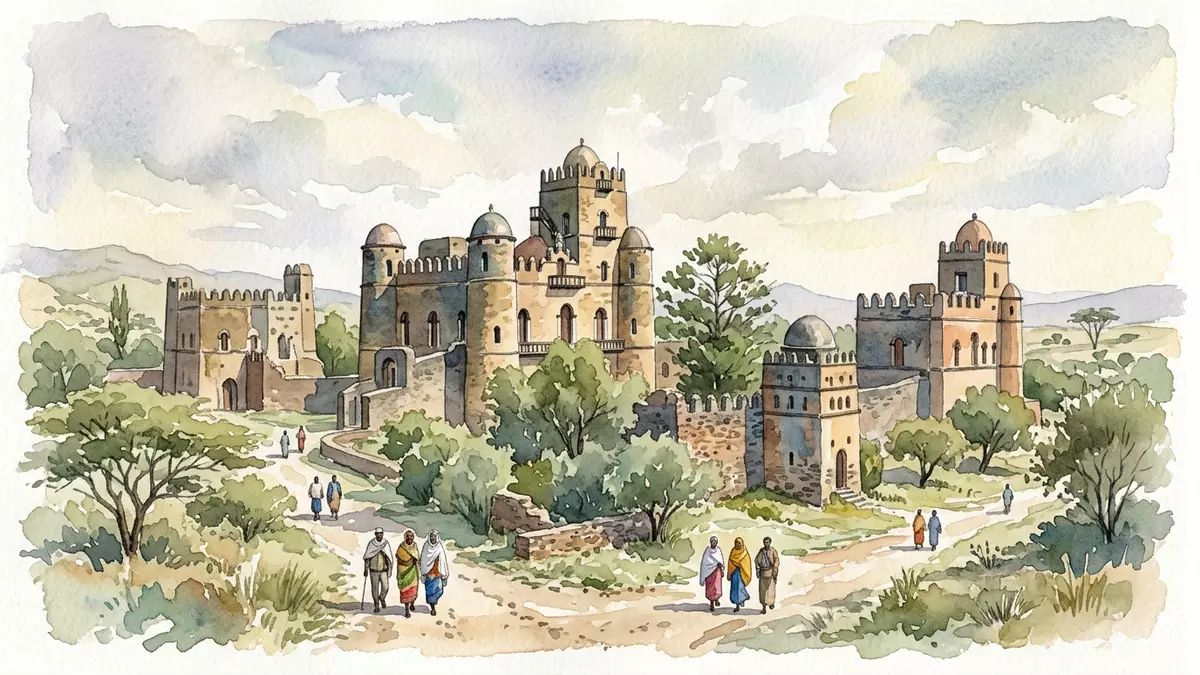
Fasil Ghebbi is the walled imperial compound at the centre of Gondar, in Ethiopia’s Amhara region. It is linked with Emperor Fasilides and the seventeenth century, and its walls, palaces and churches still define the site’s character.
Fasilides and the fortress-city of Gondar
The compound is tied to Fasilides, the ruler who made Gondar the imperial seat in the seventeenth century. The site entered the World Heritage List in 1979 and carries the formal name Fasil Ghebbi, Gondar Region.
The compound grew as a fortified residence for Ethiopian emperors, and its role as a political centre lasted beyond the reign of Fasilides. The same enclosure later gathered courts, churches and monastic buildings inside a single urban frame.
Walls, gates and the imperial enclosure
The most immediate feature is the stone enclosure, which runs for about 900 metres. Within it stand palaces, churches, monasteries and other royal buildings, arranged as a compact fortress-city rather than an isolated monument.
That enclosed setting gives Fasil Ghebbi its strong physical presence. The compound keeps together buildings of different functions, yet the wall makes them read as one historical whole.
Architectural layers in stone and timber
Fasil Ghebbi combines local imperial building traditions with external influences that reached Gondar through contact and exchange. The architecture carries Hindu and Arab elements, and later Baroque forms entered the ensemble through Jesuit missionaries.
That mixture is visible in the variety of the surviving structures. The site includes castles, churches and monastic buildings, each adding a different register to the same royal complex.
Visiting Fasil Ghebbi: what travellers from Western Europe should know
- Fasil Ghebbi lies in Gondar, in north-western Ethiopia. The compound is reached within the city rather than by a separate mountain approach.
- The site is enclosed by stone walls and includes uneven ground inside the compound. Some parts belong to palace buildings, others to churches and monastic structures.
- Gondar stands in the Ethiopian highlands. The town and the compound sit at altitude, so the setting feels distinctly elevated.
- The official language is Amharic and the currency is the Ethiopian birr.
- Entry requirements depend on your nationality; UK travellers can check the FCDO travel advice at gov.uk/foreign-travel-advice, Irish travellers the Department of Foreign Affairs at ireland.ie.
Searching for Fasil Ghebbi on social platforms
These links open searches for Fasil Ghebbi on each platform.
Frequently asked questions about Fasil Ghebbi
Where is Fasil Ghebbi?
Fasil Ghebbi is in Gondar, in the Amhara region of Ethiopia. It sits inside the city rather than apart from it.
What does a visit involve?
The site presents a walled royal compound with palaces, churches and monastic buildings. The setting is built around stone walls and historic structures rather than a single standalone palace.
What makes Fasil Ghebbi distinctive?
Its identity rests on the imperial enclosure, the seventeenth-century association with Fasilides and the layered architecture inside the walls. The combination gives the compound a strong historical profile.


