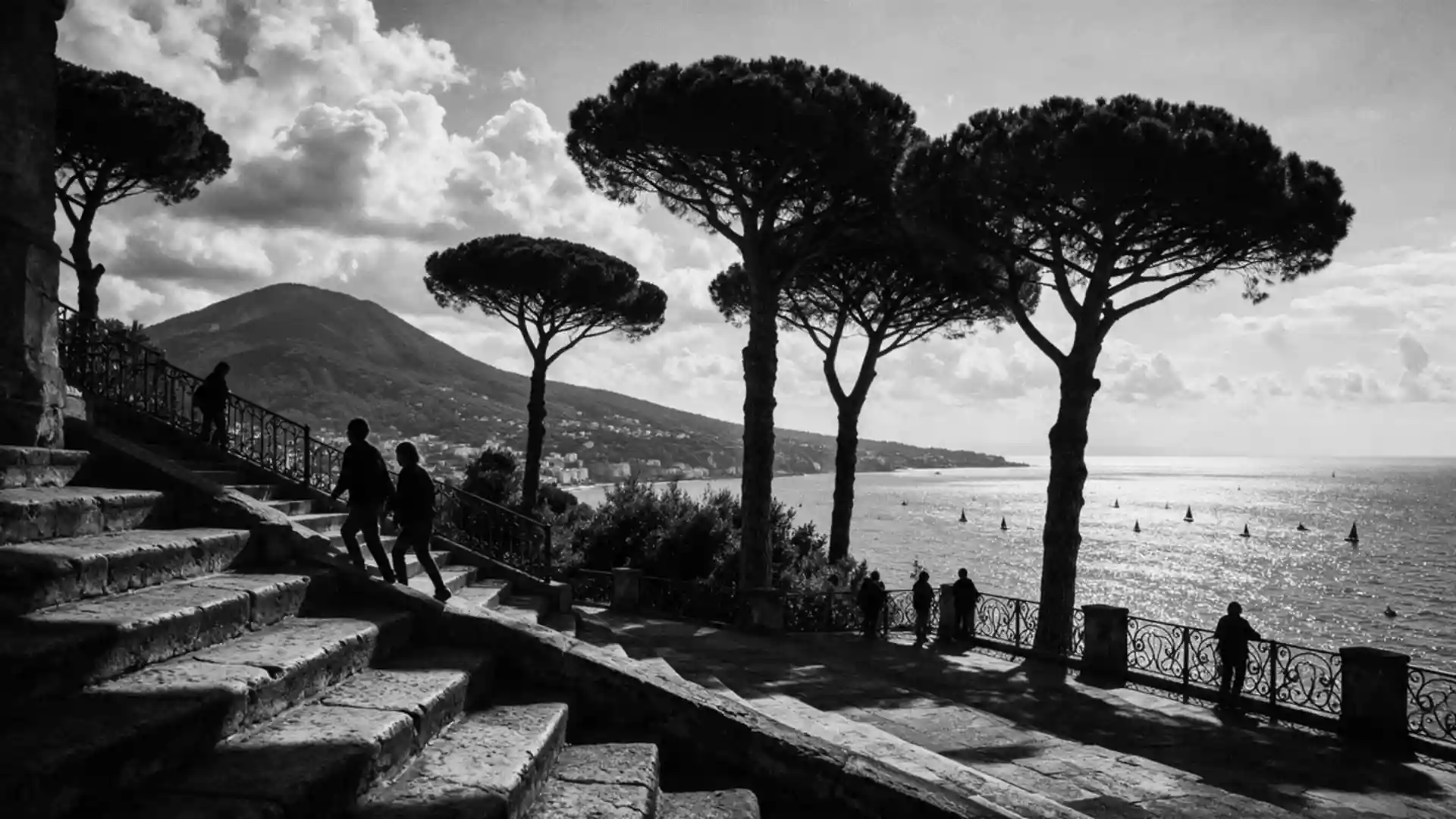
Ercolano’s buried Roman streets between Vesuvius and the sea
Published on 09/11/2026 at 20:01 | Editorial responsibility: Rafael Müller, Editor-in-Chief AD HOC NEWS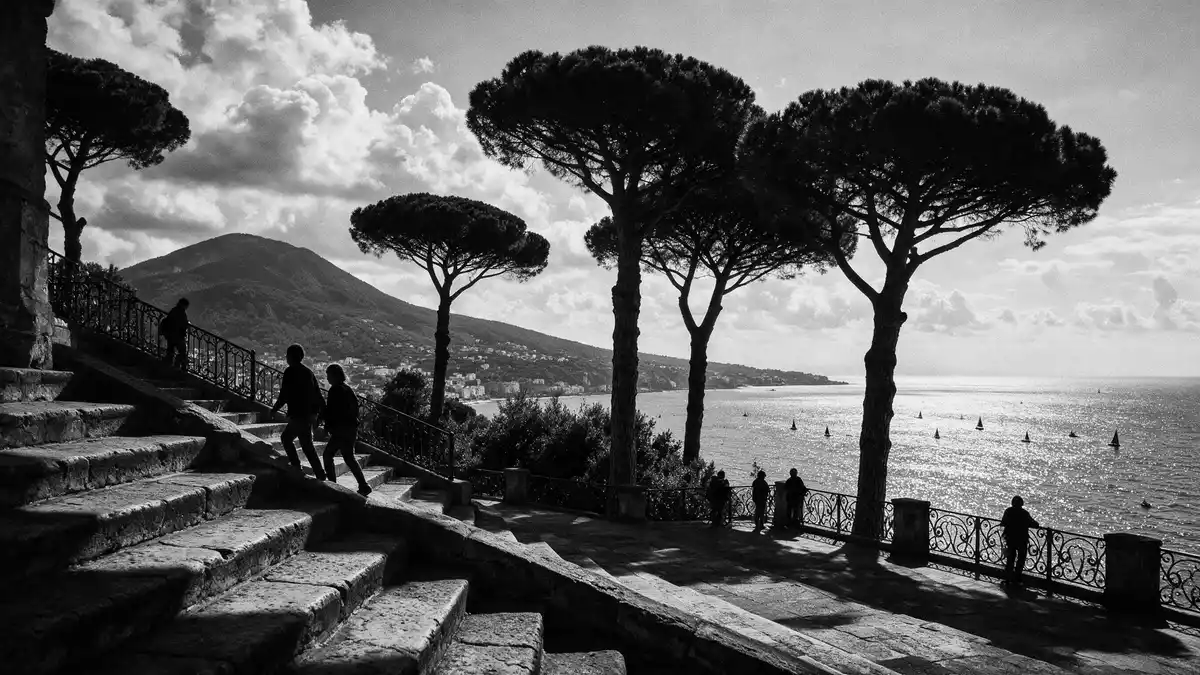
Ercolano in Italy is one of the few places where an ancient Roman town lies preserved beneath a modern coastal city, its excavated streets set between Mount Vesuvius and the Bay of Naples. The buried settlement forms part of the Archaeological Areas of Pompeii, Herculaneum and Torre Annunziata on the UNESCO World Heritage List, while the present-day comune of Ercolano occupies the slopes between the volcano and the shoreline.
Roman Ercolano beneath a modern city
The archaeological area at Ercolano preserves an ancient Roman town that was buried during the eruption of Mount Vesuvius in 79 AD, when hot material flowed down towards the bay and covered streets, houses and the harbour zone.ancient Roman town The site lies within the modern comune of Ercolano in Campania, so visitors descend from present-day streets to reach rows of Roman houses, workshops and public buildings cut into the volcanic deposits.between Vesuvius and the sea
Many structures stand with upper floors, wooden elements and everyday fittings still visible, because the thick blanket of material protected architectural details that were lost elsewhere. Streets run on a grid of decumani and cardines, giving a clear sense of the town’s original layout in the first century AD. At the edge of the excavated zone, the modern district rises above the Roman level, making the difference in height between ancient pavements and contemporary roads part of the visit.
Layers of discovery and excavation
The buried town at Ercolano re-entered historical awareness in the early eighteenth century, when underground explorations began to probe through the deposits that covered the site.explorations in the eighteenth century Systematic work with shafts and tunnels started in 1738 under the Bourbon king Carlo III of Naples, targeting buildings such as the ancient theatre. Later in the nineteenth century, open-air excavations exposed parts of the Roman town from above, replacing the tunnel system with broader trenches.
After a long interruption, excavations resumed in 1927 under the archaeologist Amedeo Maiuri, whose work freed and restored much of the area that today forms the core of the archaeological park.Amedeo Maiuri’s excavations Subsequent campaigns extended the exposed zone, including work on the northern sector of Insula VI and on the former shoreline. In 2016 the Parco Archeologico di Ercolano was established as an autonomous institution within the Italian Ministry of Culture, based on Corso Resina in Ercolano, and continues to oversee restoration and presentation of the site.Parco Archeologico di Ercolano
UNESCO status and the coastal setting
The archaeological area at Ercolano belongs to the same UNESCO World Heritage listing as Pompeii and the villas at Torre Annunziata, under the title Archaeological Areas of Pompeii, Herculaneum and Torre Annunziata.World Heritage listing This recognises both the preservation of Roman urban fabric and the wider landscape of settlements around Vesuvius in the first century AD.Scavi archeologici di Ercolano The modern comune spreads across the lower slopes of the volcano, and the archaeological park sits within an urban neighbourhood rather than in open countryside.
From the excavated streets, views extend towards the Bay of Naples, underlining the coastal position that once connected the town to maritime routes. The contrast between Roman masonry and twentieth-century apartment blocks around the rim frames the site within a wider cityscape. The relationship between the buried town, the volcano and the sea gives Ercolano a distinctive character among the Vesuvian sites, with ancient lanes suspended between geological forces above and the shoreline beyond.
Visiting Ercolano: what travellers from Western Europe should know
- Ercolano lies in Campania south-east of central Naples, on the lower slopes of Mount Vesuvius, with the archaeological park reached from the urban street Corso Resina.
- The visit involves walking along Roman streets cut below the level of the modern city and using stairways between contemporary pavements and the excavated area.
- The terrain includes uneven ancient paving and changes in height between insulae and the former shoreline zone, so sturdy footwear is useful for exploring the site.
- The official language is Italian and the currency is the euro.
Searching for Ercolano on social platforms
These links open searches for Ercolano on each platform.Frequently asked questions about Ercolano
Where is Ercolano and what is its setting?
Ercolano is a coastal comune in Campania in southern Italy, situated between Mount Vesuvius and the Bay of Naples, with the archaeological park within the urban area.
What can visitors expect on a visit to Ercolano?
A visit centres on descending from modern streets to Roman lanes, passing houses, workshops and public buildings preserved under volcanic deposits, with views back towards the city and the sea.
What makes the archaeological area at Ercolano distinctive?
The site combines unusually well-preserved Roman architecture, including upper-storey structures and wooden elements, with a setting inside a living coastal city on the slopes below Vesuvius.