
Elmina Castle in Elmina, Ghana: a fortress of trade and trauma
Published on 09/19/2026 at 18:02 | Editorial responsibility: Rafael Müller, Editor-in-Chief AD HOC NEWS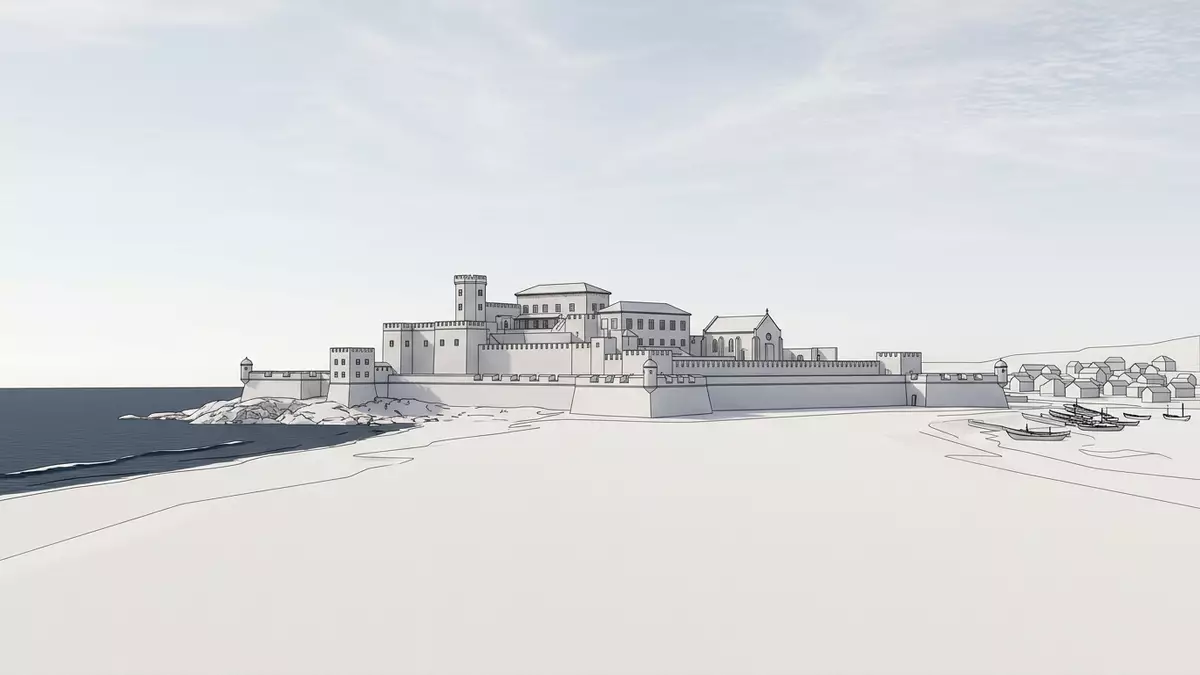
Elmina Castle in Elmina on Ghana’s Atlantic coast is a stark whitewashed fortress where ocean views meet heavy stone walls and cramped dungeons dating back to the fifteenth century. Built by Portuguese builders in 1482 as São Jorge da Mina, it later became a major hub of the transatlantic slave trade and a focal point of colonial power in West Africa.
From São Jorge da Mina to Elmina Castle
Elmina Castle began as a Portuguese fortress named São Jorge da Mina, erected in 1482 on a rocky promontory beside a natural harbour on the Gulf of Guinea.São Jorge da Mina The builders worked under Diogo de Azambuja, acting for King John II, and enclosed warehouses, a chapel and defensive towers within thick masonry walls.Portuguese builders under Diogo de Azambuja In its early decades the fort served a trading post for gold, ivory and other goods flowing from the interior to ships bound for Lisbon, secured by cannon on the ramparts and a courtyard where merchants and local intermediaries met.
The fort’s layout reflected both commercial and military roles, with storerooms facing the inner courtyard and batteries oriented towards the sea. As coastal trade expanded, the surrounding town of Elmina developed as a settlement linked to this European stronghold.fortified castle in Elmina Over time, additional bastions and platforms were added and parts of the Portuguese chapel were later repurposed, showing successive layers of adaptation within the same stone envelope.
Dungeons and the Atlantic slave trade
In the seventeenth century Elmina Castle’s role shifted decisively towards the Atlantic slave trade, turning cellars and lower chambers into holding spaces for men, women and children bound for the Americas.Portuguese, Dutch and British fortified trading institution After Dutch forces captured the castle in 1637, it became the headquarters of the Dutch Gold Coast, and its dungeons were used to confine enslaved Africans as part of extensive trading networks that linked West Africa, Brazil and Caribbean colonies.Dutch capture in 1637
Visitors walking through the stone passages encounter chambers once packed with captives and a courtyard that connected these lower levels to the upper terraces and bastions. The contrast between narrow, dark interiors and the open views towards the Atlantic gives the building a layered character: a fortified trading post perched above the sea and a memorial landscape where the history of the slave trade is read in masonry, doorways and commemorative plaques.central hub in the trans-Atlantic slave trade
Colonial transitions and World Heritage status
Elmina Castle changed hands more than once, marking shifts in European presence along the Gold Coast. Dutch troops seized the fortress from the Portuguese in 1637, and for about two centuries Elmina served as the capital of the Dutch Gold Coast, with administrative quarters set above the trading spaces and chapels inside the fort.capital of the Dutch Gold Coast In 1872 the Dutch ceded the castle to Britain as part of an agreement over forts, and it entered the British Gold Coast colony, where the complex later housed a police training school and educational facilities.police training school and museum
Ghana gained independence from Britain in 1957, and the castle passed into Ghanaian custodianship as part of the new state’s heritage.independence in 1957 In 1979 Elmina Castle and other coastal forts were inscribed on the UNESCO World Heritage List, acknowledging their significance in global trade, colonial expansion and the slave trade.UNESCO World Heritage Site The fort now functions as a museum and memorial site, where exhibitions and guided routes lead visitors through courtyards, chapels, dungeons and ramparts overlooking fishing boats in the harbour.
Visiting Elmina Castle: what travellers from Western Europe should know
- Elmina Castle stands in the coastal town of Elmina in southern Ghana, west of Cape Coast, and is reached by road connections from cities such as Accra.
- Inside the fortress, movement involves stone staircases, uneven floors and enclosed chambers, and the approach from the town passes along streets lined with fishing activity and harbour structures.
- The official language is English and the currency is the Ghanaian cedi.
- Entry requirements depend on your nationality; UK travellers can check the FCDO travel advice at gov.uk/foreign-travel-advice, Irish travellers the Department of Foreign Affairs at ireland.ie.
Searching for Elmina Castle on social platforms
These links open searches for Elmina Castle on each platform.Frequently asked questions about Elmina Castle
Where is Elmina Castle and what kind of place is it?
Elmina Castle is a fortified stone complex on the Atlantic coast in the town of Elmina in southern Ghana, originally built as a Portuguese trading fortress.
What can visitors expect inside the castle?
Visitors encounter courtyards, chapels, dungeons, storerooms and ramparts linked by staircases and passages, with museum displays and memorial elements highlighting centuries of trade and slavery.
What makes Elmina Castle distinctive among coastal forts?
Elmina Castle is widely recognised as the first permanent European fortress in sub-Saharan Africa, built in 1482, and later became a major centre of the transatlantic slave trade and a UNESCO-listed World Heritage site.


