Elmina Castle and the layered fortress of the Atlantic world
Published on 09/08/2026 at 06:16 | Editorial responsibility: Rafael Müller, Editor-in-Chief AD HOC NEWS
On the shore of Elmina on Ghana’s Central Region coast stands Elmina Castle, a stone fortress first raised by Portuguese builders in 1482 and later reshaped by Dutch and British rule. Its thick walls and courtyards hold a rare concentration of Atlantic history in a single structure, from gold and ivory trade to the violence of the transatlantic slave trade and the colonial administrations that followed.
A stone fortress of gold and empire
Elmina Castle was founded by the Portuguese as São Jorge da Mina, St George of the Mine, during the great wave of maritime expeditions in the late fifteenth century.São Jorge da Mina The fortification rose beside a natural harbour on the Gulf of Guinea, giving direct access to Akan goldfields inland and to Atlantic shipping routes offshore.first permanent European trading post The castle’s plan followed a standard European military layout for the time: enclosed courtyards framed by storerooms and living quarters and defended by gun positions oriented towards the sea.
Over its first century the complex functioned above all as a trading post for gold, ivory and other coastal goods carried under royal monopoly to Lisbon.Portuguese gold trade Portuguese architect Diogo de Azambuja is closely associated with its construction, and granite blocks shipped from Europe were assembled into the bastions that still stand above the fishing town.granite structure raised in 1482 Within the compound, chapels, warehouses and official residences were combined in one fortified trading institution, turning Elmina into a focal point of European-African exchange along this stretch of coast.
From trading post to gateway of the slave trade
In the seventeenth century the role of Elmina Castle shifted as Atlantic economies changed. The Dutch West India Company seized the fortress from Portugal in 1637 after a siege and made it the headquarters of the Dutch Gold Coast.captured by the Dutch in 1637 Under Dutch control the emphasis moved increasingly towards the transatlantic slave trade, and dungeons beneath the European quarters were used to confine enslaved Africans brought from the interior before embarkation.
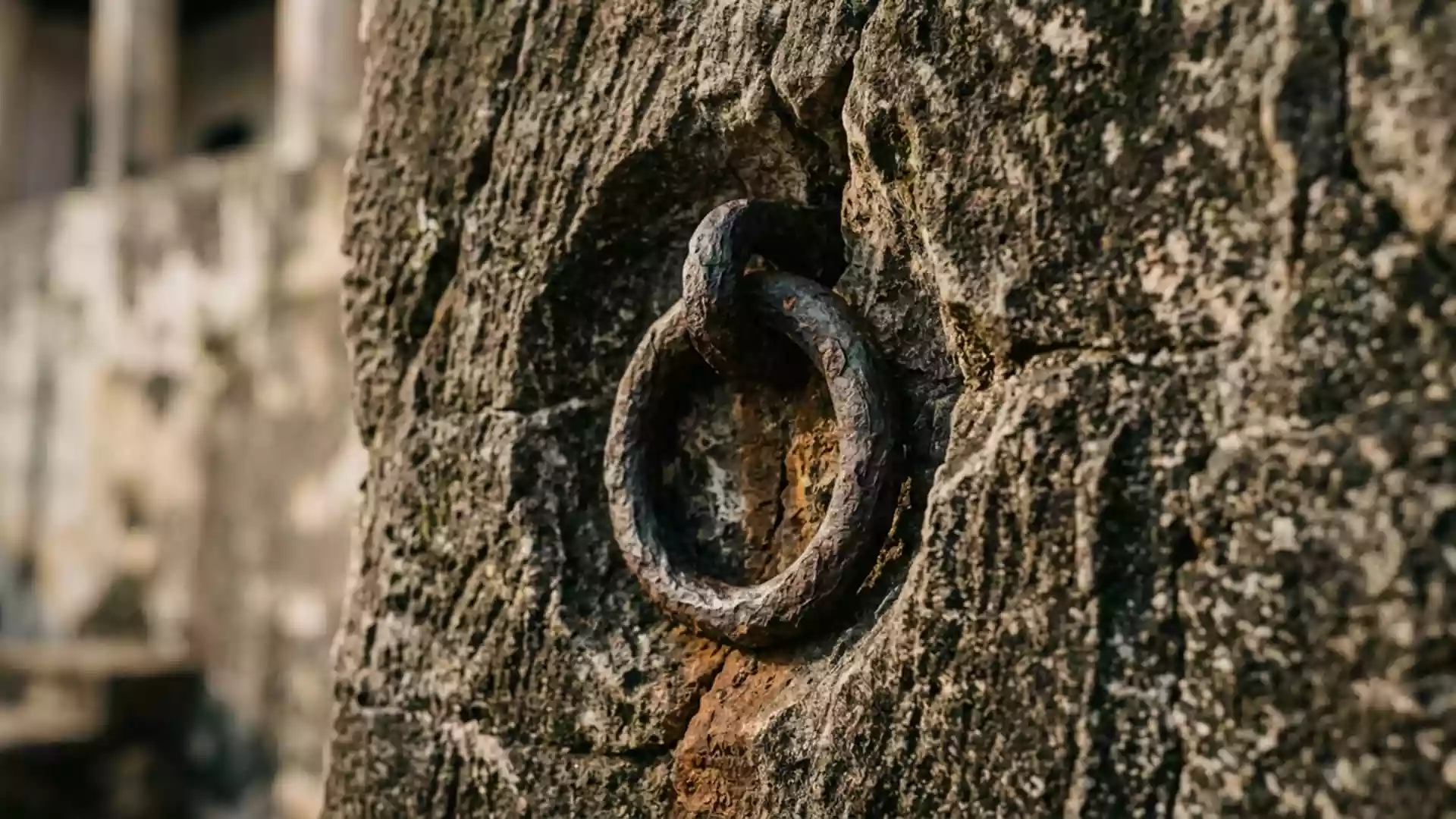
The architecture today bears evidence of these phases: Portuguese vaulted ceilings over some halls, Dutch masonry in arcaded courtyards and later British adaptations for administrative and educational use.layered European architecture Enclosed cells that once held captives survive alongside chapels and storerooms, and a doorway facing the Atlantic is known worldwide as the “Door of No Return”, marking the point where chained people passed from stone corridors to waiting ships.Door of No Return For many visitors, walking through these stacked functions within one castle makes clear how commercial calculation and coercion were physically bound together.
World Heritage on Ghana’s Central Region coast
Elmina Castle stands among a chain of forts and castles along Ghana’s Atlantic coastline that together form the inscribed UNESCO World Heritage property “Forts and Castles, Volta, Greater Accra, Central and Western Regions”.UNESCO World Heritage property Within this group it is recorded as St George’s d’Elmina, one of three principal castles alongside Cape Coast and Christiansborg, and recognised as one of the oldest surviving European fortifications outside Europe.oldest European building south of the Sahara
Political control of the castle changed hands several times. After Dutch rule, the building passed to British authority in the nineteenth century and was incorporated into the Gold Coast colony.transfer to British rule Following Ghana’s independence in 1957 the fortress became part of the national heritage portfolio, housing a museum that interprets the history of gold, slavery and colonial power along this coast.museum telling the story of the transatlantic slave trade The surrounding town remains an active fishing port, and views from the ramparts take in the lagoon, anchored boats and the separate hilltop fort of St Jago overlooking the harbour.
Visiting Elmina Castle: what travellers from Western Europe should know
- Elmina Castle rises beside the harbour in the coastal town of Elmina in Ghana’s Central Region and can be reached by road from the regional capital Cape Coast.
- Inside the fortress, movement between levels involves staircases and stone steps, and parts of the former dungeons are enclosed spaces with limited natural light.
- The castle stands at sea level on exposed Atlantic shoreline, so conditions can be humid, and the stone courtyards and ramparts provide firm walking surfaces.
- English is an official language in Ghana and the currency is the Ghanaian cedi.
- Entry requirements depend on your nationality; UK travellers can check the FCDO travel advice at gov.uk/foreign-travel-advice, Irish travellers the Department of Foreign Affairs at ireland.ie.
Searching for Elmina Castle on social platforms
These links open searches for Elmina Castle on each platform.
Frequently asked questions about Elmina Castle
Where is Elmina Castle and what is its setting?
Elmina Castle stands on the Atlantic coast of Ghana in the town of Elmina, beside a lagoon harbour and opposite the hill of Fort St Jago.
What can visitors expect inside Elmina Castle?
Visitors encounter stone courtyards, chapels, former administrative rooms and preserved dungeons, along with interpretive displays that present the history of trade, slavery and colonial rule.
What makes Elmina Castle distinctive among coastal fortifications?
The castle combines being one of the earliest substantial European structures south of the Sahara with a direct architectural record of Atlantic trade and the transatlantic slave trade in one fortified complex.