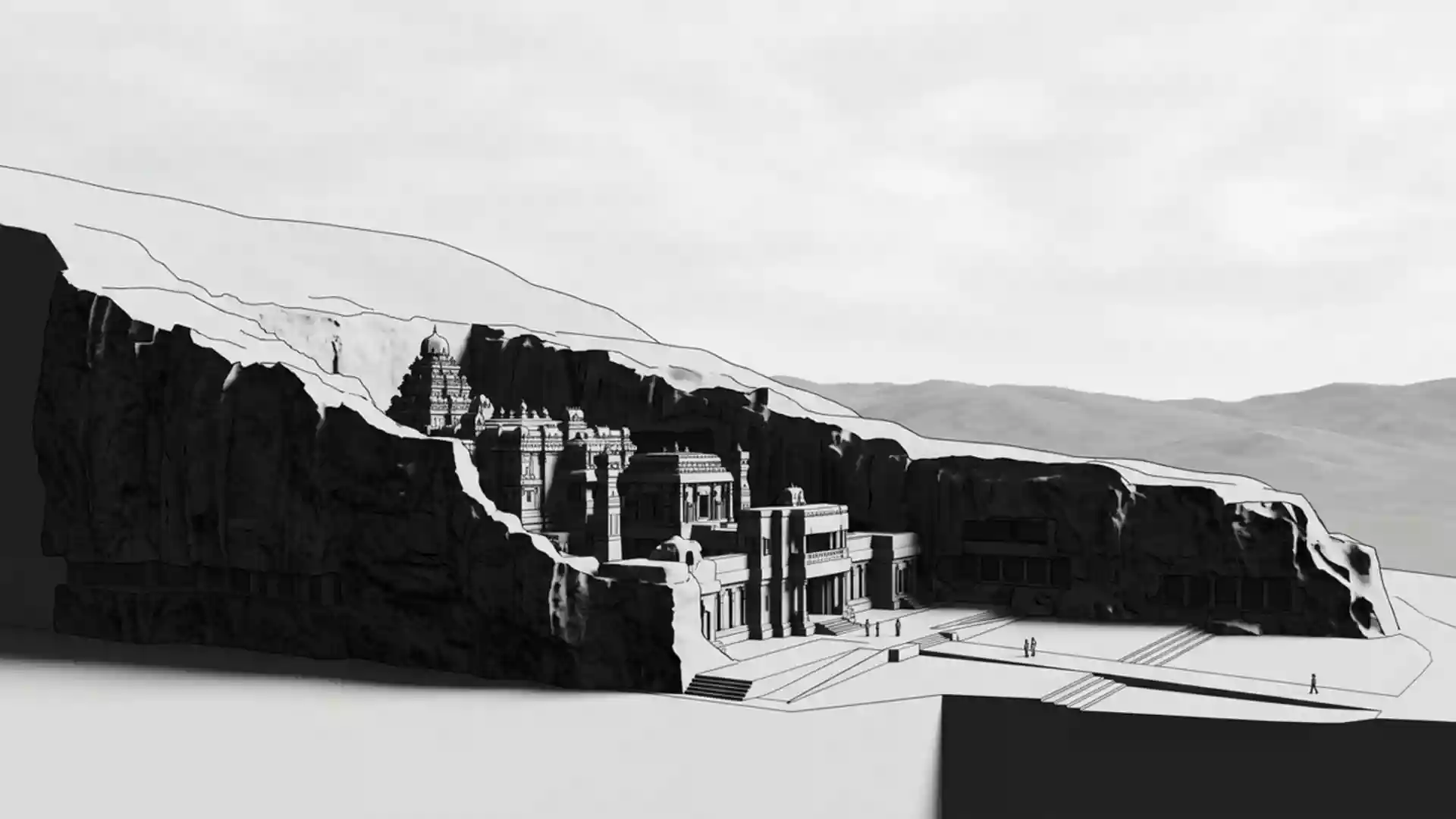
Ellora Caves in Aurangabad: a basalt cliff of carved faiths
Published on 09/04/2026 at 18:55 | Editorial responsibility: Rafael Müller, Editor-in-Chief AD HOC NEWS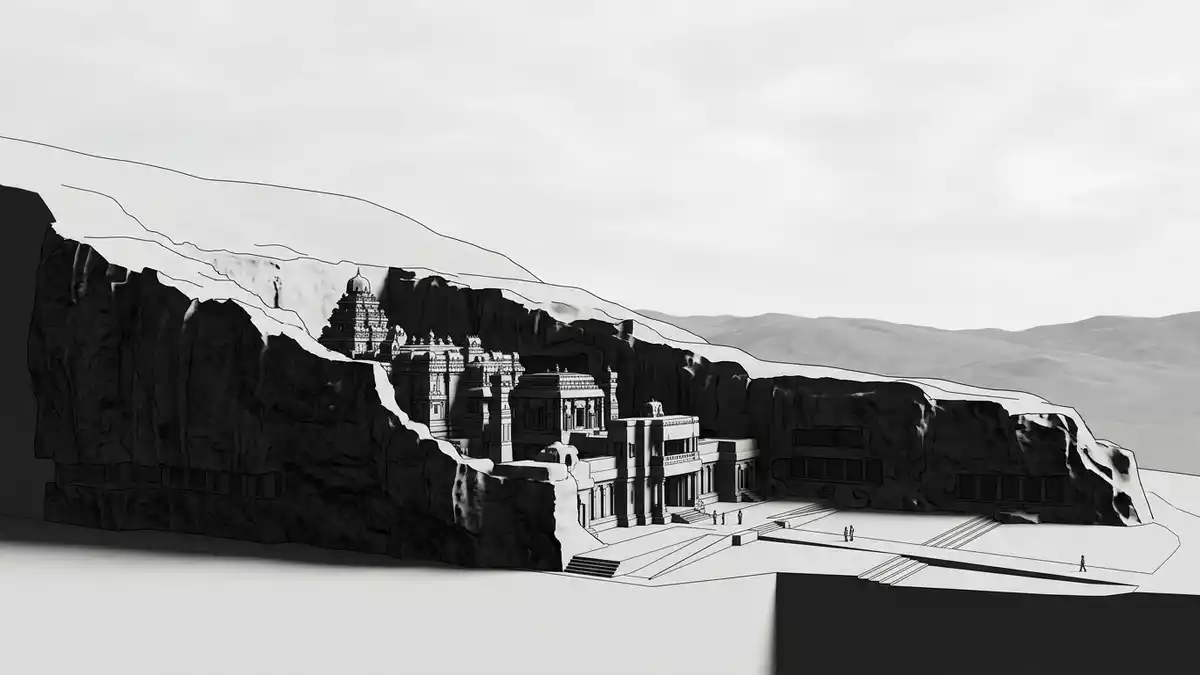
Ellora Caves near Aurangabad in India form a continuous stretch of temples and monasteries carved directly into a high basalt cliff in the Charanandri Hills. Between about AD 600 and 1000, Buddhist, Hindu and Jain communities created cave complexes here, turning the rock face into halls, shrines and façades aligned along more than 2 km of escarpment.
A cliff turned into architecture
Ellora Caves occupy a basalt escarpment on the Deccan Plateau in Maharashtra, northwest of the city of Aurangabad and near the village of Ellora, also known locally as Verul.basalt escarpment on the Deccan Plateau Along this cliff, a sequence of monasteries and temples has been cut directly into the rock, producing 34 numbered caves that together extend for more than 2 km.
The complex is carved out of volcanic basalt, with entrances and façades opening from the cliff into excavated interiors where structural elements and sculpture are all shaped from the same rock.monasteries and temples dug side by side in a high basalt cliff Within these spaces, pillars, beams, stairways and reliefs are integral to the cliff face itself rather than built as separate masonry. The result is a band of architecture that reads as both landscape and monument.
Three faiths carved along one rock face
Ellora Caves are organised broadly into three groups reflecting different religious traditions: Buddhist caves at the southern end, Hindu caves in the central stretch, and Jain caves to the north.twelve Buddhist, seventeen Hindu and five Jain caves The overall complex brings together monasteries, temples and shrines for these three faiths in a single continuous sequence, an arrangement that shows overlapping periods of patronage on the same cliff.
The Buddhist caves, dating to the earlier phase of excavation, include monastic halls with cells opening off central spaces and prayer halls where a central stupa is carved from the rock.Buddhist, Hindu and Jain temples cut from basaltic cliffs The Hindu caves introduce more elaborate multi-storey façades, free-standing pillars within excavated courts, and dense sculptural programmes centred on deities such as Shiva and Vishnu. The Jain caves at the far end of the cliff, added later, combine detailed carving with more compact shrine layouts, extending the religious range of the site.
Kailasa temple and dynastic patronage
Among the Hindu monuments, the Kailasa temple, designated Cave 16, is the most prominent single structure at Ellora Caves.Kailasa temple (Cave 16) is the largest of the rock-cut Hindu temples Unlike many other caves that are hollowed into the cliff face, this temple has been excavated as a freestanding volume of rock, with its outer walls, tower and surrounding courtyard all sculpted from the basalt outcrop.
The Kailasa temple is generally dated to the eighth century and associated with the Rashtrakuta dynasty, particularly the reign of Krishna I between about AD 756 and 773.Kailasa temple built by Krishna I of the Rashtrakuta dynasty Earlier and later caves at Ellora reflect different phases of patronage, from the Buddhist excavations beginning around the sixth century to Jain temples completed into the early second millennium. Together they form an uninterrupted sequence of monuments showing changing artistic styles and devotional practices over some four centuries.sequence of monuments dating from AD 600 to 1000
Visiting Ellora Caves: what travellers from Western Europe should know
- Ellora Caves lie in the Aurangabad district of Maharashtra in western India, north of Aurangabad and near the village of Ellora on the Aurangabad–Chalisgaon road.
- The site occupies a basalt cliff, and visiting involves walking along the base of the escarpment and through excavated halls and courtyards, with stone steps and uneven rock underfoot.
- The surrounding terrain forms part of the Charanandri Hills, and from the cave entrances the view opens towards the plateau and nearby agricultural land.
- The official language of the region is Marathi and the currency is the Indian rupee.
- Entry requirements depend on your nationality; UK travellers can check the FCDO travel advice at gov.uk/foreign-travel-advice, Irish travellers the Department of Foreign Affairs at ireland.ie.
Searching for Ellora Caves on social platforms
These links open searches for Ellora Caves on each platform.
Frequently asked questions about Ellora Caves
Where are Ellora Caves located?
Ellora Caves are in Maharashtra in western India, in the Aurangabad district, northwest of Aurangabad city and near the village of Ellora.
What should visitors expect on a visit?
Visitors walk along the base of a basalt cliff and enter excavated temples and monasteries, moving through stone halls, courtyards and shrine rooms cut from the rock.
What makes Ellora Caves distinctive among rock-cut sites?
Ellora Caves combine Buddhist, Hindu and Jain monuments along a single basalt escarpment, including the large Kailasa temple carved as a freestanding mass of rock.