

Elephantine's layered edge in Assuan
Published on 09/14/2026 at 06:32 | Editorial responsibility: Rafael Müller, Editor-in-Chief AD HOC NEWS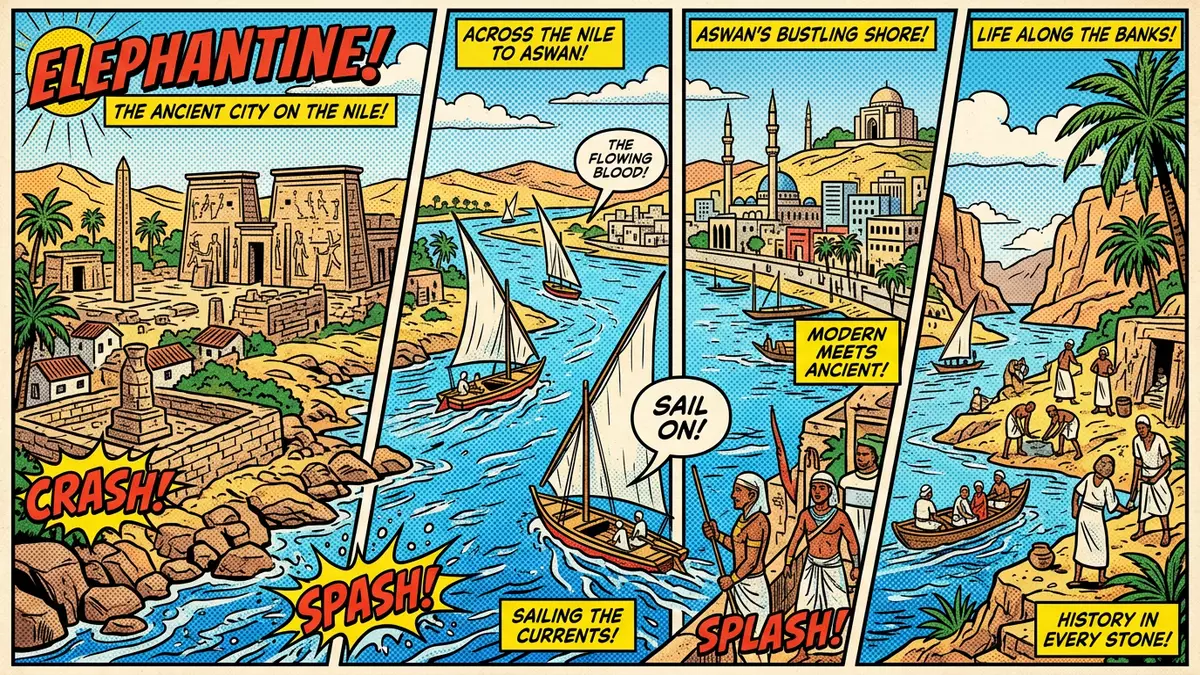
Elephantine is a Nile island in Assuan, opposite the city’s east bank and beside the First Cataract. Its layered ground combines ancient remains, later habitation and riverfront setting in one compact place.
Elephantine between the Nile and the cataract
The island forms part of the archaeological landscape at the southern edge of Upper Egypt, where the Nile narrows near the First Cataract. Ancient names for the island include Abu and Yebu, and the Greek form Elephantine became established in later use.
The place has long been linked with frontier life, river traffic and cult activity. The temple of Khnum and the nearby shrines of Satet and Anuket belong to that setting, together with the ruins of town and tombs on and around the island.
Temples, shrines and the ancient town
Elephantine contains the remains of a long-lived settlement, with traces from the Early Dynastic period through later Egyptian history. The German Archaeological Institute has worked on the island since 1969, and the archaeological record spans houses, temples and working areas across different parts of the site.
The island’s southern end preserves the temple area associated with Khnum, the ram god of the cataract region. The Nubian Monuments listing includes the ruins of town of Elephantine, placing the island within a wider heritage landscape in Aswan. The site also preserves rock tombs from the Old and Middle Kingdoms on the west bank opposite the island.
A border place with a long memory
Elephantine stood at Egypt’s southern frontier for much of pharaonic history, and that position gave it a lasting administrative and religious role. In the Old Kingdom it was known as the “door of the south”, and in other periods it remained a place where river movement, defence and worship overlapped.
That long sequence is visible in the island’s mixed fabric. The DAI project describes Elephantine as a major excavation area at the First Nile Cataract, while the official site entry identifies it as an archaeological island on the Nile Riverbank in Assuan.
Visiting Elephantine: what travellers from Western Europe should know
- The island lies opposite the city side of Assuan, and boat access from the riverfront is the usual way across.
- The site combines low ruins, uneven ground and excavated areas. Comfortable shoes make sense on the stone and sand surfaces.
- The First Cataract is part of the setting, with granite outcrops and river channels close by.
- Elephantine sits within a broader archaeological zone that includes tombs and temple remains on both sides of the river.
- The official language is Arabic and the currency is the Egyptian pound.
Searching for Elephantine on social platforms
These links open searches for Elephantine on each platform.
Frequently asked questions about Elephantine
Where is Elephantine?
Elephantine is an island in the Nile at Assuan in Upper Egypt. It lies by the First Cataract, opposite the city side of the river.
What can be seen on a visit?
The island brings together temple remains, ruins of the ancient town and traces of later settlement. Its surface is uneven, with excavated areas and stone and sand underfoot.
What makes Elephantine distinctive?
Its identity comes from the combination of frontier location, sacred buildings and long settlement history. The names Abu, Yebu and Elephantine belong to the same place across different periods.


