
Elephantine and the layered edge of Assuan
Published on 09/15/2026 at 13:18 | Editorial responsibility: Rafael Müller, Editor-in-Chief AD HOC NEWS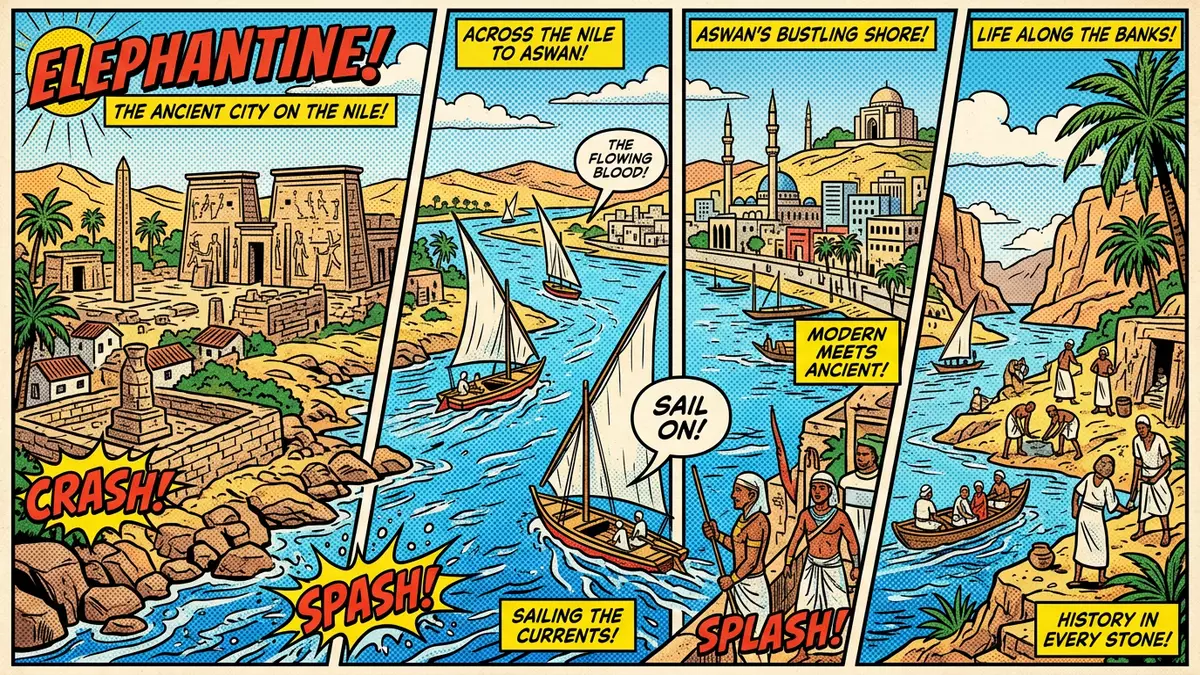
Elephantine is a Nile island in Assuan, opposite the city’s riverbank and part of the UNESCO-listed Nubian Monuments group. Its oldest surviving features sit beside later settlement, temples and village life.
Elephantine’s ancient edge on the Nile
Elephantine is the Greek name for pharaonic Abu, and the island occupies a frontier position in Upper Egypt. In the Old Kingdom, it was known as the “door of the south”, a name that fits its place opposite the First Cataract and near Nubia.Old Kingdom frontier
The island was tied to Khnum, the ram god of the cataract region, together with Satet and Anuket. Elephantine also held an important temple landscape, and the southern part preserves remains of sacred buildings and stone structures.Khnum and Satet
Stone, shrines and the river margin
The island’s archaeological remains include temple ruins, shrine fragments and rock-cut tombs on the west bank. The terrain is part river island, part archaeological site, with the Nile defining its long, narrow shape and its relationship to Assuan.
Elephantine is also linked to the ancient town of Abu, and the site preserves traces of long occupation across different periods. That layered fabric is one of the island’s defining features: religious remains, domestic areas and frontier history occupy the same ground.ancient town of Abu
Elephantine under later rulers
The island’s recorded history reaches back to the Early Dynastic period, and the fortress tradition is associated with the beginning of the First Dynasty around 3000 BCE. In later phases, Elephantine remained a political and commercial point on Egypt’s southern edge, with enduring links to Nubia and river trade.First Dynasty fortress
The temple town changed with the religious landscape of Egypt, and the cults of Khnum, Satet and Anuket left a clear mark on the island. The surviving ruins also belong to that longer sequence, where the sacred, administrative and residential histories overlap in one place.
Visiting Elephantine: what travellers from Western Europe should know
- Elephantine lies opposite central Assuan, across the Nile from the riverbank. Boats connect the city side with the island, and the approach is by water rather than road.
- The island is uneven and archaeological in character, with stone remains, paths and open ground around the ruins. The west-bank tombs sit high on the cliff, above the river.
- Elephantine includes Nubian villages as well as ruins, so settlement and archaeology appear side by side. The island also holds the Aswan Museum and the remains of ancient temple areas.
- The official language is Arabic and the currency is the Egyptian pound.
Searching for Elephantine on social platforms
These links open searches for Elephantine on each platform.
Frequently asked questions about Elephantine
Where is Elephantine?
Elephantine is an island in the Nile at Assuan in Upper Egypt. It lies opposite the city’s riverbank and near the First Cataract.
What does a visit show?
It shows a mix of temple ruins, rock tombs, village streets and open archaeological ground. The island’s ancient and living parts are close together.
What makes Elephantine distinctive?
Its distinctiveness lies in the overlap of frontier history, cult sites and settlement on one river island. Khnum, Satet, Abu and the Nubian Monuments all belong to that setting.


