
Elephantine and the layered edge of Assuan
Published on 08/29/2026 at 19:16 | Editorial responsibility: Rafael Müller, Editor-in-Chief AD HOC NEWS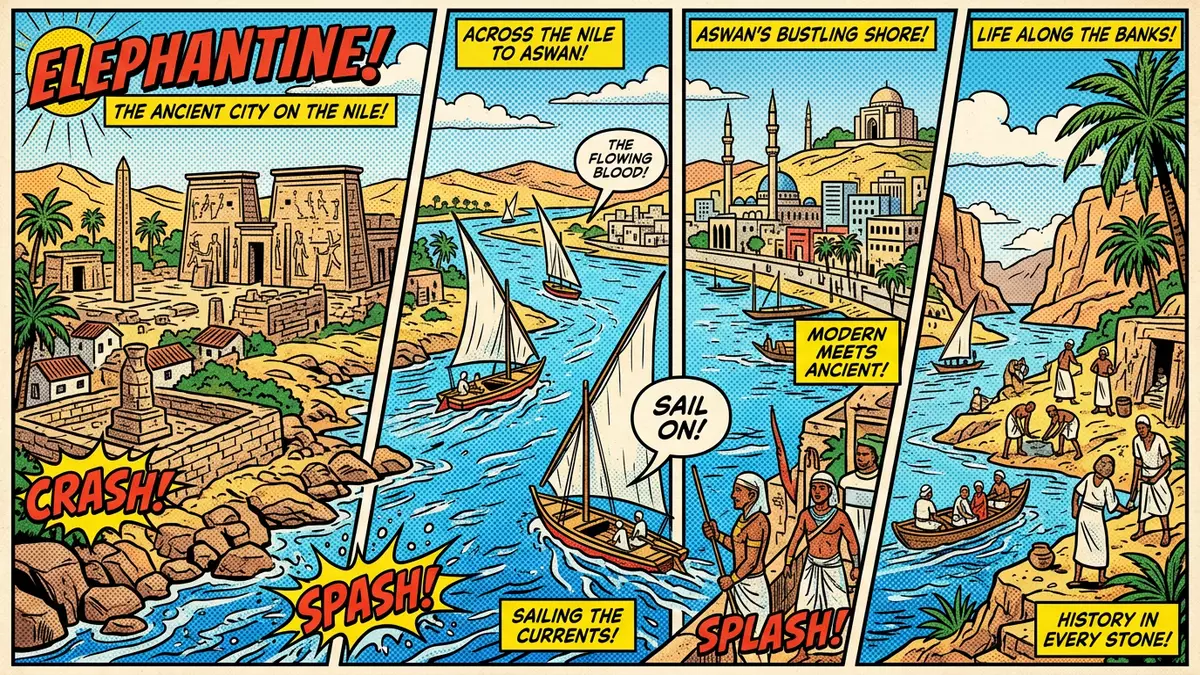
Elephantine is a Nile island in Assuan, and its layered ground still shows temples, ruins and settlement in one place. The island forms part of Aswan, sits opposite the city’s riverbank and belongs to the UNESCO-listed Nubian Monuments group.
Elephantine’s stone edge and river setting
The island lies just downstream of the First Cataract, where the Nile narrows and the river landscape becomes more rugged. Elephantine measures about 1,200 m (3,900 ft) by 400 m (1,300 ft), a compact scale that keeps its remains close together.Opposite Asw?n city, the island reads as a small strip of land with archaeology at both ends.
Ancient Egyptian and later Greek names survive in the record, and the place is tied to Abu, Yebu and Elephantine. The long occupation of the island is visible in the mix of stone, mudbrick and open ruins that share the same ground.
Temples, shrines and the cult of Khnum
Elephantine is closely linked with the temple world of Khnum, the ram god of the cataract region. The island also had shrines for Satet and Anuket, forming a sacred landscape around the southern frontier of Egypt.Temple remains and shrines stand beside later traces of habitation, so the religious and domestic pasts are not separated by distance.
At the southern tip, the temple area preserves some of the island’s most visible ancient masonry. Elsewhere, the remains of older shrine architecture and later rebuilding show how the island accumulated layers across the centuries.
Elephantine as an inhabited archaeological island
The island is not a vacant ruin field. It contains villages, museum space and excavation areas, and that combination gives Elephantine its particular character in Assuan.German excavations have long contributed to the study of the site, and finds from the island are displayed in the Aswan Museum.
Elephantine also appears in the history of frontier administration and trade. In the Old Kingdom it stood at Egypt’s southern edge, and later periods left papyri, temples and domestic remains across the island’s length.
Visiting Elephantine: what travellers from Western Europe should know
- The island lies in the Nile at Assuan and is reached by boat from the city side.
- The ground is uneven in places, with archaeological remains spread across an inhabited island landscape.
- The site combines temple ruins, museum material and village streets, so it reads as a living part of the river city.
- The official language is Arabic and the currency is the Egyptian pound.
- Entry requirements depend on your nationality; UK travellers can check the FCDO travel advice at gov.uk/foreign-travel-advice, Irish travellers the Department of Foreign Affairs at ireland.ie.
Searching for Elephantine on social platforms
These links open searches for Elephantine on each platform.
Frequently asked questions about Elephantine
Where is Elephantine?
Elephantine is an island in the Nile at Assuan in Upper Egypt. It sits opposite the city and just downstream of the First Cataract.
What appears on a visit?
Visitors encounter temple remains, ruins, museum material and inhabited streets on the same island. The setting is archaeological, but it is also part of the daily city landscape.
What makes Elephantine distinctive?
Its mixture of sacred architecture, domestic remains and frontier history gives it a dense character. The island’s small size makes those layers easy to read across short distances.


