
El Yunque National Forest, a tropical rainforest above Rio Grande
Published on 08/28/2026 at 07:25 | Editorial responsibility: Rafael Müller, Editor-in-Chief AD HOC NEWS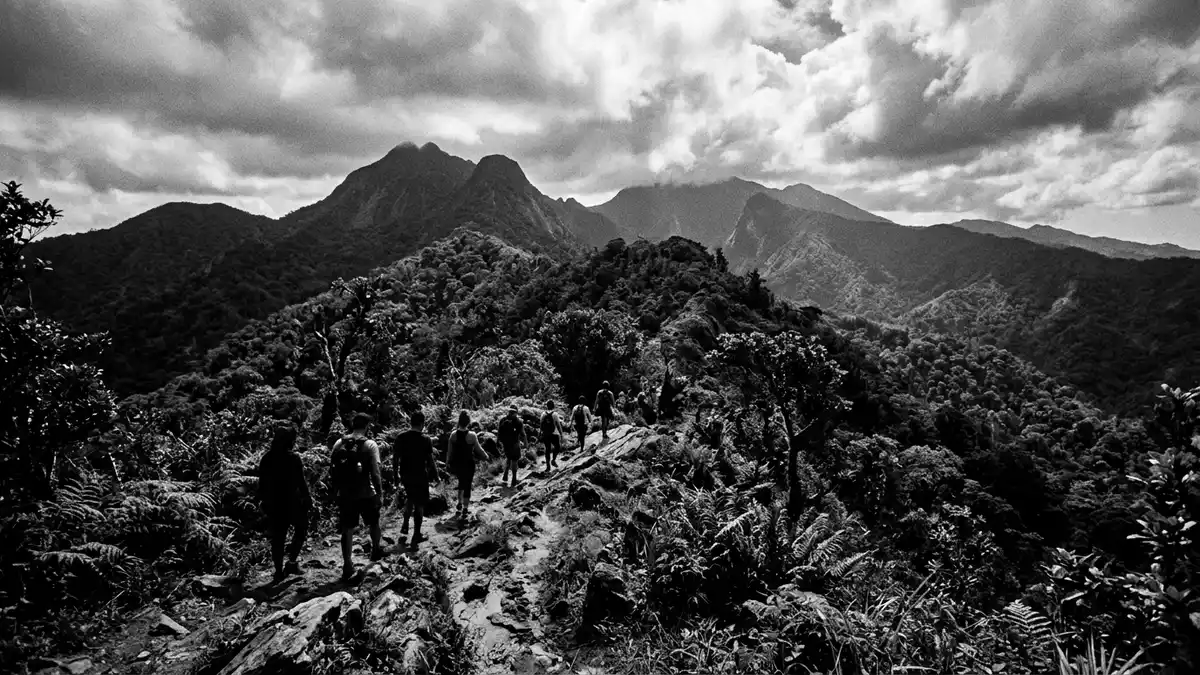
El Yunque National Forest in northeastern Puerto Rico is a compact tropical rainforest draped over the steep slopes above Rio Grande, where dense canopy, ridges and river valleys create a layered landscape rather than a single viewpoint. It forms part of the Sierra de Luquillo mountains and is recognised as the only tropical rainforest within the United States National Forest System, with protected terrain extending across several municipalities including Río Grande itself.
Rainforest on the Sierra de Luquillo slopes
The core of El Yunque National Forest lies on the rugged slopes of the Sierra de Luquillo in Puerto Rico’s north-east, where the mountains rise inland from the Atlantic coast and reach elevations of more than 1,000 m (3,281 ft) above sea level.rise to 3,533 ft The forest forms the largest continuous block of public land on the island, its boundaries enclosing more than 28,000 acres (around 115 km²) of slopes, ridges and valleysencompassing more than 28,000 acres rather than a single peak.
This terrain creates a sequence of belts as altitude increases: lower slopes carry thick broadleaf forest, while higher ground supports shorter, wind-shaped woodland that clings to ridges and summits. Streams cut down through the hillsides and gather into rivers that run towards the coastal plain around Rio Grande, and in places the water drops over rock steps to form waterfalls framed by vegetation. Because of the steepness of the slopes, many paths and roads follow the contours of the mountain rather than straight lines, bending around spurs and crossing small bridges.
A compact, long-protected tropical forest
Although the protected area is smaller in extent than many mainland national forests, El Yunque National Forest covers approximately 28,434 acres across the Sierra de Luquillocovers 28,434 acres, stretching over municipalities such as Río Grande, Luquillo, Canóvanas, Fajardo, Naguabo, Ceiba, Las Piedras and Juncosextends through eight municipalities. It is administered by the U.S. Forest Service as part of Region 8, and its status as the only tropical rainforest in the national forest system has given it particular prominence in conservation on the island.
The forest’s protected history predates its inclusion in the modern United States system: it was designated as a reserve under Spanish rule in the nineteenth century and later became known as the Caribbean National Forest before taking its present name El Yunque National Forest.formerly known as the Caribbean National Forest Across that long period it has remained largely forested, with steep terrain and heavy rainfall helping to preserve continuous canopy and a dense understorey that shelters a wide variety of flora and fauna.
Visitor corridors, towers and rivers
For visitors approaching from the coastal plain around Rio Grande, access routes climb into El Yunque National Forest along mountain roads such as PR-191, which bends uphill through neighbourhoods like Palmer before reaching forest gates and visitor facilities.driving directions to the main entrance Along these corridors, a network of marked trails branches into the trees, some following river valleys, others climbing towards viewpoints on ridges and summits.
Within these corridors, visitors encounter elements such as rivers flowing over boulders, pools below rock steps, and structures including lookout towers on high ground where the forest canopy falls away to reveal coastal views and the shapes of the Luquillo Mountains.lookout towers and waterfalls On foot, the change in vegetation with altitude becomes tangible: tall straight trunks dominate lower paths, while upper routes pass through shorter, more gnarled trees, with roots threading across rocky ground and mists sometimes moving through the branches.
Visiting El Yunque National Forest: what travellers from Western Europe should know
- El Yunque National Forest lies in north-eastern Puerto Rico above the municipality of Rio Grande, reached chiefly by road routes such as PR-3 and PR-191 that climb inland from the coastal plain.
- The terrain is mountainous, with roads and paths that ascend steep gradients and stairways that rise in long flights; walking routes can involve sustained uphill sections on uneven, sometimes wet ground.
- Trails pass rivers, cascades and dense vegetation, so footwear with good grip is important, and sections of path may feel confined where roots and rocks narrow the way.
- The official language is Spanish and the currency is the United States dollar.
- Entry requirements depend on your nationality; UK travellers can check the FCDO travel advice at gov.uk/foreign-travel-advice, Irish travellers the Department of Foreign Affairs at ireland.ie.
Searching for El Yunque National Forest on social platforms
These links open searches for El Yunque National Forest on each platform.
Frequently asked questions about El Yunque National Forest
Where is El Yunque National Forest?
El Yunque National Forest is in north-eastern Puerto Rico on the slopes of the Sierra de Luquillo mountains, with access from municipalities such as Rio Grande and Luquillo.
What should visitors expect on a first visit?
Visitors encounter steep mountain roads, forest trails through dense vegetation, rivers and cascades, and viewpoints from towers and ridges where coastal and mountain panoramas open out.
What makes El Yunque National Forest distinctive among forests?
It is recognised as the only tropical rainforest in the United States National Forest System, combining long-protected status with compact size and high ecological diversity on steep island terrain.


