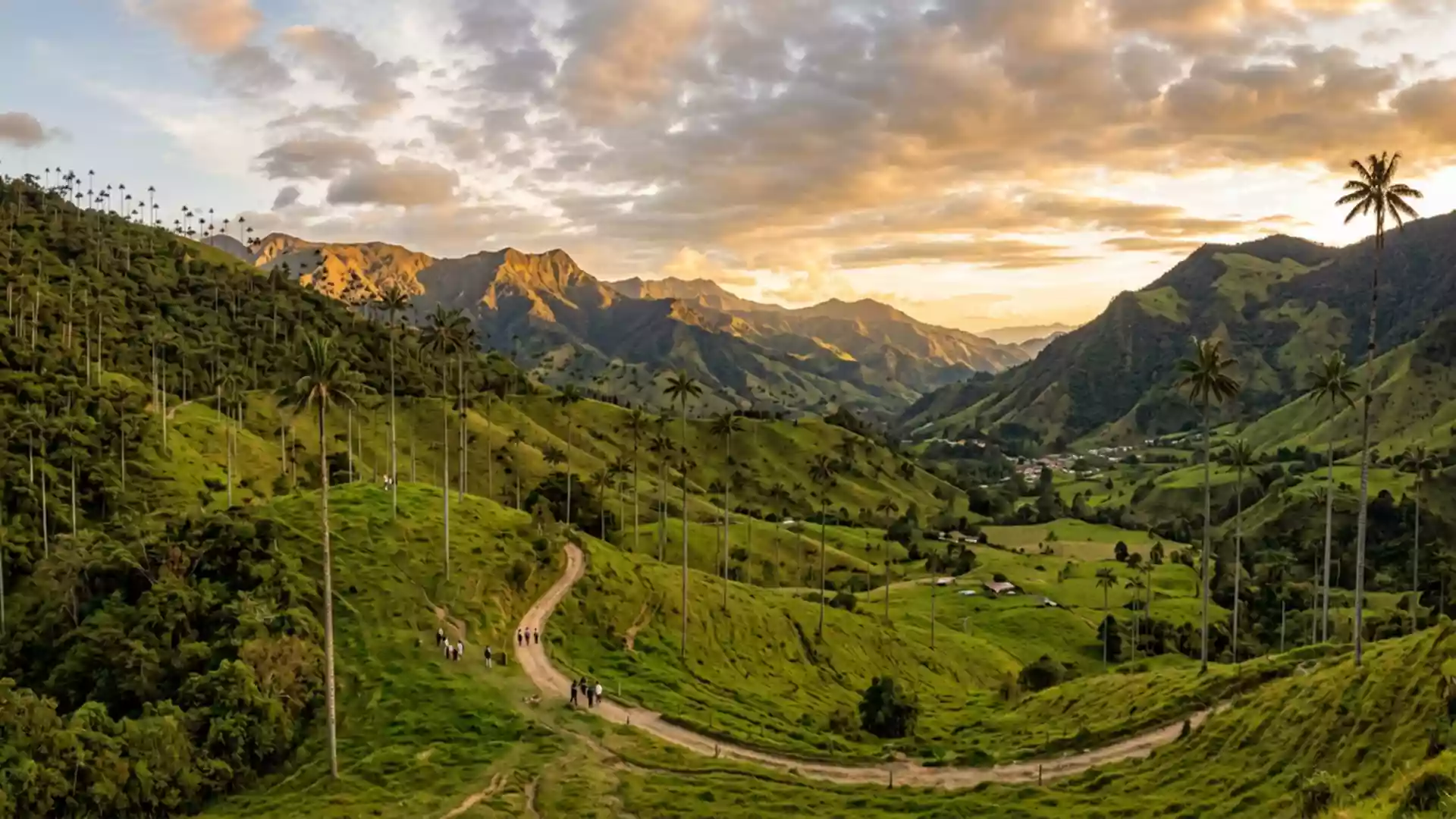
Eje Cafetero, where Colombia’s coffee hills frame Salento
Published on 09/02/2026 at 17:29 | Editorial responsibility: Rafael Müller, Editor-in-Chief AD HOC NEWS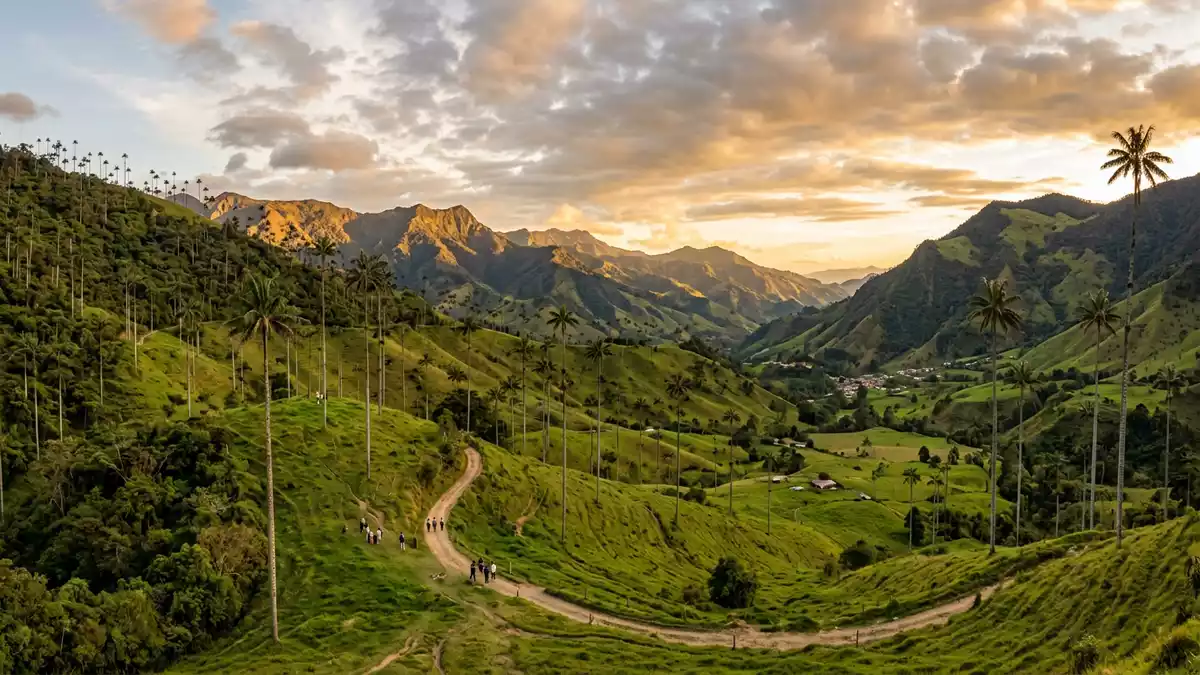
Eje Cafetero, the Coffee Axis of Colombia, unfolds around Salento as a band of steep Andean hills planted with coffee shrubs, cloud forest and brightly painted small towns. Since 2011 part of this landscape has been recognised as the Coffee Cultural Landscape of Colombia on the UNESCO World Heritage List, anchoring everyday farm life in a formally protected cultural region.
Coffee hills of the central Andes
The Eje Cafetero lies in Colombia’s central Andes, in a corridor of mountains that runs through the departments of Caldas, Risaralda and Quindío. Salento sits in Quindío, on a spur above the Quindío River valley, surrounded by ridges where coffee thrives between about 1,300 and 2,200 m (4,265–7,218 ft) above sea level.central Andes at elevations
The broader Coffee Axis stretches beyond these three departments into parts of Valle del Cauca and Tolima, forming a diagonal band of cultivated slopes, scattered farmhouses and compact towns.diagonal band of the Andes On clear days, higher peaks of the Andes rise behind the coffee hills, linking the agricultural landscape visually to the skyline of summits in Los Nevados National Natural Park.
UNESCO’s Coffee Cultural Landscape
In June 2011, UNESCO inscribed the Coffee Cultural Landscape of Colombia as a World Heritage site, recognising a mosaic of small farms, villages and transport routes shaped by coffee over generations.Coffee Cultural Landscape of Colombia The inscribed area spans selected municipalities and rural districts in Caldas, Quindío, Risaralda and Valle del Cauca, where coffee cultivation sits alongside traditional architecture and long-established patterns of land use.Paisaje Cultural Cafetero
Salento stands among these municipalities as an Andean town with Bahareque-style houses, timber-framed and painted in bright colours along narrow streets that rise from the main square.Coffee Axis towns such as Salento Around it, coffee farms share the hillsides with plantain, guava and patches of secondary forest, so the cultural landscape blends cultivated slopes with remnant woodland and river valleys.
Salento, Cocora Valley and coffee fincas
Salento serves as a gateway to some of the best-known corners of the Eje Cafetero, with roads leading to the Cocora Valley and to working coffee farms that welcome visitors.Salento in Quindío The Cocora Valley, reached along a side valley from Salento, is known for its forests and grasslands where wax palms rise high above the pasture, giving the landscape a distinctive silhouette against the Andean backdrop.Cocora Valley wax palms
Across the hills, coffee fincas operate on slopes that can be seen from the balconies and miradores of Salento and its neighbouring villages. Many farms sit on terraces cut into the hillsides, with rows of coffee shrubs following the contours and narrow tracks linking houses, drying yards and small processing sheds, so agriculture and settlement appear closely interwoven in the Eje Cafetero.
Visiting Eje Cafetero: what travellers from Western Europe should know
- Eje Cafetero lies in central Colombia’s Andes, with Salento in the department of Quindío linked by road to the regional cities of Armenia and Pereira.
- The terrain around Salento and the Cocora Valley is steep, with roads and paths that climb and descend along hillsides and tracks that can be uneven underfoot.
- Within the Coffee Axis, Salento stands near the boundary of Los Nevados National Natural Park, so highland trails and lower coffee-country walks can be combined in a single journey.
- The official language is Spanish and the currency is the Colombian peso.
- Entry requirements depend on your nationality; UK travellers can check the FCDO travel advice at gov.uk/foreign-travel-advice, Irish travellers the Department of Foreign Affairs at ireland.ie.
Searching for Eje Cafetero on social platforms
These links open searches for Eje Cafetero on each platform.
Frequently asked questions about Eje Cafetero
Where is Eje Cafetero?
Eje Cafetero is in central Colombia’s Andes, covering coffee-growing areas in the departments of Caldas, Risaralda and Quindío, with extensions into Valle del Cauca and Tolima.
What should visitors expect on a trip to Eje Cafetero?
Visitors encounter steep green hills planted with coffee, colourful towns such as Salento and access to highland landscapes including the Cocora Valley and the fringes of Los Nevados National Natural Park.
What makes Eje Cafetero distinctive among coffee regions?
Eje Cafetero combines smallholder coffee farms, Bahareque towns and Andean scenery in a UNESCO-listed cultural landscape, so agriculture, settlement and mountain terrain appear closely intertwined.