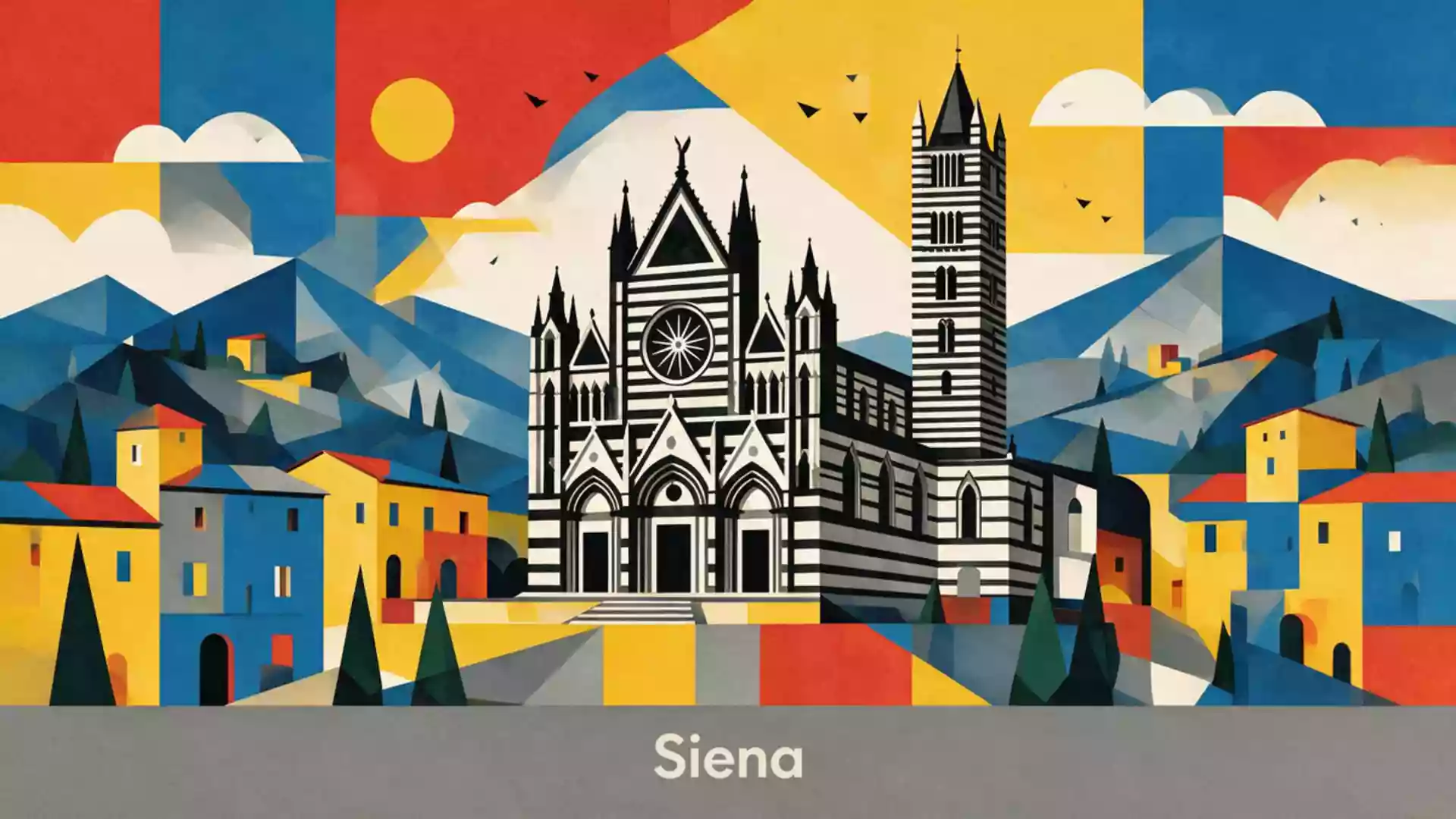
Duomo di Siena and its striped marble interior
Published on 09/04/2026 at 16:38 | Editorial responsibility: Rafael Müller, Editor-in-Chief AD HOC NEWS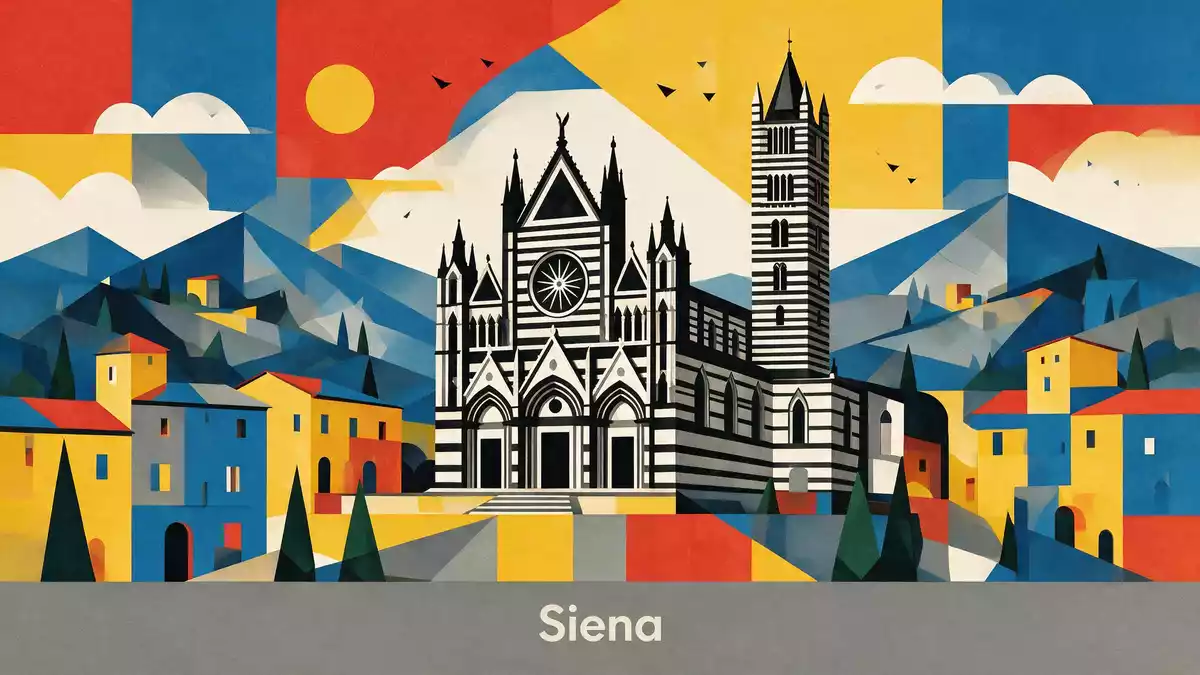
Duomo di Siena, formally the Cathedral of Santa Maria Assunta, turns the Romanesque-Gothic fabric of a medieval church into a continuous world of black and white marble stripes. The cathedral rises in Siena’s historic centre on high ground and was substantially built between the early thirteenth century and the later fourteenth century, with its present form dating from this long medieval building campaign.
Striped marble as a complete interior
Inside Duomo di Siena, bands of white marble and darker stone run across walls, columns and vaults in a pattern strongly associated with Siena’s civic colours. The alternating light and dark courses articulate the basilican plan, wrapping piers and arches so that structural elements become part of a single graphic surface rather than plain masonry.alternating bands of white marble and dark stone In the nave, the stripes rise with the clustered columns and continue into the ribs of the Gothic vaults, giving the ceiling a rhythm that echoes the vertical pattern below.
The dark stone used for the striping is frequently described as greenish-black, and its contrast with the pale marble gives the whole interior a high-contrast graphic character.Romanesque-Gothic style Chapels, arches and wall zones are framed by this banding, while sculpted capitals, cornices and friezes sit against striped backdrops instead of plain stone. The visual effect is especially clear where the striping extends around the dome’s drum, so that the transition from the crossing up into the cupola follows the same graphic language as the rest of the church.
A medieval cathedral shaped over centuries
Duomo di Siena is a medieval construction project carried across several generations, with work on the present cathedral structure recorded from the early thirteenth century. Building campaigns from around 1215 into the later 1200s created the core basilican volume, with a nave and aisles under Gothic vaults leading to a crossing crowned by a dome on an octagonal drum.designed and built between 1215 and 1263 Lead to cover the dome and copper for the globe at its top were purchased in 1263, indicating that the cupola had reached completion by that year.lead to cover the dome and copper for the apple
The thirteenth century also saw work begin on the sculpted façade under Giovanni Pisano, whose designs shaped the lower register facing south.Giovanni Pisano drew up the plans for the lower half of the facade Pisa-influenced arcades and Lombard Romanesque motifs appear in the campanile, which reached its full height in the first half of the fourteenth century.campanile from the first half of the fourteenth century Ambitious fourteenth-century plans for a much enlarged “Duomo Nuovo” were interrupted in the 1350s, leaving the incomplete Facciatone and related structures as visible traces of that halted expansion around the present cathedral.
Floor, façade and sculptural detail
Alongside the striped walls, Duomo di Siena is known for its marble floor, where inlaid panels form narrative and allegorical scenes across the nave and aisles. Work on these panels extended from the fourteenth through the sixteenth centuries, with later additions continuing into the eighteenth century, and about forty named artists contributed designs over this long period.about forty artists made their contribution Many of the floor scenes were laid out as cartoons by leading Sienese masters before being translated into marble, combining drawing and stonework in a single surface.
The western façade layers sculptural Gothic detail over the striped wall, with the lower portion attributed to Giovanni Pisano and later fourteenth-century builders extending the front upwards with additional gables, pinnacles and tracery.façade finished in a Gothic style at the end of the 1300s Statues of prophets, sibyls and other figures stand among arches and sculpted frames, set against the striped masonry that continues from the interior to the exterior. Inside, works by artists such as Nicola and Giovanni Pisano, Donatello, Pinturicchio, Lorenzo Ghiberti and Gian Lorenzo Bernini form a dense programme of sculpture, painting and metalwork that integrates with the cathedral’s architectural patterning.Siena Cathedral was founded in the 12th century and substantially built between 1215 and 1263
Visiting Duomo di Siena: what travellers from Western Europe should know
- Duomo di Siena stands in the historic centre of Siena in Tuscany, Italy, on a hilltop area near Piazza del Duomo and the Baptistery, reached along the city’s narrow streets.
- The cathedral interior includes stairways, steps and uneven stone floors, and visiting the dome-level viewpoints involves climbing additional flights within historic masonry.
- The official language is Italian and the currency is the euro.
- Entry requirements depend on your nationality; UK travellers can check the FCDO travel advice at gov.uk/foreign-travel-advice, Irish travellers the Department of Foreign Affairs at ireland.ie.
Searching for Duomo di Siena on social platforms
These links open searches for Duomo di Siena on each platform.
Frequently asked questions about Duomo di Siena
Where is Duomo di Siena located?
Duomo di Siena stands in the historic centre of Siena in Tuscany, Italy, on elevated ground near Piazza del Duomo.
What should visitors expect inside the cathedral?
Visitors encounter a Romanesque-Gothic interior defined by black and white marble stripes, inlaid narrative floor panels and a dense display of medieval and Baroque artworks.
What makes Duomo di Siena distinctive among Italian churches?
The continuous striped marble treatment across exterior and interior, combined with its long medieval building history and elaborate floor and façade decoration, gives Duomo di Siena a particularly recognisable character.