
Duomo di Milano: marble forest above Mailand’s central square
Published on 09/14/2026 at 18:57 | Editorial responsibility: Rafael Müller, Editor-in-Chief AD HOC NEWS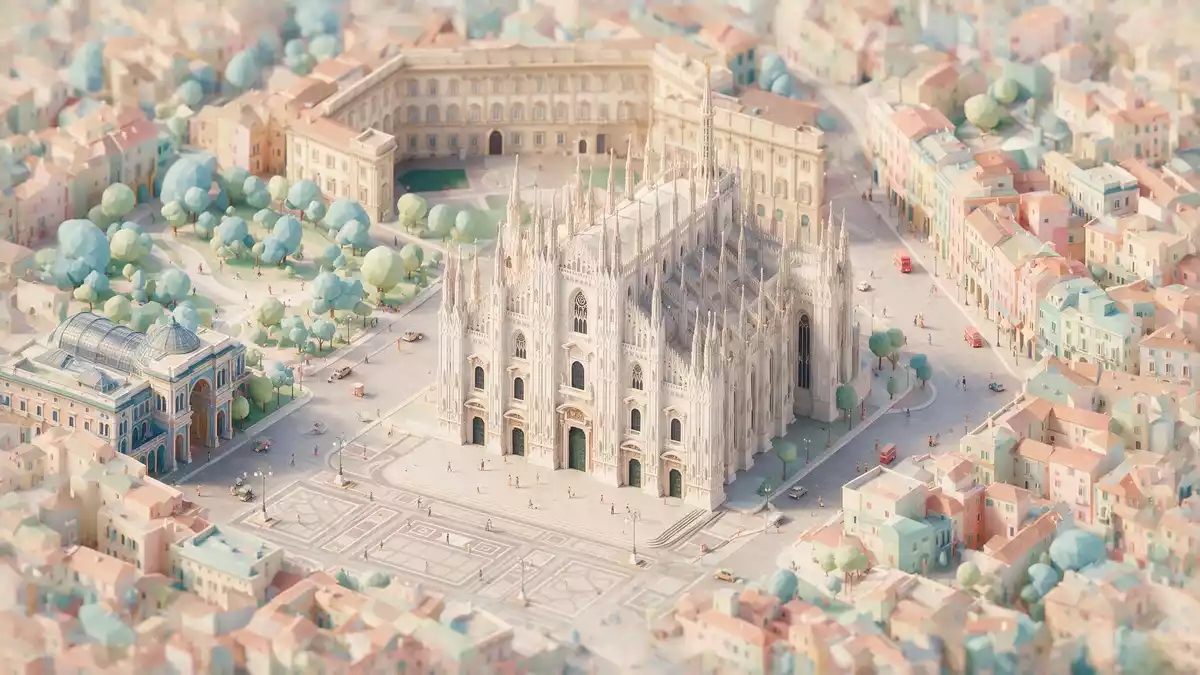
Duomo di Milano dominates Piazza del Duomo in Mailand with a vast canopy of marble pinnacles, statues and tracery rising above the city’s central square. Built as the cathedral of Milan and dedicated to Santa Maria Nascente, it grew over six centuries into a monumental Gothic church whose scale and detail shape the core of the city’s identity.
A Gothic giant built over centuries
Work on Duomo di Milano began in 1386, when Milan’s authorities launched an ambitious new cathedral to replace earlier structures on the site.construction began in 1386 The building is dedicated to the Nativity of St Mary and serves as the seat of the Archbishop of Milan, anchoring the religious life of the city.mother church of the Diocese Construction continued in phases, and the cathedral’s final decorative elements were completed in the twentieth century, with 1965 often cited as the year when the last major details on the façade and spires were finished.final details completed in 1965
The style of Duomo di Milano reflects this long timeline. The original vision belongs to International Gothic, with its emphasis on vertical lines, sculpted ornament and large stained-glass windows.International Gothic project Later work introduced Renaissance, Baroque, Neoclassical and Neo-Gothic elements, so the building reads as a layered record of changing tastes and techniques rather than a single-period project.mix of styles Inside, five aisles run from the western entrance towards the altar, creating a long processional route within a plan that has the form of a Latin cross.five great aisles
Marble, statues and the “forest” of spires
From outside, Duomo di Milano is defined by its pale cladding of Candoglia marble, a stone quarried in Lombardy and shipped historically along canals to Milan.brick with Candoglia marble Behind this skin of marble sits a core structure in brick, but the eye is drawn to the intricate sculpted surfaces rather than the hidden skeleton. The façade rises in tiers, with slender buttresses, niches and vertical bands of carving that lead up to a dense fringe of spires. At the centre of the main front stands a large portal with bronze doors framed by reliefs and figures.
The numbers attached to this ornament illustrate why the roofline is often described as a marble forest. Duomo di Milano carries more statuary than any other single building, with more than 3,000 figures distributed across façades, pinnacles and interior piers.more statuary than any other building Among these are saints, prophets and biblical scenes, but also more unexpected characters, including secular portraits inserted across the centuries.astonishing number of statues Around and above them, around 135 marble spires rise from the roof, each carrying its own small statue and decorative canopy.135 ornate spires
Dimensions, interior and the Madonnina
Duomo di Milano ranks among the largest churches in Europe in both length and footprint. The building stretches to about 158 m (520 ft) along its main axis and reaches roughly 92 m (302 ft) across the transept, occupying much of the block around Piazza del Duomo.length 158.6 m The principal spire rises to about 108 m (354 ft), giving the cathedral a strong vertical presence in the otherwise relatively level urban fabric.height 108 m Inside, the total floor area reaches well over 10,000 square metres (around 108,000 sq ft), and the space can accommodate roughly 40,000 people for major liturgical celebrations.capacity 40,000
The interior is organised into five aisles by massive stone piers that rise to ribbed vaults high above the floor.divided into five aisles Light enters through large stained-glass windows filled with scenes from scripture and the lives of the saints, many of them produced over different periods from the fifteenth century onwards.stained-glass windows Above the roofline, the cathedral’s most recognisable figure is the Madonnina, a gilded statue of the Virgin Mary that crowns the tallest spire.Madonnina on tallest spire Covered in gold leaf, the Madonnina serves as both a religious symbol and a landmark visible from many vantage points across Mailand.
Visiting Duomo di Milano: what travellers from Western Europe should know
- Duomo di Milano stands in Piazza del Duomo in central Mailand, on the Ambrosian rite Catholic territory of Lombardy, reached by urban transport routes converging on the square.
- The cathedral interior has a long nave with stone paving and a series of steps and level changes, while the surrounding square is a broad paved space exposed to the elements.
- The official language is Italian and the currency is the euro.
Searching for Duomo di Milano on social platforms
These links open searches for Duomo di Milano on each platform.
Frequently asked questions about Duomo di Milano
Where is Duomo di Milano located?
Duomo di Milano stands on Piazza del Duomo in the centre of Mailand, in the Lombardy region of northern Italy.
What should visitors expect inside the cathedral?
Visitors encounter a vast five-aisled interior with high vaults, stone piers and stained-glass windows, capable of hosting tens of thousands of worshippers for major ceremonies.
What makes Duomo di Milano distinctive among European cathedrals?
The cathedral’s combination of Candoglia marble cladding, thousands of statues, hundreds of spires and a building period stretching from 1386 to the twentieth century gives it a singular character.


