
Duomo di Milano and the marble forest of Milan
Published on 09/08/2026 at 14:53 | Editorial responsibility: Rafael Müller, Editor-in-Chief AD HOC NEWS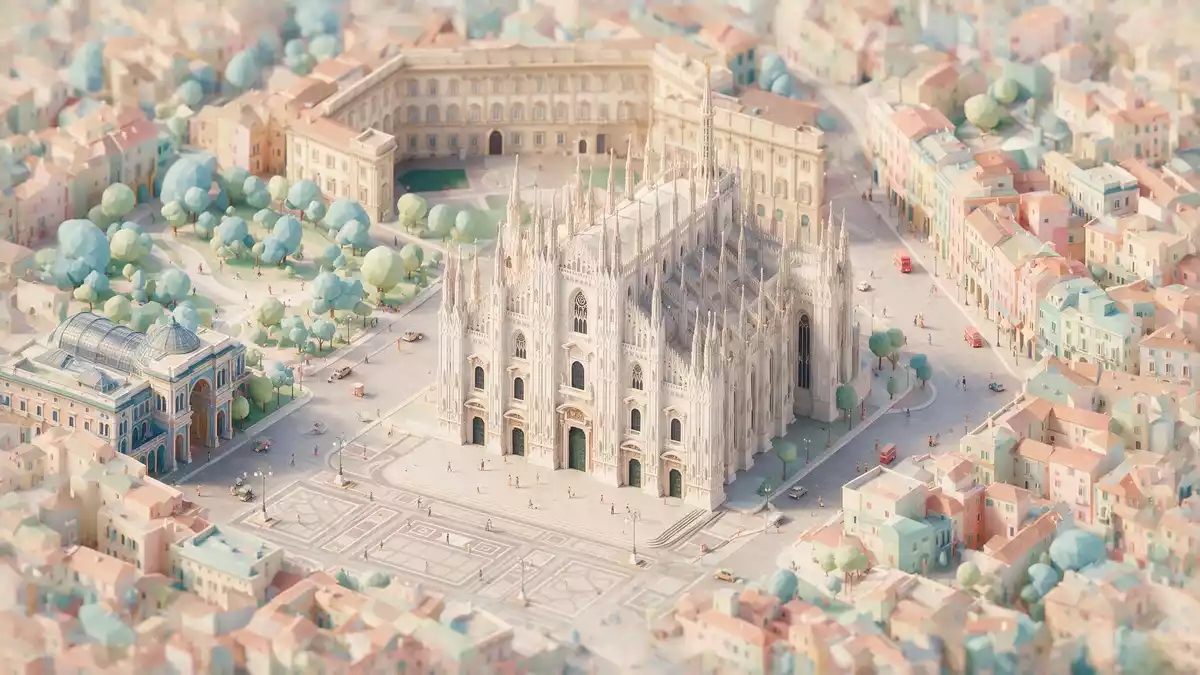
Duomo di Milano rises above Piazza del Duomo as a mass of pale marble, pinnacles and statues. The cathedral belongs to Milan’s skyline in the same way a cliff belongs to a coast: by volume, texture and outline, not by ornament alone.
The marble cathedral in the centre of Milan
The building is the cathedral of Milan and the seat of the archdiocese. Construction began in 1386 under Antonio da Saluzzo and Gian Galeazzo Visconti, and the work stretched across centuries before the cathedral reached its later form.Construction in 1386
Its fabric is the part that catches the eye first: Candoglia marble, carved into towers, niches and tracery. The long process of building left a Gothic structure that feels layered rather than uniform, with dense surface detail from different phases of work.Candoglia marble
A Gothic outline built over centuries
The cathedral is usually placed within the Gothic tradition, yet its final appearance also carries later additions. That mix is visible in the façade and in the many pinnacles that break the roofline into smaller parts.
Inside, the nave and the broad crossing keep the plan legible even when the decoration becomes intricate. The building’s size and vertical emphasis make the interior feel tied to the same language as the exterior: stone turned into a structured field of lines, figures and light.
The cathedral was completed in 1932 in the broad historical sense, while final decorative work continued after that in separate phases. The long chronology is part of the monument’s identity, but the visible result is more immediate than the dates: a Gothic body that carries later centuries within it.completed in 1932
From the façade to the spires
The west front is crowded with sculpture, crockets and vertical members that pull the eye upward. Above that mass, the roofline is broken by spires of different heights and profiles, giving the whole building a jagged silhouette.
At the top stands the gilded figure of the Virgin Mary known as the Madonnina. It has become one of the most recognisable elements of the cathedral and a fixed point in the profile of central Milan.Madonnina atop the spire
The scale of the exterior makes the cathedral read almost like a carved mountain of architecture. The surface remains busy at every distance, from the larger buttressing and towers to the smaller figures set into the stone.
Visiting Duomo di Milano: what travellers from Western Europe should know
- Duomo di Milano stands on Piazza del Duomo in central Milan. The Duomo metro station places the cathedral directly in the square, and the area also connects with the city’s tram network.
- The building is large and vertical, with steps, roofs and stone surfaces rather than a flat visit route. The terraces add height and exposed stone under open sky.
- The cathedral is the seat of the archbishop of Milan and remains a working religious building. Its liturgical role is part of what gives the place its layered character.
- The exterior is made for close looking. Statues, pinnacles and marble surfaces reward time spent on the square as much as movement through the interior.
Searching for Duomo di Milano on social platforms
These links open searches for Duomo di Milano on each platform.
Frequently asked questions about Duomo di Milano
Where is Duomo di Milano?
Duomo di Milano stands in Piazza del Duomo in central Milan. The square places the cathedral at the city’s core, with the metro station of the same name nearby.
What does a visit involve?
The place combines a vast Gothic church, a marble façade and terraces above the main body of the building. The experience is shaped by scale, sculpture and the vertical lines of the roofline.
What makes Duomo di Milano distinctive?
The cathedral is defined by its long building history, its Candoglia marble and its forest of pinnacles and spires. The Madonnina on the highest point finishes the silhouette with a clear Milan landmark.


