Duomo di Milano and its marble forest
Published on 08/10/2026 at 15:17 | Editorial responsibility: Rafael Müller, Editor-in-Chief AD HOC NEWS
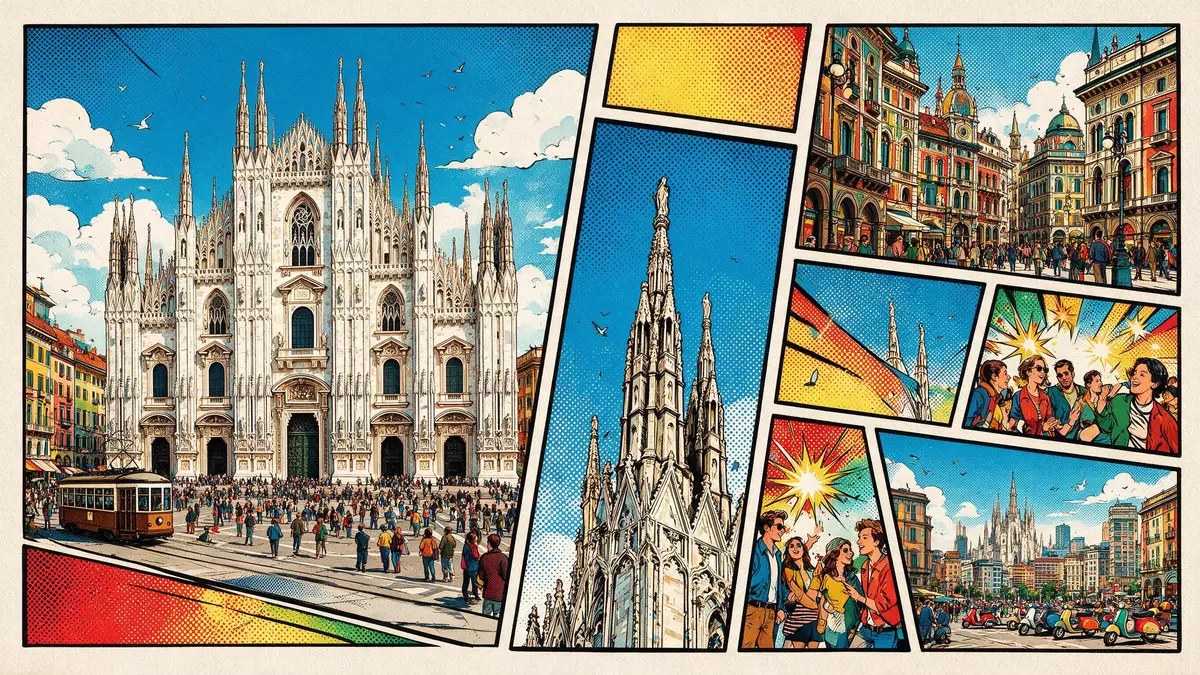
Duomo di Milano is the great marble cathedral of Mailand, begun in the late fourteenth century and associated with Gian Galeazzo Visconti. Its white Candoglia marble, dense forest of pinnacles and long Gothic profile make the building read as sculpture as much as church.
Milano’s marble cathedral
The cathedral’s body is a vast Gothic mass in pale stone, with buttresses, spires and traceried surfaces packed tightly across the façade and roofline. The building’s long construction history is visible in the mix of styles, from the late medieval shell to later completion work under Napoleon and in the nineteenth century.
Inside, the scale shifts from exterior intricacy to broad nave space, lined with columns and lit through stained glass. The cathedral is dedicated to Santa Maria Nascente, and the interior keeps the emphasis on height, stone and vertical rhythm rather than decoration alone.
The roof and the city
The roof is one of the cathedral’s defining spaces, with walkways among the pinnacles and statues. From there, Mailand spreads in every direction, and the limestone-white marble stands out against the city’s darker roofs and streets.
The exterior sculpture gives the building a layered appearance, with saints, grotesques, arches and carved details across almost every surface. The famous Madonnina, a gilded statue of the Virgin Mary, crowns the highest point and ties the skyline to the cathedral’s profile.
Gothic work in many generations
Duomo di Milano belongs to a northern Gothic tradition, but its history stretches across many generations of craftsmen, patrons and architects. That long process left a monument where medieval ambition, later finishing campaigns and civic identity are visible in the same stone envelope.
The result is a building that works as both church and city symbol. Its scale, marble surface and crowded roofline make it one of the defining landmarks of Mailand, without needing any extra explanation.
Visiting Duomo di Milano: what travellers from Western Europe should know
- Duomo di Milano stands in central Mailand, reached easily by metro, tram and on foot from nearby streets and squares.
- Admission arrangements and opening hours are set by the site's operator and change with the season; the official website is the only binding source.
- Late afternoon and early evening can suit the marble exterior, while the roof is clearest in dry weather and steady light.
- The roof involves steps and open walkways, and parts of the cathedral require comfortable shoes and care on uneven surfaces.
- Italian is the main language on site, and card payment is common in the surrounding city centre.
- Entry requirements depend on your nationality. UK travellers should check the FCDO travel advice at gov.uk/foreign-travel-advice; Irish travellers the Department of Foreign Affairs at ireland.ie; EU and EEA citizens their own national foreign ministry.
Searching for Duomo di Milano on social platforms
These links open searches for Duomo di Milano on each platform.
Frequently asked questions about Duomo di Milano
Where is Duomo di Milano?
Duomo di Milano stands in the centre of Mailand, on Piazza del Duomo. It is one of the city’s main landmarks and sits close to the surrounding shopping streets and civic buildings.
What should visitors expect?
Expect a large Gothic cathedral in pale marble, with an ornate façade, a long nave and a roof walk among statues and pinnacles. The visit involves stairs and open-air sections on the roof.
What makes it distinctive?
Its Candoglia marble surface, long building history and rooftop sculpture set it apart in appearance. The Madonnina and the crowded skyline of pinnacles make the cathedral recognisable from many parts of Mailand.