
Drottningholms slott and its preserved royal ensemble
Published on 09/23/2026 at 00:36 | Editorial responsibility: Rafael Müller, Editor-in-Chief AD HOC NEWS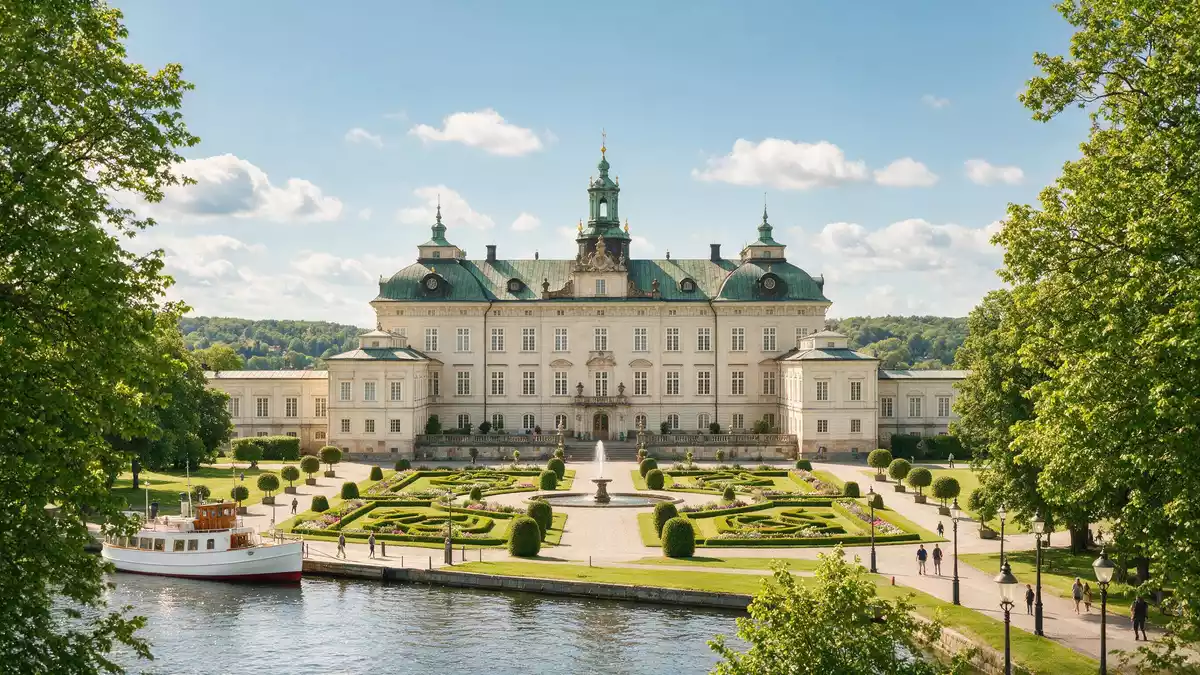
Drottningholms slott is a Baroque royal residence on Lovön, an island in Lake Mälar west of Stockholm. Its palace, theatre, Chinese Pavilion and gardens form a connected historic ensemble, with the royal home at its centre.
Drottningholms slott on Lovön
The palace rises on Lovön in Ekerö Municipality, beside Lake Mälar. Pale façades, green roofs and formal gardens create a clearly ordered architectural landscape between water and woodland.
The present palace belongs to the building campaign begun in 1662 for Queen Hedvig Eleonora. Architect Nicodemus Tessin the Elder established its main design, while Nicodemus Tessin the Younger completed important parts of the building and interiors. The work continued through the seventeenth century and into the early eighteenth century.
A Swedish Baroque residence with French and Italian influences
Drottningholms slott combines French Baroque planning with Italian classical elements. Its rooms include state apartments, halls and richly decorated interiors arranged within a formal palace composition. The surviving architecture presents the European court culture of the seventeenth and eighteenth centuries through Swedish materials and craftsmanship.
The royal residence has retained its connection with the Swedish monarchy. The Royal House of Bernadotte has used Drottningholm Palace since the time of King Oscar I, and the palace remains a residence of the Swedish royal family. Parts of the wider domain have a public cultural role, while the residence remains a working royal setting.
The theatre, Chinese Pavilion and palace gardens
The palace is only one part of the Royal Domain of Drottningholm. The Drottningholm Palace Theatre, built in 1766, preserves an eighteenth-century theatre environment associated with court performance. Its stage machinery, auditorium and decorative setting belong to the cultural history of the domain.
The Chinese Pavilion adds another architectural language to the grounds. Together with Canton Village, the palace park and the area of Malmen, it forms the wider property inscribed on the UNESCO World Heritage List in 1991. The ensemble is described through its palace, theatre, Chinese Pavilion and gardens, rather than through the palace alone.
Visiting Drottningholms slott: what travellers from Western Europe should know
- Drottningholms slott stands on Lovön in Lake Mälar, west of Stockholm. Road connections reach the palace from Stockholm, and boat services connect the site with the capital during parts of the year.
- The domain includes open parkland, formal garden areas and separate historic buildings. Reaching the theatre and Chinese Pavilion involves moving through the palace grounds on foot.
- The island setting places the palace beside Lake Mälar and within Ekerö Municipality. Stockholm remains the main urban reference point for the site.
- The official language is Swedish and the currency is the Swedish krona.
Searching for Drottningholms slott on social platforms
These links open searches for Drottningholms slott on each platform.Frequently asked questions about Drottningholms slott
Where is Drottningholms slott?
Drottningholms slott is on Lovön, an island in Lake Mälar within Ekerö Municipality, west of Stockholm.
What can visitors see at the palace?
The domain includes the palace, the Drottningholm Palace Theatre, the Chinese Pavilion, formal gardens, the palace park and parts of Canton Village.
What makes Drottningholms slott distinctive?
The palace belongs to a royal ensemble inscribed on the UNESCO World Heritage List in 1991. Its Baroque residence, 1766 theatre, Chinese Pavilion and gardens remain closely connected across the island setting.


