
Dotonbori’s canal of lights and food in Osaka
Published on 09/10/2026 at 19:52 | Editorial responsibility: Rafael Müller, Editor-in-Chief AD HOC NEWS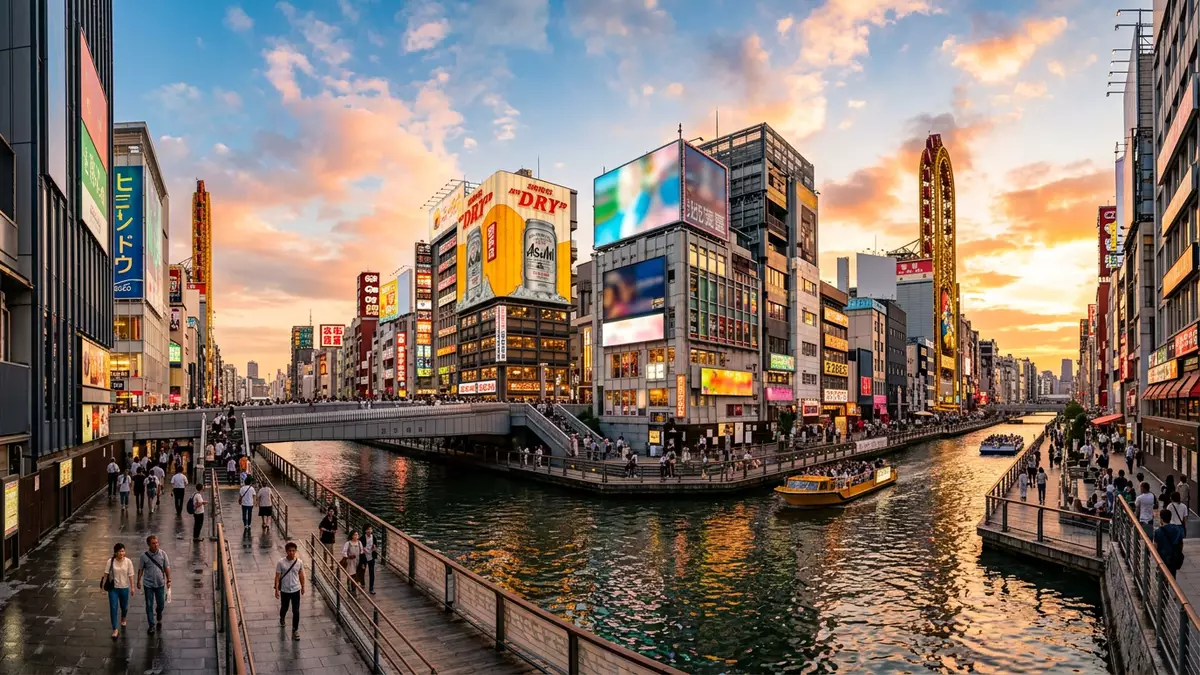
Dotonbori is an entertainment district in Osaka that grew around a canal first dug in 1612, and remains defined by its strip of water, bridges and illuminated signs in the twenty-first century.
A canal that turned into a theatre street
The story of Dotonbori begins in the early seventeenth century, when a local merchant named Yasui Doton started excavating a canal on the southern edge of Osaka in 1612 to link existing waterways.Yasui Doton did not live to see the canal completed, as he was killed in 1615 during the Siege of Osaka, but his relatives continued the work and the finished waterway was named Dotonbori in his memory later that year.the canal was completed later that year
Within a decade the new canal began to shape the district around it: in 1621 the Tokugawa shogunate designated the south bank of Dotonbori as Osaka’s main entertainment area, and by the Edo period the waterfront carried kabuki theatres and bunraku puppet theatres that made the district known as a stage-lined street.designated Dotonbori as Osaka's official entertainment district Theatres stood close to the canal, while teahouses and restaurants on the opposite bank served audiences before and after performances, fixing Dotonbori’s identity early as a place where commerce, performance and food meet around the water.
Neon billboards, bridges and the running figure
Dotonbori’s modern visual character is built from illuminated billboards lining the canal and from the way bridges and walkways cross the water at regular intervals, turning it into a corridor of signs and reflections. One of the best-known features is the Glico running man sign, first installed above the canal in 1935 by the confectionery company Ezaki Glico as a neon image of an athlete crossing a finish line.first unveiled in 1935 The current version, the sixth generation of the sign, uses an LED screen but keeps the same running figure as its centre.the current design is the sixth generation
At canal level, pedestrian bridges such as Ebisubashi span the water and act as viewing points for the billboards and the canal itself.Ebisubashi Bridge Street-level walkways run beside the water, lined with restaurants and shops whose façades carry large-scale signs, models and lighting. Together, the canal, bridges and billboards give Dotonbori a layered streetscape, with movement on the water, on the embankments and across the bridges framed by graphic images and coloured light.
Food, phrases and the district’s atmosphere
As the theatres multiplied along Dotonbori’s banks in the seventeenth century, restaurants and teahouses developed alongside them to serve visitors, and over the following centuries dining became a central part of the district’s character.six kabuki theaters and five bunraku theaters The association between Dotonbori and appetite is reflected in the Osaka saying “kuidaore”, linked with the district and roughly understood as the idea of eating until one is ruined.the famous Osaka saying kuidaore emerged here
Modern descriptions of Dotonbori emphasise its concentration of restaurants and food stalls along the canal, where different styles of Japanese cooking appear side by side and illuminated signage highlights particular dishes. The water remains central: the canal is more than 400 years old, and its presence shapes the way buildings face towards the water and the way people move along the embankments.a canal dating back over 400 years Between the long history, the canal and the emphasis on food, Dotonbori presents a district where performance spaces have largely given way to restaurants but the idea of entertainment beside the water still defines the area.
Visiting Dotonbori: what travellers from Western Europe should know
- Dotonbori lies in the Minami area of central Osaka, with the canal running roughly east–west and Ebisubashi Bridge crossing it at one of the main viewing points.
- The canal-side streets and embankment walkways are level but become busy, and access to bridges such as Ebisubashi is mainly via standard staircases and pavements rather than long ramps.
- The district sits close to other central Osaka neighbourhoods, with Shinsaibashi to the north and Namba to the south, so it often forms part of a wider city-centre walk.
- The official language is Japanese and the currency is the yen.
- Entry requirements depend on your nationality; UK travellers can check the FCDO travel advice at gov.uk/foreign-travel-advice, Irish travellers the Department of Foreign Affairs at ireland.ie.
Searching for Dotonbori on social platforms
These links open searches for Dotonbori on each platform.
Frequently asked questions about Dotonbori
Where in Osaka is Dotonbori located?
Dotonbori runs along the Dotonbori Canal in the Minami district of central Osaka, with streets and bridges lining both banks of the waterway.
What can visitors expect when walking through Dotonbori?
A walk through Dotonbori follows the canal past illuminated billboards, bridges such as Ebisubashi and dense rows of restaurants and shops facing the water.
What makes Dotonbori distinctive among Osaka’s districts?
Dotonbori combines a seventeenth-century canal, a long-standing role as an entertainment area and a concentration of canal-side dining and signage focused on food.


