
Dotonbori and its canal of light in Osaka
Published on 09/01/2026 at 12:37 | Editorial responsibility: Rafael Müller, Editor-in-Chief AD HOC NEWS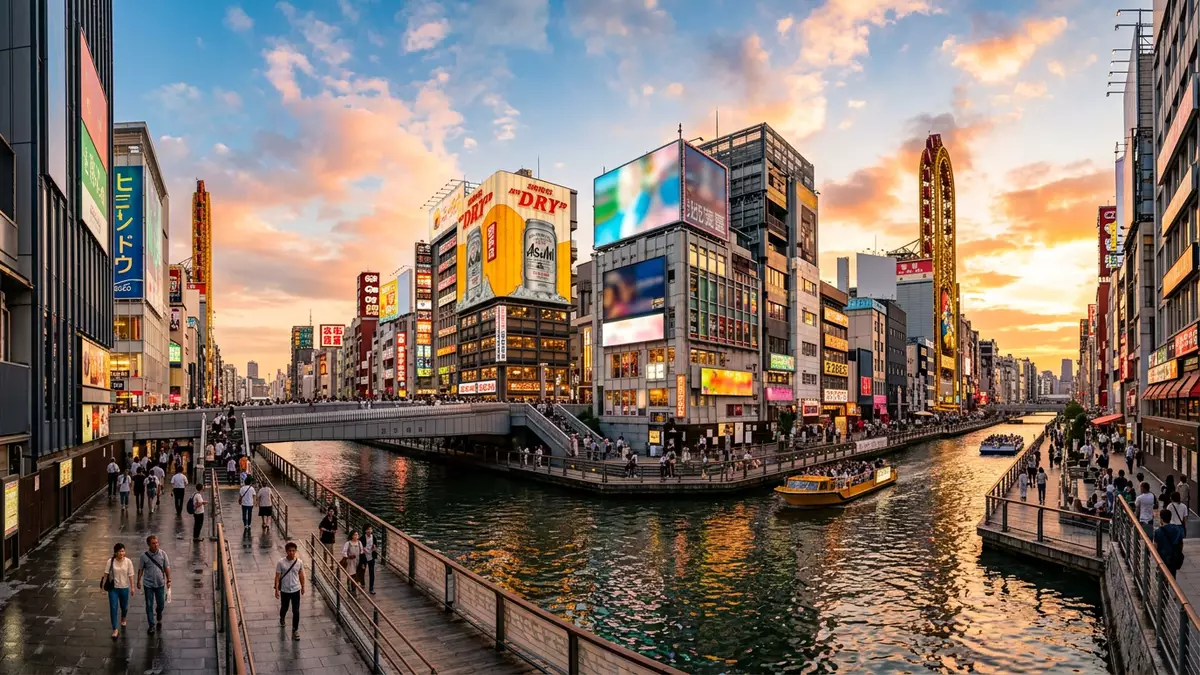
Dotonbori is a central Osaka district built along a historic canal, where illuminated signboards, restaurant terraces and bridges create a continuous corridor of light above the water. The area lies in the Namba part of Chuo Ward and has grown from an early theatre quarter into one of Osaka’s best known entertainment neighbourhoods.
The canal that shaped Dotonbori
The spine of Dotonbori is the canal of the same name, a straight east–west waterway that threads through the Namba district of Osaka’s Chuo Ward. The most recognisable stretch runs between Dotonboribashi Bridge in the west and Nipponbashi Bridge in the east, with a cluster of bridges and terraces concentrating activity around Ebisubashi Bridge.runs along the Dotonbori canal
The canal dates back to the early seventeenth century, when Osaka merchant Yasui D?ton began work in 1612 on a navigation route linking existing waterways and was killed in 1615 during the Siege of Osaka. His relatives continued the project, completing the canal that year, and feudal lord Matsudaira Tadaaki named it “D?tonbori” in D?ton’s honour.Yasui D?ton began work in 1612 In the decades that followed, Edo-period urban planning under the Tokugawa shogunate turned the banks into a planned entertainment avenue.
From theatres to neon and signboards
By the mid-seventeenth century Dotonbori had developed into Osaka’s major theatre district, lined with kabuki and bunraku houses and venues for mechanical puppet performances, alongside restaurants and tea houses serving visitors to the shows.history of Dotonbori started in 1612 Over the following centuries earthquakes and wartime bombing damaged and ultimately erased the historic theatres, and twentieth-century redevelopment brought commercial buildings, cinemas and a dense mix of bars and eateries to the same streets.
The entertainment focus remained, but the visible character shifted from stage façades to illuminated billboards and three-dimensional shop signs. Modern Dotonbori is known for giant crab figures, lantern rows and animated restaurant signage facing the canal, alongside the Shochikuza theatre building and other venues in the surrounding blocks.lined with giant three-dimensional signs Walking the waterfront promenade reveals how signage and architecture share the limited canal frontage, with upper floors rising behind narrow ground-level plots.
The Glico Running Man and canal-front promenade
One landmark sign above the canal has become closely associated with Dotonbori: the running man billboard for confectionery company Ezaki Glico. The first version of the sign appeared in 1935 overlooking the canal near Ebisubashi, and subsequent redesigns have kept the image of a runner crossing a finish line as a fixed part of the skyline.a runner frozen mid-stride above the Dotonbori Canal Photographs of its illuminated panels frequently serve as shorthand for the district as a whole.
The canal-front walkway, signed locally as the Tombori River Walk, follows both banks and links bridges, terraces and mooring points. Restaurants and bars open directly onto this promenade, with upper levels creating stacked viewing platforms along the water.the canal-front promenade Away from the water, side streets branch into the wider Minami area, where neighbouring districts such as Shinsaibashi connect to Dotonbori by foot.
Visiting Dotonbori: what travellers from Western Europe should know
- Dotonbori lies within Osaka’s Namba district in Chuo Ward, south of the city’s main rail termini. The district is reached on Osaka Metro lines to Namba Station, from which streets lead towards the canal and Ebisubashi Bridge.
- The canal-front Tombori River Walk is level but busy, with steps at bridge approaches and on access routes between the promenade and street level. Side streets away from the water have narrow pavements and occasional staircases inside older buildings.
- Osaka sits in the Kansai region of Japan, with humid summers and cool winters that shape conditions along the canal, from warm evenings on the terraces to brisk air over the water in the colder months.
- The official language is Japanese and the currency is the yen.
- Entry requirements depend on your nationality; UK travellers can check the FCDO travel advice at gov.uk/foreign-travel-advice, Irish travellers the Department of Foreign Affairs at ireland.ie.
Searching for Dotonbori on social platforms
These links open searches for Dotonbori on each platform.
Frequently asked questions about Dotonbori
Where is Dotonbori in Osaka?
Dotonbori is a canal-side district in the Namba area of Osaka’s Chuo Ward, with its central stretch between Dotonboribashi Bridge and Nipponbashi Bridge.
What can visitors expect on a walk through Dotonbori?
Visitors encounter illuminated signboards, restaurant terraces and bridges along the canal, with dense streets of eateries, bars and shops extending into the surrounding Minami district.
What makes Dotonbori distinctive among Osaka neighbourhoods?
The combination of a seventeenth-century canal, long history as a theatre quarter and concentration of modern signage and waterfront promenades gives Dotonbori a character strongly associated with Osaka’s after-dark cityscape.


