
Djoudj National Bird Sanctuary and the wetlands of the Senegal River delta
Published on 09/15/2026 at 12:59 | Editorial responsibility: Rafael Müller, Editor-in-Chief AD HOC NEWS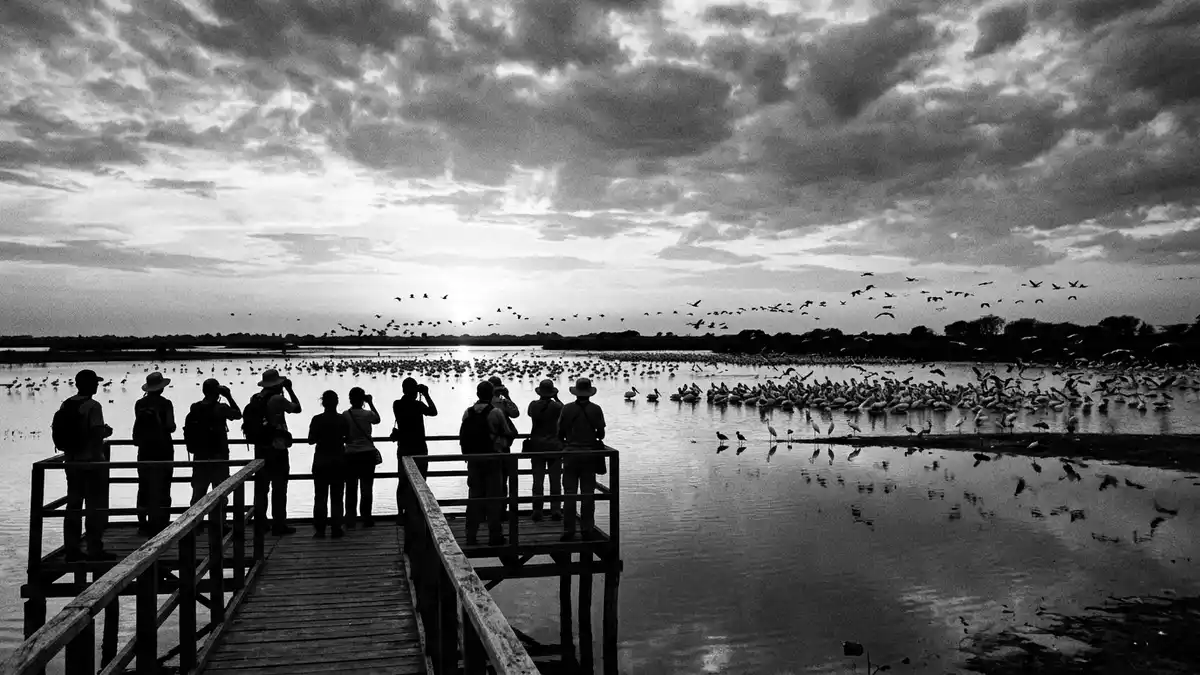
Djoudj National Bird Sanctuary in northern Senegal is one of West Africa’s great wetland reserves, a protected expanse of lakes and channels in the Senegal River delta where migratory birds concentrate in remarkable numbers. Recognised as a UNESCO World Heritage Site since 1981, it offers a rare glimpse of a large delta landscape managed primarily for wildlife rather than agriculture.
Wetland maze at the edge of the Sahara
The sanctuary lies in the lower Senegal River valley, north-east of Saint-Louis, where the river spreads into a shallow inland delta before turning towards the Atlantic. Within the protected core, a large shallow lake is surrounded by a network of streams, ponds and backwaters that flood and retreat with the seasons.wetland of 16,000 ha gives a sense of the scale of this water landscape, though the protected complex with its buffer zone extends further inland.complexe protégé d’une superficie de 23 677 hectares
The environment here sits close to the Sahara yet retains a semi-arid climate shaped by the river and the floodplain. The contrast between open water, mudflats and sahelian savanna vegetation defines the character of Djoudj. Visitors travelling across dry scrubland find themselves entering a mosaic of lakes, seasonal lagoons and channels lined by reeds and other aquatic plants, with low islands emerging above the floodwaters.
A sanctuary for migratory birds
Djoudj is best known for its birdlife, especially the gatherings of migratory waterbirds that arrive after crossing the desert from Europe and Asia. The protected wetlands form a crucial refuge in the long migration route, providing feeding and resting areas away from cultivated land. Surveys over the years have recorded hundreds of bird species using the park and its surroundings, reflecting the variety of habitats from open water to mudflats and shallow vegetated pools.zone humide d'importance internationale
Among the birds most associated with Djoudj are white pelicans, purple herons, African spoonbills, great egrets and several cormorant species, which gather in large flocks on the water and in roosting trees.white pelican, the purple heron, the African spoonbill, the great egret and the cormorant Breeding colonies of pelicans and other waterbirds are among the most striking sights, with birds fishing in coordinated groups on the lake and then returning to crowded nesting areas. Smaller species, including waders and ducks, spread across mudflats and shallow pools, while raptors patrol above the floodplain.
Protected status and conservation history
The site was established as Parc National des Oiseaux du Djoudj in 1971, giving it national park status at a time when large wetland reserves were rare in West Africa.Crée en 1971, le Parc National des Oiseaux du Djoudj It gained international recognition in 1977 when it was listed as a wetland of international importance under the Ramsar Convention, and in 1981 the park was inscribed on the UNESCO World Heritage List as a natural site under criteria that emphasise both ecological value and natural beauty.site Ramsarinscribed on the UNESCO World Heritage List in 1981
These layers of protection reflect the role Djoudj plays within the wider Senegal River delta. The park forms one of the central cores of a transboundary biosphere reserve shared between Senegal and neighbouring Mauritania, recognised by UNESCO in June 2005.Réserve de Biosphère Transfrontière du Delta du Fleuve Sénégal Management therefore has to balance bird breeding sites, traditional uses of the floodplain and upstream water-control structures. Conservation projects have focused on safeguarding habitats from pressures linked to large-scale agriculture and infrastructure while maintaining the hydrological regimes that allow the wetlands to function.
Experiencing Djoudj National Bird Sanctuary
Travellers encounter Djoudj as a landscape rather than a single viewpoint. Access is usually from Saint-Louis, the historic river port city whose colonial-era buildings face the lower Senegal River. From there, roads lead north through the delta plain to the park entrance, where visits typically continue along tracks and waterways deeper into the protected area.situé à une soixantaine de kilomètres au nord de Saint-Louis
The terrain inside the park is relatively flat but shaped by water. Vehicle tracks cross dry ground and embankments between basins, while boat trips follow channels and open stretches of the lake. Observation points look across expanses of water and marsh where birds gather on banks, low islands and submerged sandbars. The experience is defined by long views across the floodplain, the geometry of meandering channels and the constant presence of birdlife on and above the wetlands.
Visiting Djoudj National Bird Sanctuary: what travellers from Western Europe should know
- Djoudj National Bird Sanctuary lies in the Senegal River delta north-east of Saint-Louis, reached by road from the city towards the delta settlements and the park entrance.
- Within the sanctuary, visitors move along unpaved tracks and waterways; the terrain is flat but includes embankments, soft ground near the water and boarding points for boats.
- The official language is French and the currency is the West African CFA franc.
- Entry requirements depend on your nationality; UK travellers can check the FCDO travel advice at gov.uk/foreign-travel-advice, Irish travellers the Department of Foreign Affairs at ireland.ie.
Searching for Djoudj National Bird Sanctuary on social platforms
These links open searches for Djoudj National Bird Sanctuary on each platform.
Frequently asked questions about Djoudj National Bird Sanctuary
Where is Djoudj National Bird Sanctuary located?
Djoudj National Bird Sanctuary is in northern Senegal, in the Senegal River delta north-east of Saint-Louis near the border with Mauritania.
What can visitors expect on a visit to Djoudj?
Visitors encounter a flat floodplain landscape of lakes, channels and marshes, reached by road and explored along tracks and by boat, with extensive birdlife on the wetlands.
What makes Djoudj National Bird Sanctuary distinctive among African wetlands?
The combination of a large protected wetland, major gatherings of migratory waterbirds and long-standing international recognition under Ramsar, UNESCO and biosphere reserve programmes gives Djoudj a particular standing.


