
Djoudj National Bird Sanctuary and the living wetlands of Saint-Louis
Published on 09/10/2026 at 12:14 | Editorial responsibility: Rafael Müller, Editor-in-Chief AD HOC NEWS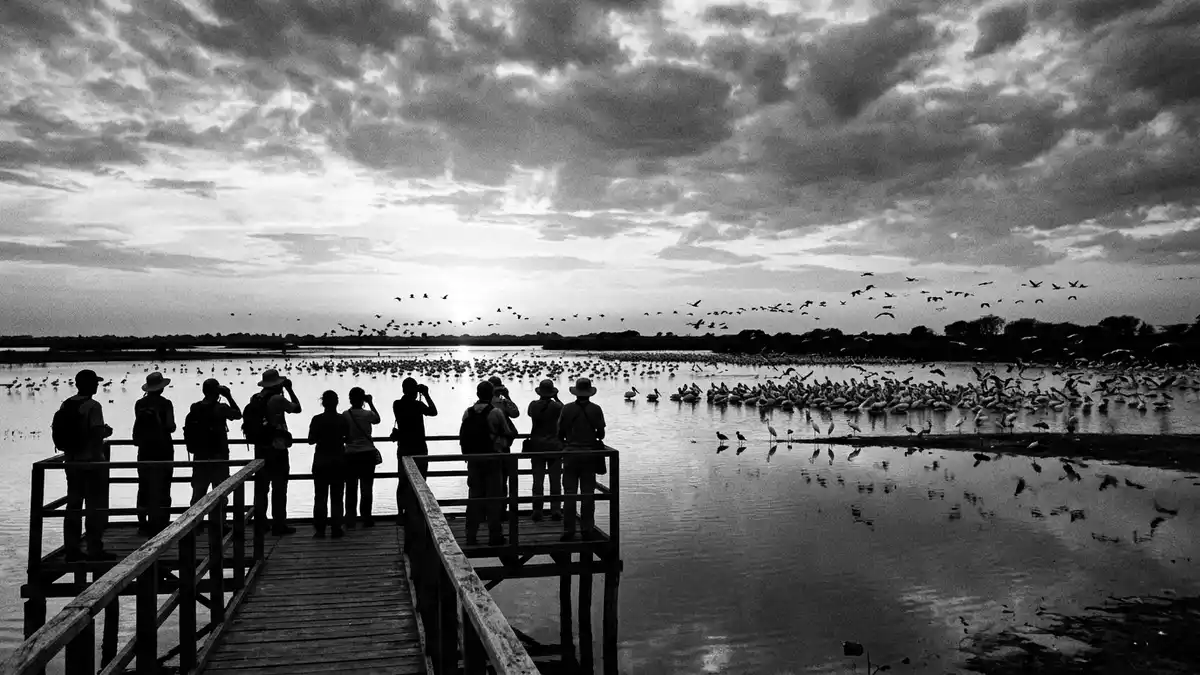
Djoudj National Bird Sanctuary in northern Senegal is a broad wetland landscape where the Senegal River spreads into lakes, ponds and marshes before turning towards the Atlantic. Set in the river delta north of Saint-Louis, it is known for vast bird colonies that gather above shallow water, reed beds and mudflats.
A river delta turned bird sanctuary
The sanctuary lies in the Senegal River delta in the extreme north-west of the country near the border with Mauritania, where the river slows and breaks into backwaters and side channels across a wide low valley. A core protected area of wetlands covers around 16,000 hectares, with a large lake surrounded by ponds, bayous and narrow streams that create a mosaic of open water and flooded ground.wetlands of 16,000 ha The broader park boundary takes in surrounding land to reach about 160 square kilometres, framing the watery centre with drier banks and grassland where tracks and observation points have been laid out.area of 160 km²
Djoudj was established as a national bird sanctuary by presidential decree on 14 April 1971, when the protected core first covered roughly 13,000 hectares before later enlargement.created in 1971 It was designated a Wetland of International Importance under the Ramsar Convention in 1977 and subsequently recognised as a natural World Heritage Site in 1981, linking the delta formally to international conservation frameworks and to adjoining protected land across the border in Mauritania.Ramsar designation in 1977
Millions of migratory birds above shallow water
Djoudj lies just south of the Sahara, making its wetlands one of the first major resting and wintering areas for migratory birds after they cross the desert from the north. The marshes, pools and flooded plains support more than a million and a half birds of around 365 species, including over 120 species that migrate from the Palaearctic zone in Europe and Asia.around 365 bird species Large colonies of white pelicans often dominate the open water, gathering in dense groups that can be seen from observatories as they rest, feed and take off in waves over the lake.
The sanctuary is also known for purple herons and great egrets with their long legs and necks, African spoonbills sweeping their distinctive bills through the shallows, and flocks of pink flamingos creating a striking band of colour against the pale tones of water and mud.white pelican and flamingo colonies Cormorants perch on branches protruding from the water or on simple posts, while smaller waders and ducks move across the edges of pools and along narrow inlets. Away from the birds, the park holds populations of crocodiles and West African manatees in its backwaters, adding another layer of wildlife to encounters along the main channels.crocodiles and manatees
Land, water and conservation on the edge of the Sahara
Djoudj National Bird Sanctuary stands in the far north of Senegal about 60 kilometres north-north-east of Saint-Louis, in a region where the flat delta plain meets the edge of dry Sahelian terrain. The main lake sits at around 16°30?N, 16°10?W, with channels spreading across the valley towards the Mauritanian border, and Diawling National Park on the opposite bank shares similar wetland habitats.location in the extreme northwest Within the park, artificial embankments and control structures shape water levels so that seasonal flooding continues to support marsh vegetation and feeding grounds for the birds.
The sanctuary’s World Heritage status, recorded in 1981 under natural criteria linked to scenery and biodiversity, has brought attention to threats such as invasive aquatic plants and changes in river flow. At different points it has been placed on and removed from the List of World Heritage in Danger, reflecting periods when species like giant salvinia spread across the surface and risked choking native vegetation before concerted management measures were taken.World Heritage in Danger listings Djoudj continues to be assessed through conservation outlook programmes and supported by partnerships that link local communities, park authorities and international organisations focused on wetland protection.
Visiting Djoudj National Bird Sanctuary: what travellers from Western Europe should know
- Djoudj National Bird Sanctuary lies north of Saint-Louis in the Senegal River delta, reached by road towards Ross-Béthio and tracks that branch to the park entrance.
- The terrain consists of flat floodplain with embankments and unpaved tracks; access to viewpoints involves short walks on sandy and occasionally muddy ground.
- The official language is French and the currency is the West African CFA franc.
- Entry requirements depend on your nationality; UK travellers can check the FCDO travel advice at gov.uk/foreign-travel-advice, Irish travellers the Department of Foreign Affairs at ireland.ie.
Searching for Djoudj National Bird Sanctuary on social platforms
These links open searches for Djoudj National Bird Sanctuary on each platform.
Frequently asked questions about Djoudj National Bird Sanctuary
Where is Djoudj National Bird Sanctuary located?
Djoudj National Bird Sanctuary is in the Senegal River delta in northern Senegal, around 60 kilometres north-north-east of Saint-Louis near the border with Mauritania.
What should visitors expect on a visit to Djoudj?
Visitors encounter wide wetlands of lakes, ponds and marshes with dense bird colonies, viewed from tracks, simple observatories and boat routes across the shallow water.
What makes Djoudj National Bird Sanctuary distinctive?
Djoudj is distinctive as a Ramsar wetland and World Heritage Site where over a million and a half migratory birds gather just south of the Sahara in a single protected delta landscape.


