
Disneyland Paris and the art of the storybook landscape
Published on 08/30/2026 at 10:39 | Editorial responsibility: Rafael Müller, Editor-in-Chief AD HOC NEWS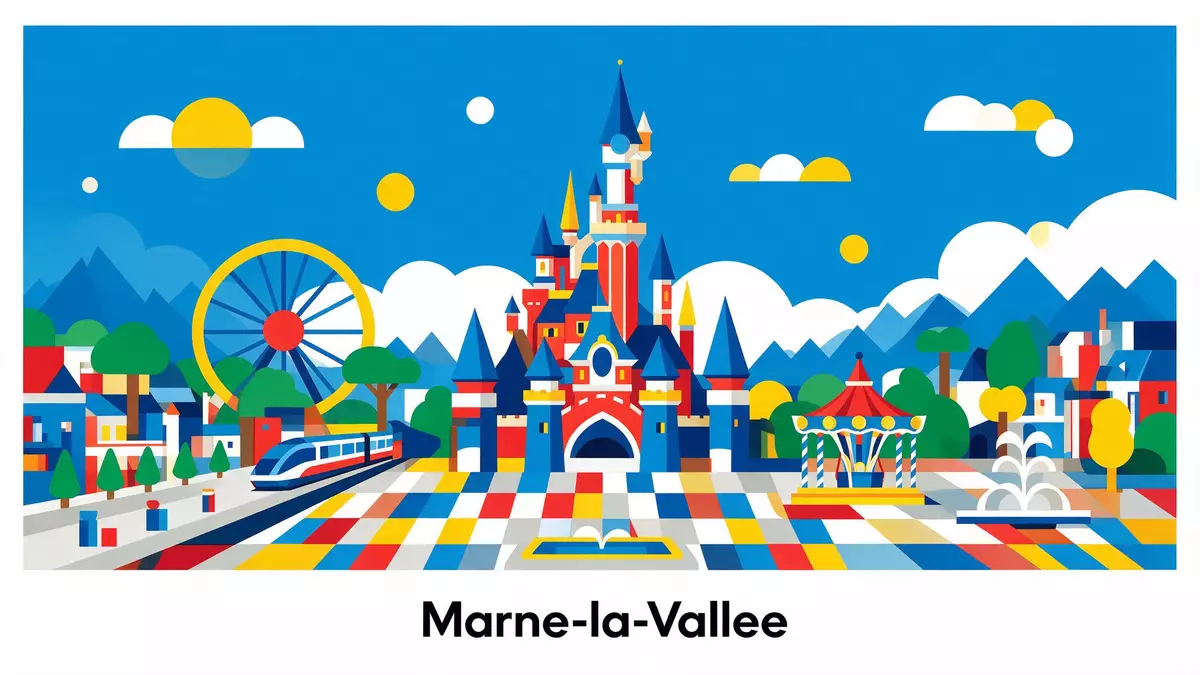
Disneyland Paris transforms the flat countryside of Marne-la-Vallee into a carefully staged storybook landscape, anchored by Sleeping Beauty Castle at the centre of its original theme park. Opened on 12 April 1992 as Euro Disney, the resort brought the imaginative world of The Walt Disney Company to the eastern edge of the Paris region and has grown into a sprawling complex of parks, hotels and entertainment streets over the decades.
A European kingdom of two theme parks
Disneyland Paris stands in the communes of Chessy and Coupvray, east of central Paris, as the first Disney resort built in Europe. The agreement to create the resort was signed in 1987, and several years of construction in Marne-la-Vallee led up to the inauguration of the first park in 1992.Agreement in 1987 The overall complex was initially known as Euro Disney Resort and has carried several official names since, but the idea has remained constant: a self-contained destination dedicated to Disney stories and themed environments.Formerly Euro Disney Resort
The resort includes two separate theme parks with distinct characters. Disneyland Park, the original park that opened on 12 April 1992, follows the classic Disney castle-park model with Main Street U.S.A. leading towards Sleeping Beauty Castle and lands arranged around a central hub.Disneyland Park in Marne-la-Vallee Next door, a second park opened in 2002 under the name Walt Disney Studios Park and has been reworked and renamed Disney Adventure World, adding further themed areas linked to cinema, animation and more recent film franchises.Second park Disney Adventure World
Sleeping Beauty Castle and the five classic lands
At the centre of Disneyland Park stands Sleeping Beauty Castle, created as the focal point of the French resort and designed with details that pick up on European fairy-tale traditions. Main Street U.S.A. leads from the park entrance towards the castle, with the buildings along the street evoking small-town American architecture and framing the view towards the landmark in the distance.Main Street U.S.A. and Sleeping Beauty Castle
From the open plaza in front of the castle, the rest of the park spreads out in the recognisable “hub and spoke” layout used in other Disney castle parks. Fantasyland lies behind Sleeping Beauty Castle with a concentration of rides and settings inspired by classic animated films. Frontierland brings a stylised version of the American West to the shores of an artificial river, with Big Thunder Mountain and Phantom Manor as its major set-pieces. Adventureland uses rockwork, dense planting and winding paths to suggest a blend of tropical islands and adventure stories, while Discoveryland presents a European take on retro-futurism and space travel.Five themed lands layout
A resort city on the plains east of Paris
Disneyland Paris is embedded in a wider urban development zone that has reshaped this part of Seine-et-Marne since the late twentieth century. The leisure complex and its associated hotels, golf facilities and retail areas cover a broad swathe of land east of the town centre of Chessy, on ground that had been earmarked for the Marne-la-Vallee new town project.Tourist and urban complex in Marne-la-Vallee Over the years, the presence of the resort has been accompanied by major transport and infrastructure work, including the creation of a TGV high-speed station and an extension of the RER A regional rail line to Marne-la-Vallee – Chessy.
The resort is laid out as a pedestrian precinct once inside the perimeter, with the two parks facing each other across a paved esplanade and the Disney Village entertainment district linking the park gates with the main hotel zone. Beyond the themed architecture of the parks, the surrounding area includes landscaped lakes, car parks and service roads, as well as a golf course and large shopping centre that serve both visitors and the growing local community.Hotels, golf and shopping centre
Visiting Disneyland Paris: what travellers from Western Europe should know
- Disneyland Paris lies in Marne-la-Vallee, east of central Paris, with the resort concentrated around the Marne-la-Vallee – Chessy rail hub and the A4 autoroute interchange.
- Arriving visitors enter a large open forecourt between the rail station and the park gates, with level paved surfaces but long walking distances between the car parks, hotels and the two parks.
- The country is France, the official language is French and the currency is the euro.
- The parks and Disney Village form a mostly pedestrian environment; service roads, hotel access loops and bus stations sit around the perimeter of the central guest areas.
- Entry requirements depend on your nationality; UK travellers can check the FCDO travel advice at gov.uk/foreign-travel-advice, Irish travellers the Department of Foreign Affairs at ireland.ie.
Searching for Disneyland Paris on social platforms
These links open searches for Disneyland Paris on each platform.
Frequently asked questions about Disneyland Paris
Where is Disneyland Paris and how is it laid out?
Disneyland Paris is in Marne-la-Vallee, east of Paris, with two theme parks facing each other across a central esplanade and an entertainment district linking them to the hotels.
What can visitors expect on a first visit?
Visitors encounter a classic Disney castle park with five themed lands around Sleeping Beauty Castle, a second park with film-inspired areas and a broad belt of hotels and leisure facilities.
What makes Disneyland Paris distinctive among Disney resorts?
Disneyland Paris is the only Disney resort in Europe, combining American-style theme park design with European fairy-tale architecture and a large planned urban district around Marne-la-Vallee – Chessy.


