
Dinh Doc Lap, Ho-Chi-Minh-Stadt’s modernist palace of independence
Published on 09/12/2026 at 16:47 | Editorial responsibility: Rafael Müller, Editor-in-Chief AD HOC NEWS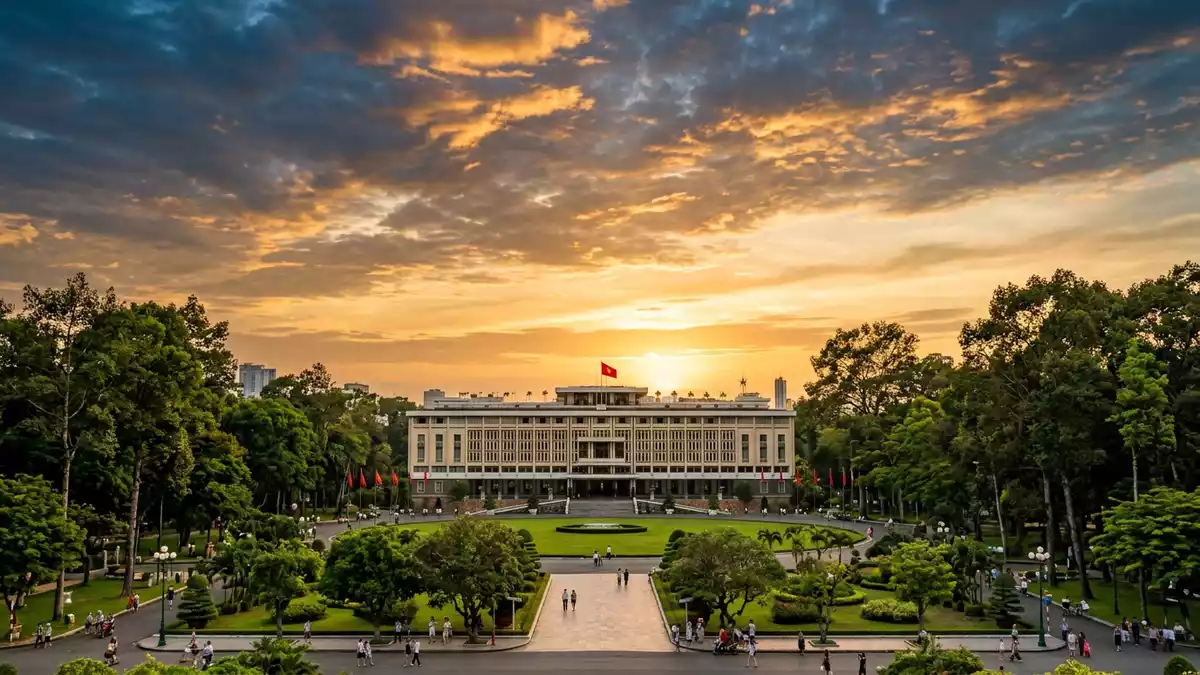
Dinh Doc Lap in Ho-Chi-Minh-Stadt, widely known in English as the Independence Palace or Reunification Palace, is a 1960s modernist presidential residence turned national historic site at 135 Nam Ky Khoi Nghia Street in District 1.Independence Palace It preserves the architecture, interiors and grounds of South Vietnam’s former seat of power, now recognised as a special national relic.
A modernist palace built for a president
The present Dinh Doc Lap was built in the early 1960s after the earlier Norodom Palace on the same site was damaged, creating space for a new presidential residence for the Republic of Vietnam.rebuilt in 1962 Architect Ngo Viet Thu, the first Vietnamese winner of the prestigious Prix de Rome scholarship, designed the complex as a large modernist block with strong horizontal lines, projecting balconies and a façade articulated by concrete screens.Ngo Viet Thu
The main building rises over several levels above an extensive compound that covers around 12 hectares, with three principal floors above ground, mezzanines, a basement and a roof terrace.three main floors Concrete, glass and steel define the structure, but the plan and decorative motifs incorporate references to traditional East Asian architecture, including the layout said to echo the Chinese character associated with good fortune.
Rooms where twentieth-century history unfolded
Dinh Doc Lap served as the home and workplace of the presidents of South Vietnam, making its interiors closely tied to the political history of the 1950s, 1960s and first half of the 1970s.home and workplace State reception halls, the presidential office, cabinet meeting rooms and private apartments remain furnished with desks, seating, decorative screens and artworks characteristic of the era.
Below the main floors, a basement level contains communication rooms and operational spaces linked to wartime command, including chambers with maps, radio equipment and secure meeting areas. On 30 April 1975, the palace became the scene of the final moments of the Republic of Vietnam, when tanks of the South Vietnam National Liberation Front reached the complex and a liberation flag was raised above the roof.flag above the roof Later in 1975 the palace hosted the Political Consultative Meeting on the reunification of north and south, and it was subsequently renamed Reunification Palace and recognised as a special cultural and historical relic.
Gardens and setting in the centre of Ho-Chi-Minh-Stadt
Dinh Doc Lap occupies a large urban block in Ben Thanh Ward, District 1, surrounded by major streets including Nam Ky Khoi Nghia, Huyen Tran Cong Chua, Nguyen Thi Minh Khai and Nguyen Du.Independence Palace location The main façade faces Nam Ky Khoi Nghia Street, set back behind lawns that separate the building from the traffic. Mature trees and planted areas run around the palace, giving the compound the character of a government residence surrounded by gardens despite its position in the dense centre of Ho Chi Minh City.
Inside the grounds, pathways and open lawns lead visitors around the perimeter of the building, offering views of the concrete façades, projecting balconies and narrow vertical fins. The gardens frame the approach to the central entrance and also create space for outdoor displays, including vehicles associated with the events of 30 April 1975, which stand on the grass within sight of the palace walls.Reunification Palace article
Visiting Dinh Doc Lap: what travellers from Western Europe should know
- Dinh Doc Lap stands in Ben Thanh Ward, District 1, at 135 Nam Ky Khoi Nghia Street, surrounded by Nam Ky Khoi Nghia, Huyen Tran Cong Chua, Nguyen Thi Minh Khai and Nguyen Du streets.
- The palace complex is set within a walled compound with lawns and planted areas; approaches involve walking on paved paths, with steps inside the building between floors.
- The official language is Vietnamese and the currency is the Vietnamese dong.
- Entry requirements depend on your nationality; UK travellers can check the FCDO travel advice at gov.uk/foreign-travel-advice, Irish travellers the Department of Foreign Affairs at ireland.ie.
Searching for Dinh Doc Lap on social platforms
These links open searches for Dinh Doc Lap on each platform.Frequently asked questions about Dinh Doc Lap
Where is Dinh Doc Lap in Ho-Chi-Minh-Stadt?
Dinh Doc Lap is in Ben Thanh Ward, District 1 of Ho Chi Minh City, at 135 Nam Ky Khoi Nghia Street, within a block bordered by major central roads.
What can visitors expect inside Dinh Doc Lap?
Visitors encounter preserved reception halls, offices, private rooms and basement command spaces furnished in 1960s style, along with displays related to the events of 30 April 1975.
What makes Dinh Doc Lap distinctive among buildings in Vietnam?
Its combination of modernist concrete architecture by Ngo Viet Thu, extensive gardens and direct association with key moments of Vietnam’s twentieth-century political history gives the palace a distinctive character.


