
Diani Beach’s long lagoon of white sand at Ukunda
Published on 08/31/2026 at 09:49 | Editorial responsibility: Rafael Müller, Editor-in-Chief AD HOC NEWS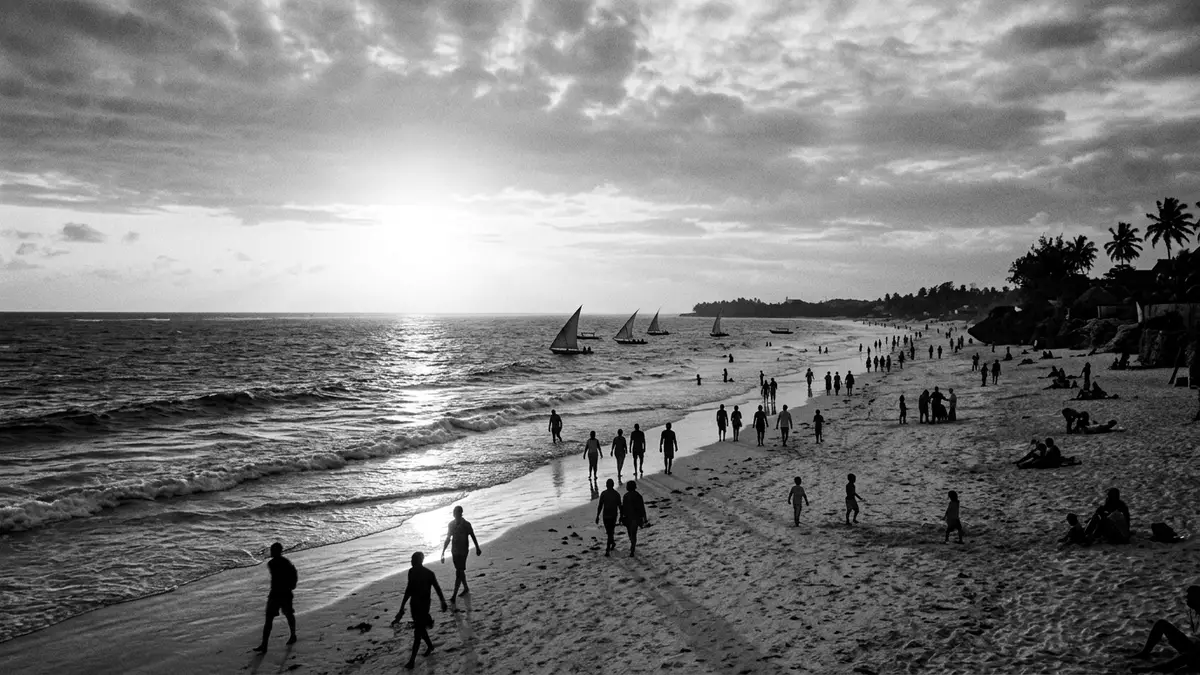
Diani Beach near Ukunda on Kenya’s south coast is a long ribbon of white sand beside shallow Indian Ocean water, where the scale of the shoreline is the defining experience. Stretching for around 17 km (about 10 miles) along Kwale County’s coast and framed by coastal forest inland, it offers a continuous beach rather than a single cove, with the lagoon and reef shaping how travellers encounter this part of Kenya.
A long Indian Ocean shoreline shaped by reef and forest
Diani Beach lies in Kwale County on the Indian Ocean coast of Kenya, south of the port city of Mombasa and close to the inland town of Ukunda. The beach strip extends for about 17 km (11 miles) from the Kongo River in the north to the area known as Galu Beach in the south, forming a continuous band of white sand that changes character subtly along its length.from the Kongo River in the north to Galu Beach in the south Inland, sections of ancient coastal forest and village land sit behind the hotel plots, while offshore a fringing coral reef runs roughly parallel to the shore, enclosing a lagoon of protected, shallow water.a long ribbon of white sand beside a shallow lagoon
The Indian Ocean itself lies beyond the reef, but for most of the main beach the visual focus is the lagoon: at low tide extensive sandbars and exposed patches of coral rubble appear, while at higher water the pale sand drops directly into clear shallows. The strand remains open and public along its length, with resort plots and beach bars set back from the high-water line and informal access paths leading from the inland road across the vegetation to the sand.a major beach on the Indian Ocean coast in Kwale County
Ukunda and the beach strip: a linked coastal landscape
Although Diani Beach provides the shoreline focus, Ukunda is the inland town that underpins daily life in the area. It sits just west of the beach strip on the main highway towards the Tanzanian border, with the junction where the road to Diani branches off holding the small airport, bus and matatu stages and many of the services that are less visible on the sand itself.Ukunda and Diani are closely linked but not the same Travellers arriving by air land at Ukunda Airstrip, while those coming by road from Mombasa cross towards the south coast and then follow the highway until the turn-off to the beach area.
Along the 17 km of shoreline, the names Tiwi, central Diani, Galu and Kinondo mark broad zones rather than abrupt boundaries, reflecting differences in development and in how forest and settlement sit against the sand.Tiwi in the north, central Diani in the middle, and Galu and Kinondo to the south North of the main resort area the Kongo River reaches the sea near a historic mosque and grove, while towards the southern end the beach narrows and the forest comes closer to the high-water line. Inland from much of the strip, Ukunda’s markets and small businesses support the hotels and guesthouses, so a visit to Diani Beach often includes movement between the beach-facing properties and the everyday town.
Lagoon, coral reef and Indian Ocean light
Diani Beach’s character is closely tied to the fringing coral reef that runs parallel to the shore, a natural barrier that shelters the lagoon from the direct force of the Indian Ocean swells.the fringing coral reef that runs parallel to the shore In places the reef lies only a few hundred metres offshore, in others somewhat further, but across most of the beach the protected shallows allow small boats, traditional dhows and swimmers to share the inner water where the colour shifts through pale blue and shallow green. At low tide, parts of the reef flat are accessible on foot with care, revealing pools among coral heads and patches of seagrass.
Beneath the surface, the coral gardens host diverse marine life, with hard and soft corals forming structures that support fish, invertebrates and other lagoon species.coral gardens host over 250 species of hard and soft coral Out on the horizon the open Indian Ocean forms a contrasting band of deeper colour, while on shore the white sand reflects strong equatorial light. Simple activities such as walking along the tide line, watching traditional boats move between lagoon and reef or tracing the subtle differences between open stretches and more tree-lined sections form much of the experience here, with the long scale of the beach allowing these patterns to play out gradually rather than in a single view.
Visiting Diani Beach: what travellers from Western Europe should know
- Diani Beach lies on Kenya’s south coast in Kwale County, with the beach strip reached by road via the town of Ukunda and the main highway towards the Tanzanian border; road approaches typically begin in Mombasa and turn off near Ukunda for the short drive east to the shoreline.
- The shoreline itself is long and open, so walking on sand is central to any visit; sections of the beach are broad and level, while others narrow slightly where coastal vegetation comes closer to the high-water mark.
- The official language is Swahili and English, and the currency is the Kenyan shilling.
- Entry requirements depend on your nationality; UK travellers can check the FCDO travel advice at gov.uk/foreign-travel-advice, Irish travellers the Department of Foreign Affairs at ireland.ie.
Searching for Diani Beach on social platforms
These links open searches for Diani Beach on each platform.Frequently asked questions about Diani Beach
Where is Diani Beach in relation to Ukunda and Mombasa?
Diani Beach lies on Kenya’s south coast in Kwale County, just east of Ukunda and approximately 30 km (about 19 miles) south of Mombasa.
What should visitors expect when they arrive at Diani Beach?
Visitors encounter a long, public strand of white sand edged by coastal forest in places and facing a shallow lagoon, with resort plots and informal access paths leading down to the sea.
What makes the setting of Diani Beach distinctive among Kenya’s coasts?
The combination of a roughly 17 km shoreline, a fringing coral reef that forms a sheltered lagoon and the close presence of Ukunda as an inland hub gives this stretch of coast its particular character.


