

Delphi offers free admission on 28 October 2026
Published on 10/11/2026 at 04:47 | Editorial responsibility: Rafael Müller, Editor-in-Chief AD HOC NEWSKey points in brief
- Delphi offers free admission to its archaeological site and museum on 28 October 2026.
- The sanctuary lies between the Phaidriades rocks on Mount Parnassus in Central Greece and is a UNESCO World Heritage property.
- Visitors can reach Delphi from Athens or Patras by Phocis KTEL bus, or walk from the modern settlement.
- The archaeological site includes the Temple of Apollo, the Theatre, the Stadium and the Treasury of the Athenians.
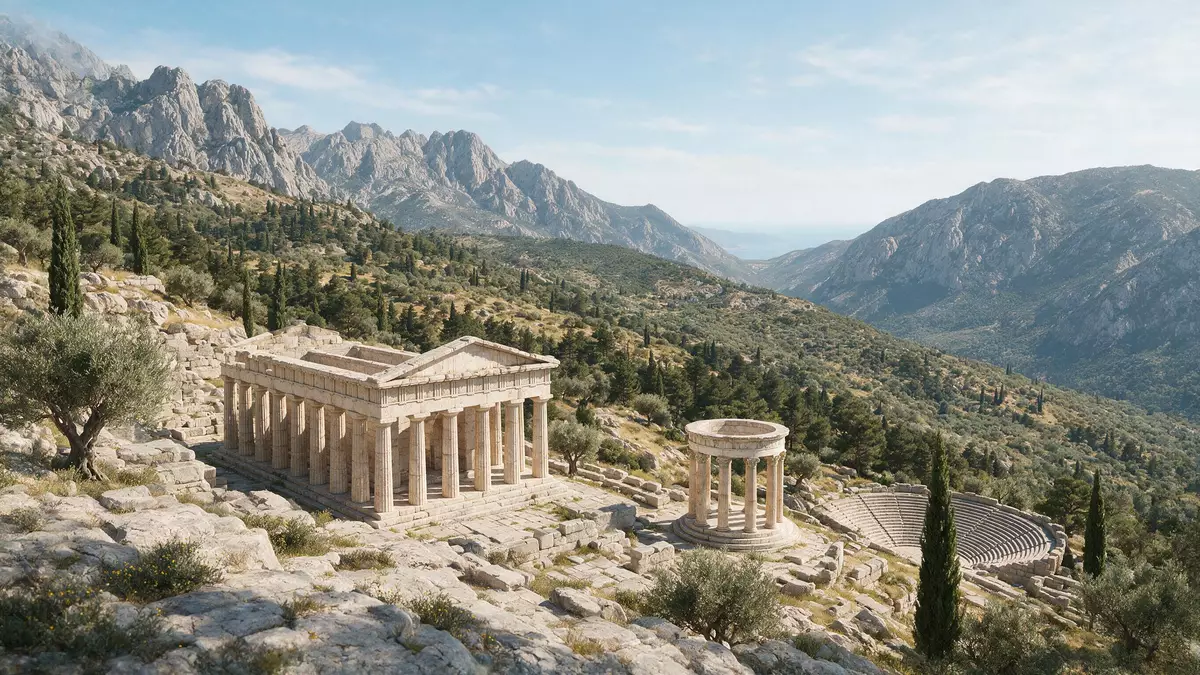
Delphi offers free admission on 28 October 2026, giving visitors access to its archaeological site and museum in Delphi, Greece. The arrangement is part of the national calendar for free entry to Greek state archaeological sites and museums.
Free admission brings Delphi site and museum together
The Hellenic Heritage visitor page lists 28 October among the fixed dates when admission is free. The same page identifies the venue as the Archaeological Site of Delphi and confirms that the access also covers the Archaeological Museum of Delphi.
The date falls within the autumn visiting period and gives travellers a specific reason to plan a visit during the article window. It is not a festival or performance, but a public access arrangement applying to visitors at the state-run cultural site. The Ministry of Culture information also lists 28 October as a free-admission day for the museum and archaeological site.
The practical effect is clear: visitors arriving on 28 October 2026 can visit the sanctuary and the museum under the free-admission rule. The site remains a working archaeological property, so access to individual areas can depend on conservation, safety or local management measures.
Delphi sanctuary links the October date to ancient history
The sanctuary stands between the Phaidriades, or Shining Rocks, on Mount Parnassus in the regional unit of Phocis. UNESCO describes it as the Pan-Hellenic sanctuary of Apollo, where the oracle spoke, and lists it as the Archaeological Site of Delphi on the World Heritage List.
The oracle and sanctuary began developing in the eighth century BC, while Delphi became a major religious centre in the sixth century BC. The surviving ensemble includes the Temple of Apollo, the Theatre, the Stadium, the Treasury of the Athenians, the Tholos and the Roman Agora.
The 28 October access date therefore connects a modern national visitor arrangement with a site that UNESCO associates with ancient Greek religion, political history and the Pythian Games. The combination of the open-air monuments and the museum gives the day a clear link between the sanctuary and the objects recovered from it.
Visiting Delphi: what travellers from Western Europe should know
- Free admission applies at the Archaeological Site of Delphi and the Archaeological Museum of Delphi on 28 October 2026.
- The date concerns public access to the main archaeological venue and its museum; individual areas can remain subject to site management or safety restrictions.
- The site is in Delphi, in Central Greece. The Hellenic Heritage directions identify Phocis KTEL buses from Athens or Patras, while the sanctuary is a walk from the modern settlement.
- The archaeological area occupies steep ground between the Phaidriades rocks, and the route includes terraces, monuments and the uphill approach towards the Stadium.
- Greek is the official language and the currency is the euro.
Searching for Delphi on social platforms
These links open searches for Delphi on each platform.
Frequently asked questions about Delphi
When does free admission take place at Delphi?
Free admission is listed for 28 October 2026 at the archaeological site and museum.
What is included in a visit to Delphi?
The access arrangement covers the Archaeological Site of Delphi and the Archaeological Museum of Delphi. The sanctuary includes the Temple of Apollo, Theatre, Stadium and Treasury of the Athenians.
Where is Delphi and how do you get there?
Delphi is in Phocis in Central Greece. Phocis KTEL buses connect the settlement with Athens and Patras, and the site can also be reached on foot from the modern town.


